
An unboxing experience is built from four designable layers — the box structure, the opening mechanism, the interior reveal and the print finish. Allen Paper Products has refined all four for brands across 80+ countries since 1998, starting at MOQ from 100 pcs with samples in days and bulk delivered in 2–3 weeks.
The four layers of an unboxing experience
Most brands think of “unboxing” as one decision. In practice it is four, and each can be specified independently at the quote stage.
Layer 1 · Structure — rigid vs. folding
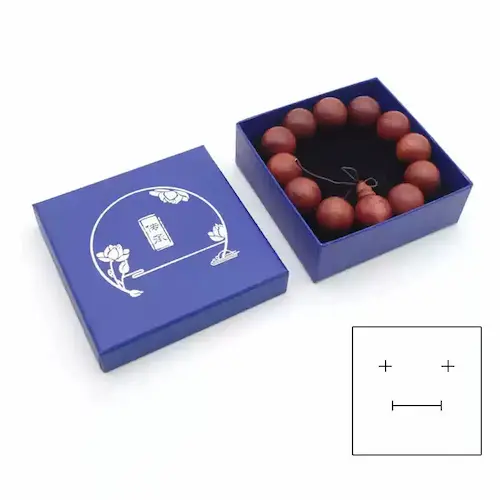
A rigid (setup) box holds its shape and feels substantial the moment it is lifted — the default for jewelry, cosmetics and gifting. A folding carton costs less and ships flat, but trades away the “weight” of the moment. Most premium lines run rigid for the hero SKU and folding for the volume range.
Layer 2 · Opening mechanism — magnetic, drawer, lift-off

The opening is the sound and the pause. A magnetic closure gives a soft close and a clean reveal; a drawer box builds anticipation as it slides; a lift-off lid is the simplest and the most traditional. The mechanism also drives the tooling cost — magnetic closures need precise magnet placement, which is drawn on the dieline before cutting.
Layer 3 · Interior reveal — insert and lining

The interior is the moment the product is seen. Velvet, EVA and moulded-pulp inserts are cut to the product profile so it sits centered and fixed. For multi-piece sets, the tray is what stops pieces shifting between the factory and the customer — and what makes the “reveal” photo worth taking.
Layer 4 · Print and tactile finish
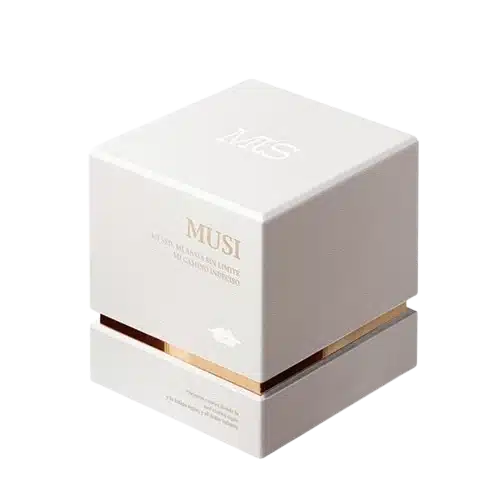
Foil, blind emboss, spot-UV and soft-touch lamination are read by touch before they are read by eye. Gold foil on the logo is the most requested single finish; blind emboss is the quieter European preference. Finishes are approved on a physical sample, because screen and paper both lie about texture.
Craft × sensation matrix
| Craft | Visual | Tactile | Sound | Typical placement |
|---|---|---|---|---|
| Gold / silver foil | High contrast shine | Slight raise | — | Logo, monogram |
| Blind emboss | Tone-on-tone | Deep press | — | Logo, pattern field |
| Spot-UV | Gloss on matte | Smooth accent | — | Logo, claim text |
| Soft-touch lamination | Matte, deep color | Velvet-like | — | Whole wrap |
| Magnetic closure | Clean edge | — | Soft click | Closure seam |
| Ribbon pull | Color accent | Satin | — | Drawer / lid |
Which layers to invest in first
Not every layer deserves the budget. A practical order of investment, based on what buyers photograph and post: (1) opening mechanism — it is the moment; (2) interior reveal — it is the photo; (3) print finish — it is the brand read; (4) structure upgrade — felt, but rarely photographed. A digital-print folding box with a good insert and one foil accent outperforms a plain rigid box at the same cost.
Frequently asked questions
- Can I test the full unboxing effect before bulk? Yes — the pre-production sample is made on the real board with the real finishes, so the opening, the insert and the print are all approved before production.
- Which mechanism is most durable for shipping? Magnetic closure with an EVA or moulded-pulp cradle. The cradle does the protective work; the magnet does the experience.
- What is the MOQ for a custom unboxing box? From 100 pcs, with volume tiers at 1,000 / 3,000 / 5,000+.
- How long does production take? Samples in days; bulk 2–3 weeks after sample approval.