emboss and deboss from finishing for custom packaging

Hang Tag Buying Guide: Custom Hang Tags & Price Tags for Retail Brands

A hang tag buying guide is what Lena wishes she had before her first 10,000-tag order arrived with crooked holes and a logo two shades off the Pantone book. She ran a small apparel label and trusted a quote that listed only size and quantity. The tags hung unevenly on the rack, the string frayed, and a retailer sent half the batch back. The lesson: a hang tag is a printed product, not a commodity, and the spec sheet — not the price — decides whether it sells.

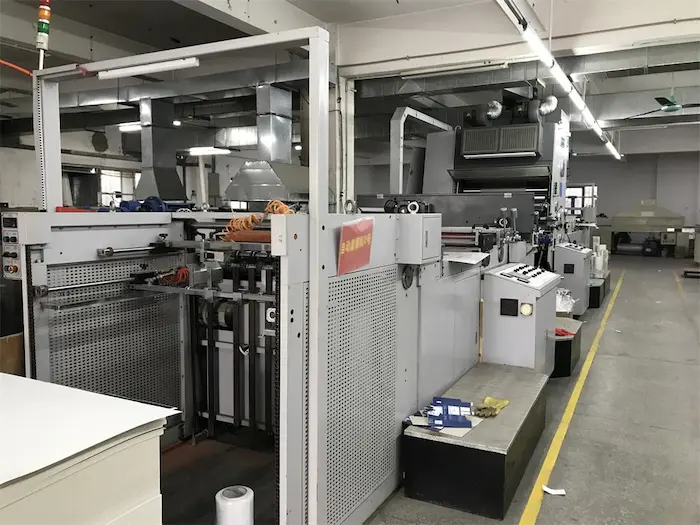
Every spec below comes out of our own plant in Dongguan — see Allen Paper Products for the full capability list.


hang tag buying guide custom hang tags and price tags for retail brands

Key Takeaways

  • A solid hang tag buying guide starts with board weight; 300–350 gsm coated card is the retail sweet spot for rigidity without bulk.
  • Hole punch position and diameter decide whether tags hang straight; a 3–4 mm centre hole is the retail standard.
  • Print method sets cost and finish: offset for large runs, digital for small batches, and foil for premium lines.
  • Factory MOQ often starts near 500–1,000 pieces, but a split order can lower it for a first run.
  • Request a physical sample before bulk production; colour and hole tolerance vary more than quotes suggest.

For the related spec, see custom printed paper bags — same board grades, same tolerances.

Hang Tag Buying Guide: The Specs That Decide Quality

A real hang tag buying guide is built on measurable specs, not adjectives like “nice” or “premium.” The four variables that separate a tag that survives the shop floor from one that looks cheap in week one are board weight, hole placement, print method, and string. Get these on paper before you ask for a price and the quote you receive will actually mean something.

Key points – Board weight drives rigidity and perceived value. – Hole position decides how the tag sits on the garment. – Print method controls colour accuracy and cost per piece. – String or cord is a finish detail buyers notice up close. – Every spec belongs in the purchase order, not the chat.

For the related spec, see custom paper boxes — same board grades, same tolerances.

For the underlying standard, see FSC chain-of-custody certification.

Materials and Board Weight

The board is the first decision. Light 200–250 gsm card bends and looks flimsy; 300–350 gsm coated card reads as substantial and resists curl in humid stores. Recycled kraft (around 300 gsm) suits eco positioning but prints flatter, while coated art card holds saturated colour. The FSC certification matters if you claim responsible fibre, and a custom hang tag manufacturer should be able to show the chain-of-custody document on request.

Board type Weight (gsm) Best for Relative cost
Coated art card 300–350 Apparel, beauty, retail $$
Uncoated kraft 280–320 Eco, handmade brands $$
Recycled card 300–340 Sustainable claims $$$
Black core card 320–360 Jewelry, premium $$$

Estimates only; actual figures depend on your specs — request a quote.

For the related spec, see packaging by industry — same board grades, same tolerances.

Hole Punch and Stringing

A mis-punched hole is the fastest way to ruin a tag. The retail standard is a 3–4 mm centre hole, but die-cut shapes (arch, reinforced eyelet, slot) cost more and need a stronger board. Eyelets stop the string tearing out of thin card. If you plan volume stringing, tell the factory the cord diameter so the hole matches. Our hang tag hole spec guide lists the tolerances a good supplier will hold, and hang tag info required covers what legally has to print on the tag.

For the related spec, see our packaging factory — same board grades, same tolerances.

For the underlying standard, see ASTM International test standards.

Print Method and Finish

Print method is where cost and quality diverge. Offset gives the lowest unit cost above roughly 3,000 pieces with accurate, even colour; digital wins below that and lets you test a design cheaply; foil and emboss add a luxury cue but add setup. Colour must be specified to a book — the Pantone Matching System is the reference most factories accept. A wholesale hang tags china quote that omits the print method is really quoting an unknown.

Method Run size Colour accuracy Finish options
Offset 3,000+ High (Pantone) Foil, emboss, soft-touch
Digital 100–3,000 Good Spot UV, matte
Screen 500+ Medium Thick ink, tactile

Estimates only; actual figures depend on your specs — request a quote.

For the underlying standard, see the Fibre Box Association.

How to Brief Your China Factory

A brief is a spec sheet, not a wish. Send the size in mm, board weight and type, hole position from the edge, print method, Pantone numbers, string type and length, and the packing format. Use our custom packaging spec sheet template to keep it consistent across products. When you wonder how much do custom hang tags cost, the answer tracks directly to these choices: heavier board, foil, and eyelets each push the unit price up.

Mini-story — Daniel’s crooked first run. Daniel briefed a factory with only a JPEG and “make it look good.” The 8,000 tags came back with holes 2 mm off-centre, so they twisted on the hanger. His supplier blamed the artwork; the real gap was a missing hole-coordinate spec. Daniel rebuilt the brief with exact mm positions and an eyelet, paid a small tooling fee, and the rerun sat perfectly straight. The hang tag buying guide he wrote for his own team now leads with hole coordinates, not colour.

MOQ, Pricing, and Sampling

Minimum order quantities at a China factory commonly start at 500–1,000 pieces per design, with price breaks at 3,000, 5,000, and 10,000. Foil and emboss carry higher MOQs because of the plates. Always order a pre-production sample and check it against your Pantone and hole spec before the full run. Our low moq packaging suppliers small business guide shows how split orders and combined SKUs pull the effective MOQ down, and order sample before bulk production explains what to verify on that sample.

Your Next Step

A good spec turns a risky purchase into one you control. Stop quoting on size and quantity alone and start sending a real brief: board, hole, print, and string, each in writing. Before your next order, read our hang tag print method guide to pick the finish that fits your run size, and keep the spec sheet in the purchase order so what arrives is what you approved.

  • 1. What should I specify first in a hang tag order?

    A spec should cover board weight, hole placement, print method, and string before price. These specs decide whether the tag looks premium and survives the shop floor. Without them, any quote is guessing, and colour or hole tolerance will drift from what you approved on screen.

  • 2. How much do custom hang tags cost per piece?

    Custom hang tags typically run about USD 0.03–0.12 per piece at volume, rising with heavier board, foil, eyelets, and short runs. A 300 gsm offset tag at 5,000 pieces sits near the low end; a foil embossed run under 1,000 costs far more per unit. Always tie the price to a written spec.

  • 3. What board weight is best for retail hang tags?

    For most retail hang tags, 300–350 gsm coated card is the sweet spot: rigid enough to feel premium, light enough to keep shipping cheap. Kraft around 300 gsm suits eco brands but prints flatter. Below 250 gsm the tag curls and reads as low value on the rack.

  • 4. How do I specify the hole punch to a factory?

    Give the hole diameter, usually 3–4 mm, and its exact distance from the tag edge in millimetres. For thin board or stringing by machine, add an eyelet. A written coordinate beats a photo, because a 2 mm drift is invisible in proof yet obvious on the hanger.

  • 5. Should I order a sample before bulk hang tag production?

    Yes. A pre-production sample confirms Pantone colour, hole position, board feel, and string before you commit to thousands of pieces. Checking it against your spec sheet catches most failures cheaply; skipping it is the usual cause of crooked, off-colour, or torn tags arriving at your warehouse.

Conclusion

Hang tag buying guide custom hang tags and price tags for retail brands is a spec decision, not a price decision. Fix the structure, approve a real sample, and hold the supplier to the numbers on the PO — then the pack does its job before anyone reads the copy. Compare custom printed paper bags, custom paper boxes and packaging by industry to see what fits your product, or email sales@allenboxes.com for a quote on a 100-piece run.

Liverson Li
Liverson Li

Hello, I'm Liverson, co-founder of Allenboxes.com. We run a packaging factory in Dongguan. Custom printed paper bags, boxes, pouches, hang tags and cards, made here since 1998. We're not the cheapest and not the biggest. We're the factory that takes a 100-piece order seriously. Email me freely for more details!

Leave a Comment

GET A QUOTE NOW

Your inquiry matters!

Our team replies within 8 hours, with your full quote in 24.

Please check inbox/spam later for replies from @allenboxes.com