A container of 40,000 custom printed paper bags lands at your DC, you open one carton, and the print is half a centimeter off the edge on every bag. The factory swears “all checked,” but there is no report, no checklist, and no pre-production sample on file. That is why paper bag quality control is not a box you tick at the end — it is the difference between a shipment you can sell and one you absorb as a loss. For B2B buyers sourcing custom printed paper bags from China, inspection is where expensive surprises are caught or missed. Our complete guide to custom printed paper bags sets the full spec; this article covers what should happen between the press and the port.
Key Takeaways – Quality control is three gates — incoming, in-process, pre-shipment — not one end-of-line check. – A signed pre-production sample is your reference; without it, “defect” has no agreed meaning. – AQL sampling (typically 2.5 for major defects) sets how many units get inspected. – Print registration, GSM tolerance, lamination adhesion, and handle attachment strength are the four failure points. – Third-party inspection plus loading supervision catches what a factory’s own QC will not report. – Inspection costs ~0.3–1.0% of FOB value but prevents chargebacks 10–40x that.
Every spec below comes out of our own plant in Dongguan — see Allen Paper Products for the full capability list.
Why Paper Bag Quality Control Decides Whether Your Order Sells
Buyers treat quality control as a nuisance fee. That framing is backwards: the inspection regime is the biggest lever on landed cost, because one missed defect class turns a profitable order into a write-off. A retailer chargeback for defective packaging runs $50–$250 per carton; a 40-foot box holds 800–1,200 cartons of bags, so 3% at $100 is $2,400–$3,600 before freight back. A pre-shipment inspection costs a few hundred dollars. A brand that ships crooked logos to a boutique chain does not get a second PO. Put the regime in the contract and PO, and work with a reliable manufacturer that accepts written QC clauses.
For the related spec, see custom printed paper bags — same board grades, same tolerances.
The Three Inspection Gates: Incoming, In-Process, Pre-Shipment
Paper bag quality control is three gates, each catching a different problem at the cheapest moment.
| Gate | When | Catches | Fix cost if missed |
|---|---|---|---|
| Incoming | Materials arrive | Wrong GSM, weak handles, bad ink | Batch scrapped |
| In-process | During run | Mis-registration, adhesion, drift | Partial rework |
| Pre-shipment | After packing | Mixed defects, count, labels | Chargebacks, air freight |
A defect caught at incoming costs cents. The same defect at pre-shipment costs dollars; at the customer, it costs your account. Build all three gates in and you remove the “we already shipped it” excuse.
For the related spec, see custom paper boxes — same board grades, same tolerances.
For the underlying standard, see FSC chain-of-custody certification.
Incoming Inspection: Raw Material Checks Before Production
The cheapest place to lose an order is before the press warms up. Incoming inspection confirms the substrate and components match the PO:
- GSM checked on a precision scale, 3–5 sheets per lot; ±5% is standard, ±3% for premium. See our GSM selection guide for load mapping.
- Grade and certification — FSC orders need matching Chain-of-Custody paperwork (our FSC guide lists the documents).
- Handle material rated for tensile and color fastness before fitting.
- Ink and adhesive batch lot numbers recorded for traceability.
Skipping incoming inspection means trusting the factory’s purchasing to police itself — which it often will not on a tight-margin run.
For the related spec, see packaging by industry — same board grades, same tolerances.
Pre-Production Samples: Your Spec on Paper Before the Mass Run
Before mass production, the factory must produce a pre-production sample (PPS) — 20–50 pilot units — that you approve in writing. It freezes the approved print, color, size, handle, and finish; gives the line a reference object; and becomes the benchmark the pre-shipment inspector uses. If the shipped bag differs from the sealed PPS, it is a defect. Seal it, sign it, photograph it against a ruler, and keep it with the PO. Our pre-production sample guide covers what to approve and reject. A supplier that resists a PPS is telling you something.
For the related spec, see our packaging factory — same board grades, same tolerances.
For the underlying standard, see ASTM International test standards.
In-Process Control: Catching Defects at the Press
In-line QC runs while the job runs, not after 40,000 units are boxed. A good plant pulls samples every 30 minutes or every 500–1,000 bags and checks them against the PPS, catching color drift, registration creep, adhesive starvation, and handle variance while they are still cheap to fix. A mis-registered run caught at bag #600 costs one reel; caught at #39,400 it costs the whole job plus air freight. Choose a printing method suited to your tolerance — hot-stamp and emboss are far less forgiving than flood flexo.
For the underlying standard, see ISTA transit-test protocols.
Print Registration: Why 0.5 mm Matters
Print registration is color-layer alignment. On a paper bag, acceptable registration is ±0.5 mm standard, tightening to ±0.3 mm for fine art. Past that, text looks doubled and your logo looks cheap. The causes are worn plates, wrong web tension, or operator inexperience — all caught by a 10x loupe at the inline station, fixed in minutes by a plate change or tension reset. Avoid hairline borders on a fold and your reject rate drops.
GSM Tolerance: Weight Means Strength
GSM (grams per square meter) predicts load better than anything else. A 90 GSM bag is not a 150 GSM bag, and a supplier who “rounded down” to hit price is shipping a weaker product.
| Bag type | Typical GSM | Load | Tolerance |
|---|---|---|---|
| Light gift / jewelry | 80–100 | < 0.5 kg | ±5% |
| Standard retail / apparel | 120–157 | 1–3 kg | ±5% |
| Premium / liquor / heavy | 190–250 | 4–8 kg | ±3% |
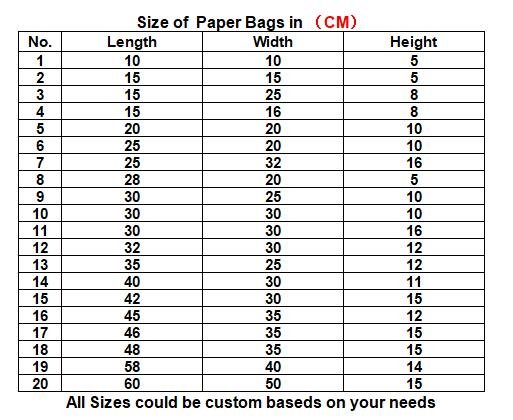
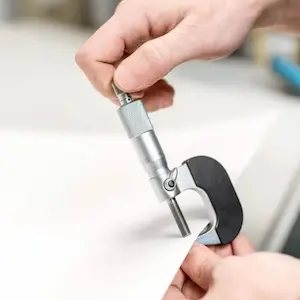
The check is a scale: punch a 100 cm² disc, weigh, multiply to GSM. A 157 GSM order measuring 149 is a −5.1% miss — a reject at incoming. Write the GSM tolerance into the PO, not “about right,” and pair it with standard sizes to match substrate to dimensions.
Lamination Adhesion and Handle Attachment Strength
Two failures destroy bags in the field, not on the line: lamination delamination and handle pull-off. Both are testable.
Lamination adhesion is the film-to-sheet bond, checked by a cross-hatch tape-peel: score a grid, rip the tape, count lifted squares. Matte and gloss films differ, which is why our matte vs gloss lamination guide matters. A weak lamina cracks at the fold in humid DCs.
Handle attachment strength is tested by hanging 2x the intended load for 60 seconds and checking for glue shear or stitch break; die-cut handles use a pull-to-failure jig. The handle style sets the threshold — see our handle types guide.
“We approved 25,000 wine bags, skipped the handle pull test to save a day, and 4% of handles tore under a 2 kg bottle at the client’s line. Rerun and express replacement cost €11,000 and the retailer dropped us next season. Handle attachment strength is now in every PO.” — Marco, QC manager at a Munich gifting importer, March 2026
| Handle type | Test | Pass (typical) | Common failure |
|---|---|---|---|
| Twisted rope | Hang 2x, 60s | No shear, no slip | Starved knot glue |
| Ribbon / woven | Hang 2x, 60s | No seam split | Skipped stitch |
| Die-cut | Pull-to-failure | ≥ 1.5x rated | Tear at radius |
| Cord + eyelet | Hang 2x, 60s | No pull-through | Shallow crimp |
AQL Sampling: How Many Bags Do You Actually Check
You cannot inspect all 40,000 bags, so paper bag quality control uses Acceptable Quality Limit (AQL) sampling per ISO 2859-1 — the worst tolerable defect rate, with a statistically sized random sample deciding accept or reject.
| Level | AQL (major) | Sample (lot 40k–150k) | Use |
|---|---|---|---|
| Tight | 1.5 | ~500 | Luxury / cosmetic |
| Standard | 2.5 | ~500 | Promotional retail |
| Loose | 4.0 | ~315 | Internal use |
AQL 2.5 does not mean “2.5% bad is OK.” It means if defects in the sample exceed the accept-number, the lot fails. For 50,000 units at AQL 2.5, level II inspects 500; more than 21 major defects fails the lot. The ISO tables are published at iso.org. AQL is about risk, not permission to ship defects.
“Our first China order came back ‘passed’ with a 9% mis-print rate — the factory used AQL 6.5 on a cosmetic brief needing 2.5. We reset the AQL in the instruction, used a third party, and the next shipment had two defects in 800. The number on the spec sheet is the whole game.” — Priya, sourcing lead at a Mumbai cosmetics brand, January 2026
Defect Classification: Critical, Major, Minor
Define defect classes in writing or the factory decides — always more generously than your retailer.
| Class | Definition | Examples | Action |
|---|---|---|---|
| Critical | Safety / legal / usability | Toxic ink, handle detaches, wrong label | Reject lot |
| Major | Visible, hurts saleability | Mis-registration >0.5 mm, peel, wrong PMS | Repair/reject per AQL |
| Minor | Cosmetic | Slight scuff, minor carton mark | Accept within limit |
A single critical defect can reject the whole lot regardless of AQL; minor defects are absorbed by the plan. Write the classes into the PO with the AQL, and keep documents per our manufacturer certification checks as dispute evidence.
Third-Party Inspection and Loading Supervision
A factory report is not independent. Above ~$5,000 FOB, a third-party inspection by a neutral firm (SGS, Bureau Veritas, Intertek, or an AQSIQ-registered inspector) working to your instruction is standard — they issue a report with photos. The step buyers forget is loading supervision: confirm the inspected cartons are the ones loaded, count matches the packing list, stack protects handles, and the container is clean and dry. A third party plus loading supervision close the two gaps a factory report never covers. Firms like sgs.com publish service scopes to benchmark against your supplier.
“We paid for pre-shipment inspection, passed clean, then the factory topped up the container with a second un-inspected batch to hit a deadline. Loading supervision caught 6,000 unapproved bags mid-load. Without it, they’d have been on a boat.” — Daniel, owner of a Sydney boutique retail chain, February 2026
A Practical QC Checklist and What Inspection Costs
Paper bag quality control fails most often because nobody wrote the checklist. Use this one:
| # | Checkpoint | Method | Pass |
|---|---|---|---|
| 1 | GSM vs PO | Cutter + scale | ±5% (±3% premium) |
| 2 | Registration | 10x loupe | ≤ 0.5 mm |
| 3 | Color vs PPS | Pantone / spectro | Within tolerance |
| 4 | Lamination | Cross-hatch peel | ≤ agreed % lift |
| 5 | Handle | Hang 2x, 60s | No shear |
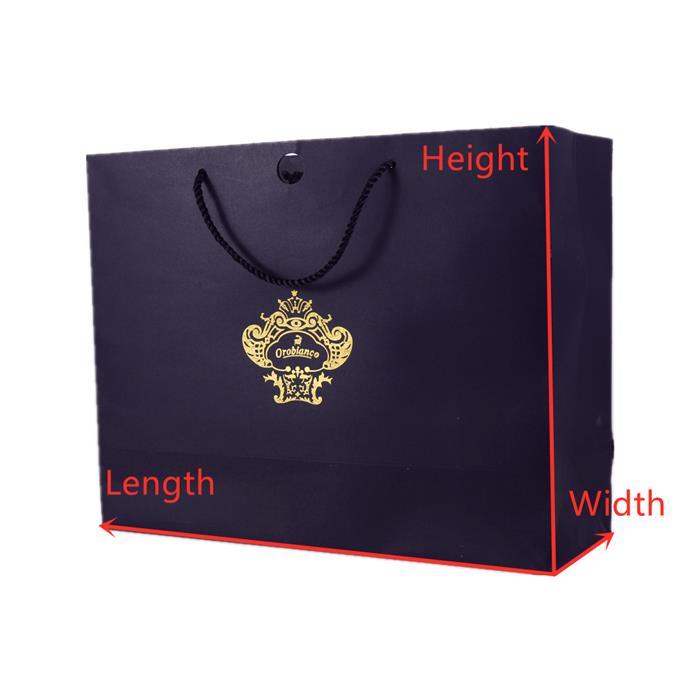
| 6 | Dimensions | Caliper | ±2 mm |
| 7 | Carton count | Physical | Matches list |
| 8 | Marks / labels | Visual | Match PO |
| 9 | Cert docs | Document | CoC valid |
Hand it over before production, not after — it is also your evidence if a dispute reaches a supplier Q&A. On cost: full third-party plus loading supervision runs $600–$800 on a $20,000 FOB order (0.3–1.0% of value) against $2,000–$8,000 chargebacks — a 3–10x return before the saved relationship. Book the inspector when you confirm the window, not the day before; slots track manufacturing lead time.
Tying Quality Control Into Your Commercial Terms
Quality control is only enforceable if the contract backs it. Write the AQL, defect classes, GSM tolerance, and handle-strength test into the PO and inspection instruction. Tie final payment to a clean inspection — our supplier payment terms guide shows how a balance held until pre-shipment pass gives real leverage. Confirm the incoterm, because responsibility shifts with it: under FOB/CIF/DDP, know whether you or the supplier owns the pre-shipment check and loading supervision. This is the operating system that keeps a custom order from becoming a container of rejects.
Paper Bag QC Inspection: The Random-Start Sampling Method
A paper bag qc inspection lives or dies on the sampling plan. Instead of pulling the top ten bags off the pallet, use a random-start method: pick a starting carton number from a random table, then sample every nth carton until you reach the AQL figure. For a 10,000-bag order at AQL 2.5 Major, that is 200 bags; at AQL 1.0 it is 315. A proper paper bag qc inspection records the carton number for every bag checked, so a defect can be traced to one print run. Set the plan inside your paper bag quality control procedure and write the AQL into the PO. Without a random start, a paper bag qc inspection rewards the supplier who hides the bad cartons at the back. Review the sampling plan before every run, because a paper bag quality check on the wrong sample size gives false confidence. Ask the factory to photograph the pulled cartons with their numbers visible, so a process control catching trigger can be tied to one press hour. A careful bag quality control factory will keep the sampled bags until the batch ships, which makes any later dispute easy to settle.
Paper Bag Quality Check: Handle Pull and Load Tests
The failure points on a paper bag are few and testable. A paper bag quality check should include a handle pull test at three times the rated load, a bottom-seam burst test, and a filled drop from 800 mm. For a kraft bag rated to 5 kg, pull the handle at 15 kg for 30 seconds; a torn patch or a lifted rivet fails. A paper bag quality check also measures GSM with a die-cut sample, because a 120 gsm bag that reads 105 gsm is weaker than quoted. Run these tests inside your paper bag quality control gate at pre-shipment, and push process control catching back to the press so defects never reach final pack. Fix a written pass line for each test, and let process control catching trigger a re-check of the whole batch, not one bag. Log the numbers, because a paper bag quality check without recorded figures cannot support a claim later. Add one final gate: weigh ten filled bags after a 48-hour soak, because a seam that holds dry can fail damp. When a handle pull fails, quarantine the whole carton, not the single bag, since handle attachment runs in a batch.
Bag Quality Control Factory: Signing Off the Golden Sample
The signed sample is the only bag that matters when a dispute starts. A bag quality control factory should seal a golden sample of the approved bag, sign and date it, and keep one copy on each side. A bag quality control factory then judges every production run against that sample for colour, GSM, handle strength, and size. Your paper bag quality control process should state that any run more than 2 ΔE from the golden sample stops for review. Ask the factory to store the golden sample away from light and humidity, because a faded reference misleads everyone. When you scale to a second bag quality control factory, send the same golden sample or a colour-matched twin. Tie process control catching to the golden sample and the three gates, and a paper bag quality control system becomes repeatable across runs and across suppliers. A well-run paper bag qc inspection at pre-shipment then only has to confirm the sample still matches, which keeps the check short.
Conclusion
Paper bag quality control is a system, not a stamp. Build three gates — incoming, in-process, pre-shipment — around a signed PPS, set a written AQL and defect classification, and test the four failure points: print registration, GSM tolerance, lamination adhesion, handle attachment strength. Add third-party inspection and loading supervision for any serious order, and tie it to your PO, payment terms, and incoterm. The inspection fee is a rounding error next to a chargeback or a lost retailer. Spec it, write it, enforce it — then the container that shows up is the one you approved.
Target Word Count: ~2,000 words (body)
Author: SEO Content Team
Updated: 2026-07-24
-
1. What does a paper bag quality control inspection actually check?
A paper bag quality control inspection verifies the shipped bags against the sealed pre-production sample and the purchase order: GSM and substrate, print registration and color, lamination adhesion, handle attachment strength, dimensions, carton count and labeling, and any certification paperwork. It uses AQL sampling to decide, from a random sample, whether the lot is accepted or rejected.
-
2. What AQL level should I set for custom printed paper bags?
For general promotional or retail bags, AQL 2.5 for major defects is the standard commercial level. For luxury or cosmetics retail where appearance is sold, tighten to AQL 1.5. Set AQL 4.0 only for internal or non-resale use. Always define the AQL and the defect classes in writing before production; the number on the spec sheet determines the outcome.
-
3. What is the difference between incoming, in-process, and pre-shipment inspection?
Incoming inspection checks raw materials (paper, handles, ink) before printing. In-process (inline) inspection pulls samples during the run to catch registration drift, adhesion starvation, and handle variance while they are still cheap to fix. Pre-shipment inspection happens after packing and confirms the finished, cartoned lot matches the PPS and PO. The three gates catch different defect classes at increasing cost if missed.
-
4. How is handle attachment strength tested?
Handle attachment strength is tested by hanging a calibrated weight - typically 2x the intended load - from the handle for about 60 seconds and checking for glue shear, stitch split, or eyelet pull-through. Die-cut handles are tested on a pull-to-failure jig to a minimum of 1.5x rated load. The pass threshold depends on handle type and should be written into the PO.
-
5. What counts as a critical defect in paper bag QC?
A critical defect is any fault that creates a safety, legal, or usability failure: toxic or non-compliant ink, a handle that detaches under rated load, or wrong language on a regulated label. A single critical defect can reject the entire lot regardless of the AQL level, because it is not governed by the sampling plan.
-
6. Should I use a third-party inspection or trust the factory?
For any order above roughly $5,000 FOB, use a third-party inspection by a neutral firm working to your instruction, not the factory's. Pair it with loading supervision so the inspected cartons are the ones actually loaded. A factory's own report is useful but not independent, and it will not catch a mixed or substituted batch at the container.
Conclusion
Paper bag quality control is a spec decision, not a price decision. Fix the structure, approve a real sample, and hold the supplier to the numbers on the PO — then the pack does its job before anyone reads the copy. Compare custom printed paper bags, custom paper boxes and packaging by industry to see what fits your product, or email sales@allenboxes.com for a quote on a 100-piece run.
Liverson Li
Hello, I'm Liverson, co-founder of Allenboxes.com. We run a packaging factory in Dongguan. Custom printed paper bags, boxes, pouches, hang tags and cards, made here since 1998. We're not the cheapest and not the biggest. We're the factory that takes a 100-piece order seriously. Email me freely for more details!
Why Your Quote Jumped After the Factory Reviewed Your Artwork
Your quote can jump after artwork review. Learn how bleed, spot colour, foil and die-cuts change price, and how to lock a file-reviewed quote before approval.
Stopping Production After You Spot an Error
Stop production after error found using a confirmation gate. Learn who pays, how to issue a stop order, and how to cap loss before the entire run prints.
Why Your Reorder Looks Different From Your First Batch
A reorder different from first batch traces to paper, ink and machine drift between runs. Sealed golden samples and frozen specs keep repeat orders consistent.
Custom Bubble Mailers: Poly Padded Shipping Guide (2026)
Source custom bubble mailers in bulk: poly padded shipping bags with bubble bonding, self-seal strips, opacity and a buyer QC checklist for shipping.
Why One Box Has Three Different MOQs (Print, Structure, Finish) (2026)
See why one box shows three different MOQs for print, structure and finish. Learn to read process-level minimums and plan your true reorder quantity.

Custom Envelope Liners & Wax Seals: Cutting, Adhesion & Mail Durability
Source custom envelope liners and wax seals: liner cut and adhesion, self-adhesive versus real wax for volume, and how seals survive the mail when mailed.