
Luxury jewelry packaging is the first impression a high-value piece makes — the box opens before the diamond does, and the interior decides whether the buyer trusts the brand. When a buyer searches “luxury jewelry packaging,” they are protecting a product that tarnishes, scratches, and loses perceived value from a weak unboxing. Silver needs anti-tarnish foam; a ring needs a recess that holds it still; a watch needs a cushion that does not crush the crown. This guide covers anti-tarnish materials, velvet and foam interiors, magnetic closures, and the rigid-box specs that keep a precious item pristine from the workshop to the wrist in 2026.
Every spec below comes out of our own plant in Dongguan — see Allen Paper Products for the full capability list.
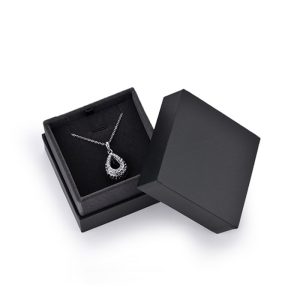
Why the Interior Is the Product
For jewelry, the insert is not padding — it is the display and the protection. A loose ring in a velvet box arrives scratched; a silver chain on bare board arrives tarnished; a watch on flat foam arrives with a pressed crown. The interior material decides all three outcomes:
- Anti-tarnish (TT) foam: absorbs sulphur compounds that blacken silver.
- Velvet (velour) insert: soft cradle, premium touch, hides lint.
- EVA / PU foam: moulded recess, shock and scratch control.
- Satin or silk wrap: luxury surface, less protective than foam.
A luxury jewelry packaging spec that names the interior material protects the piece; one that says “soft insert” leaves the outcome to chance. The box is the product’s first 10 seconds, and the interior is where those seconds are won or lost.
For the related spec, see custom printed paper bags — same board grades, same tolerances.
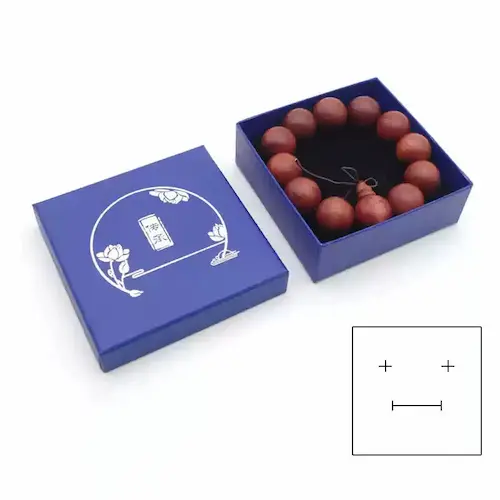
Anti-Tarnish Foam: How It Works
Silver and low-karat gold tarnish when sulphur in the air reacts with the metal. Anti-tarnish (often “tarnish-tab” or treated) foam contains a compound that traps those sulphur vapours, slowing blackening for months inside a sealed box. Spec it as:
| Interior | Tarnish control | Scratch control | Best for |
|---|---|---|---|
| Anti-tarnish foam | High | Medium | Silver, chains |
| Velvet on board | None | High | Rings, sets |
| EVA moulded | None | Very high | Watches, odd shapes |
| Satin wrap | Low | Low | Gifting, display |
Anti-tarnish foam is the right call for silver and forany piece stored sealed for weeks. It is not a polish — it slows tarnish, it does not remove it — so the piece should ship clean. Name “anti-tarnish treated” in the PO; a plain grey foam labelled “protective” does nothing for silver.
For the related spec, see custom paper boxes — same board grades, same tolerances.
For the underlying standard, see FSC chain-of-custody certification.
Velvet and the Premium Touch
Velvet (velour) wrap over a firm board gives the soft, dense cradle that reads luxury and holds a ring or pendant without movement. The variables:
- Velvet colour: black and cream are the safe luxury defaults.
- Board backing: firm, not floppy, so the piece sits proud.
- Logo deboss: subtle brand mark on the lid interior.
- Lint grade: low-shed velvet so the piece stays clean.
A velvet interior over floppy board sags and the ring rolls — the opposite of luxury. Spec a rigid backing and a low-lint velvet so the cradle holds shape and the piece arrives as shown. The velvet is the feel; the board is the structure that makes the feel real.
For the related spec, see packaging by industry — same board grades, same tolerances.
Magnetic Closure: Strength and Durability
The magnetic closure is where luxury jewelry packaging either feels premium or feels cheap. A weak magnet drifts open in transit; a strong one needs two hands and risks crushing a delicate piece. Spec:
- Magnet grade: named pull force (e.g., N rating).
- Alignment: centred so the lid seats flush.
- Reinforced corner: magnet area glued, not just tucked.
- Hidden magnet: no exposed metal to scratch.
A magnetic closure jewelry box with a named pull force and a reinforced corner stays shut through courier handling and opens with one confident motion. One with an unnamed magnet and a tucked seam drifts and scuffs. Name the pull force in the PO so the closure is tested, not guessed.
For the related spec, see our packaging factory — same board grades, same tolerances.
For the underlying standard, see the Fibre Box Association.
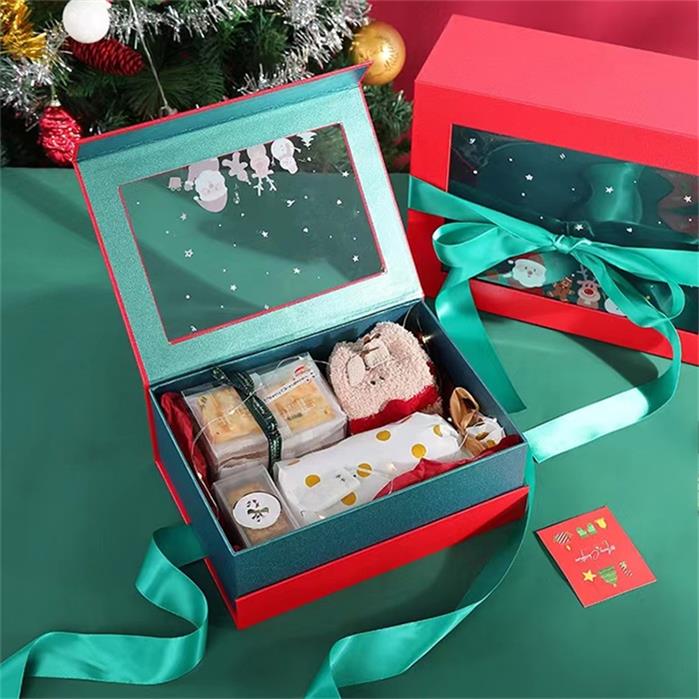
Rigid Box Construction for High Value
Luxury jewelry lives in a rigid box (wrapped board, not folded carton) because rigidity holds the insert and the closure precisely:
- Wrapped rigid: greyboard wrapped in paper or fabric, premium.
- Drawer (matchbox) style: slide-open, high drama.
- Book-style hinge: lid folds back, display feel.
- Two-piece: base and lid, simplest rigid.
A rigid jewelry gift box with a wrapped greyboard and a recessed insert presents like a boutique, not a mailer. The wrap material (linen, leatherette, coated paper) sets the tier; the greyboard weight (usually 1000–1500 gsm) sets the sturdiness. Name both in the PO so the box feels substantial, not hollow.
For the underlying standard, see ASTM International test standards.
RFID and Security for High-Value Items
For high-value pieces, some buyers add RFID-blocking or tamper features:
- RFID-blocking lining: stops skim of any embedded tag.
- Tamper-evident seal: shows if opened.
- Serialised insert: matches piece to box.
- Reinforced corners: survive shipping if mailed.
RFID-blocking jewelry boxes are a niche but growing request for pieces with embedded chips or for VIP gifting where discretion matters. A luxury box with a hidden RFID lining protects the data without changing the look. Name it only if the piece carries a tag; otherwise it is cost with no benefit.
Wholesale MOQ and Lead Time
Rigid jewelry boxes are wrapped, not folded, so they cost more and tool slower:
- Short-run: 500–1,000 units, 2–3 weeks, higher per-unit.
- Offset / wrap line: 3,000+ units, 4–6 weeks, lower per-unit.
- Custom insert tooling: adds 1–2 weeks for moulded EVA.
Pricing drops above 3,000 units as the wrap and board spread across the run. A custom anti-tarnish or moulded insert adds tooling but lifts perceived value enough to justify it on premium lines. Keep the insert dieline as a fixed asset so reorders skip tooling and ship faster.

Drawer vs Book-Style Reveal: Which Feels Premium
The opening motion is half the luxury feel. A drawer (matchbox) style slides open with a satisfying resistance and reveals the piece in a fixed cradle — high drama, good for rings and watches. A book-style hinge folds the lid back so the piece is presented at an angle, like a display — good for pendants and sets. The drawer needs a precise wrap and a snug fit or it feels loose; the book style needs a clean hinge glue or it sags. Pick the reveal by the piece: a watch wants the drawer’s stable cradle, a necklace wants the book’s display angle. Name the style and the fit tolerance in the PO so the motion feels engineered, not accidental, and the unboxing reads as a deliberate ritual rather than a carton that happens to open.
Mini Story: The Tarnished Silver Set
A brand shipped sterling sets in velvet-lined boxes with plain grey foam and no tarnish treatment. By the time the retailer opened them three weeks later, the chains had blackened at the clasp; the retailer returned the line. The brand switched to anti-tarnish foam in the same velvet box, kept the look, and the tarnish stopped. The fix was a foam spec, not a redesign, and it was named in the PO the second time. The first PO had said “soft insert”; the second said “anti-tarnish treated.” The difference was a returned line.
Mini Story: The Drifting Lid
A watch brand used a magnetic closure with no named pull force to save cost. In courier transit the lids drifted open, the watches slid, and two crowns bent against the foam. The brand specified a rated magnet with a reinforced corner, kept the same box shape, and the drift stopped. The watches arrived with crowns intact. The magnet cost pennies more per box; the bent crowns cost a repair and a complaint. The lesson: name the pull force, or the lid decides for you.
How to Brief a Factory for Jewelry Boxes
A luxury jewelry packaging brief must name the interior and the closure:
- Piece type and dimensions stated.
- Interior material named (anti-tarnish / velvet / EVA).
- Closure type and magnet pull force.
- Rigid board weight and wrap material.
- Logo and finish (deboss / foil) specified.
- Security feature (RFID / tamper) if needed.
A luxury jewelry packaging supplier that fills all six is building a box that presents and protects. One that leaves the interior blank is building a return risk.
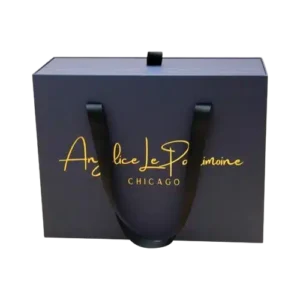
PO Checklist for Jewelry Boxes
- [ ] Piece type and dimensions stated
- [ ] Interior material named (anti-tarnish / velvet / EVA)
- [ ] Closure type and magnet pull force specified
- [ ] Rigid board weight and wrap material listed
- [ ] Logo and finish (deboss / foil) specified
- [ ] Security feature (RFID / tamper) if needed
- [ ] MOQ and ex-factory date in contract
Luxury Jewelry Packaging Summary
Luxury jewelry packaging wins in the interior and the closure. Pair anti-tarnish foam for silver with velvet on a rigid backing for rings, name a rated magnetic pull force so the lid stays shut, and wrap a substantial greyboard so the box feels boutique, not mailer. Buyers who name the interior material, the magnet force, and the board weight before they quote get boxes that present like a flagship and protect like a vault; buyers who order “soft insert” get a cradle that scratches, tarnishes, or drifts. Keep the spec in your packaging template so every reorder repeats the same luxury numbers, and the box stops being the reason a piece arrives less impressive than it is. The interior is the product’s first impression; make it intentional, not accidental.
Interior Materials Compared: Velvet, Foam, EVA, Suede, Anti-Tarnish
The insert is where value is protected or lost, and the materials trade feel against function:
| Material | Feel | Protection | Best for |
|---|---|---|---|
| Velvet on board | Premium | Scratch (high) | Rings, pendants |
| Anti-tarnish foam | Soft | Tarnish (high) | Silver, chains |
| EVA moulded | Firm | Shock (very high) | Watches, odd shapes |
| Suede wrap | Luxe | Low | Display, gifting |
| Satin | Smooth | Low | Light pieces |
A luxury jewelry packaging spec that names the interior material protects the piece; “soft insert” leaves the outcome to chance. Silver wants anti-tarnish foam; a ring wants velvet on a rigid backing; a watch wants a moulded EVA recess that holds the crown. Mixing is fine — a velvet cradle over anti-tarnish foam gets both the look and the protection. Name the layers so the box does both jobs at once.
The Tarnish Science: Why Silver Oxidises and How Treatment Helps
Silver tarnish is a chemical reaction: sulphur compounds in the air (from pollution, rubber, wool) bond with the metal and form silver sulphide — the black film on a neglected chain. The reaction is slow in a dry, sealed box and fast in a humid, sulphur-rich one. Anti-tarnish (treated) foam contains a compound that traps those sulphur vapours, starving the reaction for months inside a closed lid. It slows tarnish; it does not remove existing tarnish, so the piece must ship clean. For sterling and low-karat gold stored sealed for weeks, name “anti-tarnish treated” in the PO — a plain grey foam labelled “protective” does nothing for silver and the retailer opens a blackened line three weeks later.
Unboxing Experience Design: Engineering the Reveal
Luxury is a sequence, not a box. The reveal should be deliberate: the magnet seats with one confident motion, the lid lifts to show the piece in a fixed cradle, and the interior colour frames the product. Small choices decide it:
- A recessed insert keeps the piece centred, not rolling.
- A low-lint velvet keeps the surface clean, not fuzzy.
- A centred magnet keeps the lid flush, not drifting.
- A subtle deboss (not a loud logo) signals confidence.
A luxury jewelry packaging box that engineers these beats one that hopes they happen. The reveal is the brand’s 10 seconds; design it like a ritual — drawer slide for rings and watches, book hinge for pendants and sets — and the unboxing reads as intention, not accident.
Closure Types: Magnetic, Ribbon, Drawer — Cost vs. Feel
The closure sets the tone and the cost. Magnetic is the everyday luxury default; ribbon tie reads ceremonial but loosens in transit; a drawer is the highest-drama reveal but needs the tightest wrap tolerance.
| Closure | Feel | Cost | Risk |
|---|---|---|---|
| Magnetic | Premium, easy | Mid | Weak magnet drifts |
| Ribbon tie | Ceremonial | Low–Mid | Loosens in post |
| Drawer | High drama | Higher | Loose if wrap slack |
| Book hinge | Display | Mid | Sag if glue weak |
Name the closure and, for magnetic, the pull force, so the feel is engineered and the seam holds. A magnetic closure jewelry box with a rated magnet and a reinforced corner stays shut and opens clean; a ribbon that loosens or a drawer that rattles reads cheap no matter the board. Pick the closure by the piece and the channel, and the box presents like a flagship instead of a mailer. The closure also interacts with the rest of the build: a drawer needs the wrap tolerance tight or the slide feels loose, and a magnetic lid needs the corner glued, not tucked, or it splits on the shelf. These are not finishing details — they are the difference between a box that reads boutique and one that reads like a carton with a logo. Buyers who name the closure, the pull force, and the wrap tolerance together get a unit that presents like a flagship on every opening; those who leave the closure to the factory get whatever the line defaulted to that week. The unboxing is the brand’s first 10 seconds, and the closure is what delivers it — so spec it like the product it protects, because that is exactly what it is. A box that opens with a confident, single motion tells the buyer the brand sweats the details they cannot see, and that impression outlasts the price tag.
Luxury Jewelry Packaging Wholesale: Unit Economics at Volume
At volume the price curve bends around tooling. Luxury jewelry packaging wholesale quotes usually split into material, labour, and one-time die and hot-foil costs. At MOQ 500 the tooling can add 30% to the unit; at 5,000 it nearly vanishes. Ask for both a 500 and a 5,000 piece price on the same spec. A serious luxury jewelry packaging wholesale partner will show where the cost drops—usually the foam insert and the wrap labour, not the board.
Luxury Jewelry Packaging Supplier: Sampling and Trust Signals
Judge a luxury jewelry packaging supplier by the sample, not the website. Request a free DHL sample and a free dieline drawing; serious factories offer both. Check the lid fit, the magnet strength, and whether the wrap bubbles at the corners—those three faults expose cheap production. A luxury jewelry packaging supplier should also name the anti-tarnish material and its test data. Since 1998 we have served 50+ brands, and it is the sample, not the pitch, that wins the reorder.
Luxury Jewelry Packaging Manufacturer: In-House Control and Lead Time
A true luxury jewelry packaging manufacturer keeps printing, foiling, magnet insertion, and wrapping in-house. Outsourcing any step adds 5–10 days and hides defects between vendors. Ask for monthly rigid-box capacity and a realistic lead time: 15–20 days for a printed rigid box is normal, plus sea freight. A luxury jewelry packaging manufacturer that quotes in-house QC with a named inspector protects a launch date better than the lowest price.
Luxury Jewelry Packaging Bulk: Scaling Without Losing the Finish
Luxury jewelry packaging bulk runs fail on the finish, not the structure. After a 5,000-piece order, re-check magnet pull strength, foil edge sharpness, and corner wrap on a 30-piece sample each quarter. Humidity in storage can swell board and drift the lid gap, so keep stock below 60% RH. A luxury jewelry packaging bulk plan should include a locked reference sample and a stated ±0.5 mm insert tolerance. Consistency at volume is what keeps a premium brand premium.

-
1. What is anti-tarnish foam in jewelry boxes?
Anti-tarnish foam contains a compound that traps sulphur vapours in the air, slowing the blackening of silver and low-karat gold inside a sealed box. It slows tarnish; it does not polish, so the piece should ship clean. Name 'anti-tarnish treated' in the PO for silver.
-
2. Which interior is best for a ring or pendant?
Velvet wrapped over a firm board cradles a ring or pendant without movement and reads luxury. The board must be rigid, not floppy, or the piece rolls. A low-lint velvet keeps the piece clean. For odd shapes, a moulded EVA recess holds better than velvet.
-
3. How strong should a magnetic closure be?
Spec a named pull force so the lid stays shut in transit but opens with one confident hand. A weak magnet drifts open; an over-strong one needs two hands and can crush delicate pieces. Reinforce the magnet corner so the seam does not split.
-
4. What rigid board weight suits luxury boxes?
Greyboard of 1000–1500 gsm gives a substantial, boutique feel; the wrap material — linen, leatherette, or coated paper — sets the tier. Name both in the PO so the box feels solid, not hollow. A lighter board reads cheap no matter the wrap.
-
5. Do I need RFID-blocking jewelry boxes?
Only if the piece carries an embedded RFID tag or discretion matters for VIP gifting. The lining blocks skim without changing the look. For standard jewelry it adds cost with no benefit, so name it only when the piece actually needs it.
-
6. What MOQ should I expect for luxury jewelry boxes?
Short-run starts around 500–1,000 units in 2–3 weeks at higher per-unit cost; wrap-line above 3,000 units lowers the price over 4–6 weeks. A custom moulded insert adds 1–2 weeks of tooling but lifts perceived value on premium lines.
Conclusion
Luxury jewelry packaging is a spec decision, not a price decision. Fix the structure, approve a real sample, and hold the supplier to the numbers on the PO — then the pack does its job before anyone reads the copy. Compare custom printed paper bags, custom paper boxes and packaging by industry to see what fits your product, or email sales@allenboxes.com for a quote on a 100-piece run.

Liverson Li
Hello, I'm Liverson, co-founder of Allenboxes.com. We run a packaging factory in Dongguan. Custom printed paper bags, boxes, pouches, hang tags and cards, made here since 1998. We're not the cheapest and not the biggest. We're the factory that takes a 100-piece order seriously. Email me freely for more details!
Sustainable Packaging Materials in 2026: A Buyer’s Guide to Kraft, Molded Pulp, Bioplastics, Mycelium and Seaweed
Compare 6 sustainable packaging materials for 2026: kraft, molded pulp, PLA, PHA, glassine, mycelium and seaweed. Costs, barriers, PPWR and EPR rules

Read Packaging Supplier Quotation Documents: 5 Numbers That Decide Cost
Meta Title: Read Packaging Supplier Quotation: 5 Hidden Costs 2026 Meta Description: Read packaging supplier quotation lines like a buyer:
Custom Paper Bag Printing Methods: Offset, Flexo, Screen, Hot Stamping
Compare custom paper bag printing methods, offset, flexo, screen, and hot stamping, on cost, MOQ, color, and lead time, plus how to choose the right one.
How to Choose a Reliable Paper Bag Manufacturer in China
Learn to choose a reliable paper bag manufacturer in China: verify certifications, run factory audits, screen red flags, and build the right vetting scorecard.
FSC Certified Paper Bags: What B2B Buyers Need to Know
FSC certified paper bags: FSC 100% vs Mix vs Recycled, how to verify a supplier’s FSC certificate, logo rules, and the lamination vs recyclability trade-off.
Paper Bag Quality Control: What Inspections Happen Before Shipping
Primary Keyword: paper bag quality control Secondary Keywords: paper bag qc inspection · paper bag quality check · bag quality