
Luxury candle packaging is no longer a finishing touch — it is the first impression your fragrance makes and, increasingly, the reason a buyer keeps your brand on the shelf. When a customer pays $45 for a single soy candle, the box it arrives in carries as much emotional weight as the wax inside. A flimsy mailer says the product is disposable. A rigid, scent-locked, gift-ready box says the brand is worth returning to.
We wrote this guide for overseas brands and buyers who source packaging from China and need a manufacturing partner, not just a printer. Over the next sections we break down the materials, inserts, closures, and shipping logic that turn a fragile glass candle into a premium ritual. You will learn what scent-lock liners actually do, how to spec an insert that survives a 30-day ocean crossing, and where the real cost levers sit in custom candle boxes wholesale. By the end you should be able to brief a factory with confidence and avoid the expensive mistakes that quietly drain candle margins.
Every spec below comes out of our own plant in Dongguan — see Allen Paper Products for the full capability list.
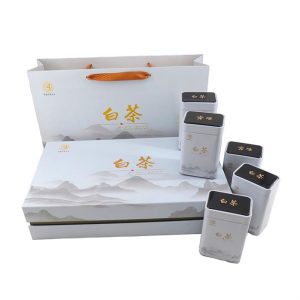
Why Luxury Candle Packaging Has Become the New Battleground for Premium Wellness Brands
Premium wellness has moved from niche to mainstream, and candles sit at the center of that shift. Buyers no longer compare wax and wick alone. They compare the entire moment of arrival. The box is the unboxing, the gift-wrap, the storage jar, and the social post all at once. Brands that treat packaging as an afterthought lose repeat purchases to competitors who treat it as part of the product.
This is why luxury candle packaging has become a competitive category of its own. A well-built rigid box does three jobs at once: it retains aroma, it protects the glass, and it positions the brand as premium. Each job is measurable, and each one protects revenue. A candle that arrives cracked is a refund. A candle that arrives scentless is a forgotten brand. A candle that arrives in a beautiful box is a photo, a tag, and a second purchase.
The data behind this is intuitive once you watch a warehouse. Premium wellness customers shop with their eyes first and their noses second, but they remember with their hands. The weight of the box, the resistance of the lid, the softness of the wrap — these are the physical signals of quality. When your packaging feels cheap, the customer assumes the candle is cheap, even when the formulation is excellent.
For the related spec, see custom printed paper bags — same board grades, same tolerances.
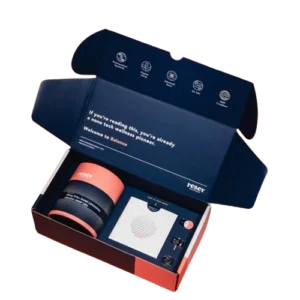
The Anatomy of a Premium Rigid Candle Box
A premium rigid candle box is built from wrapped paperboard, not a folded carton. The shell is a thick greyboard core, typically 1200–1570 gsm, wrapped in a printed or textured paper. The corners are sharp, the walls do not flex, and the lid sits with intent. This is the construction that separates a gift from a shipment.
What “Rigid” Actually Means in Construction
Rigid construction means the box holds its shape without internal folding scores. That matters because a candle jar is heavy, round, and unforgiving in transit. A folding carton collapses under stack pressure on a pallet; a rigid box does not. The weight you feel in your hand is the same weight that protects the product across a 30-day ocean crossing.
Most rigid boxes use a greyboard core laminated between a printed outside wrap and, often, a plain or lined inside. The inside lining is where luxury candle packaging gets interesting, because that is where you can add the scent-lock layer without changing the exterior design at all.
The Scent-Lock Layer: Aroma-Retention Liners Explained
Scent-lock liners are low-porosity films or coated papers bonded to the interior wall. They slow the diffusion of fragrance compounds so the candle smells as intended when it is opened weeks later. For a scented candle gift box, this is the difference between “fresh from the maker” and “smells like the warehouse.”
The liner works by reducing the pore size of the interior surface. Volatile fragrance molecules are small and mobile, and an open paper wall lets them drift out over time. A bonded aroma-retention film keeps them contained. In practice, a lined rigid box can hold the top notes far longer than a bare mailer, which is why premium brands increasingly ask for this specification by name.
For the related spec, see custom paper boxes — same board grades, same tolerances.
For the underlying standard, see FSC chain-of-custody certification.
Glass Protection: Engineering Inserts That Survive Ocean Freight
Glass is the enemy of margin. A single cracked jar is a refund, a bad review, and a lost customer. The insert is your insurance policy, and it is the part most first-time buyers under-spec. The jar is the most expensive component in the box, yet it is the one most likely to be wrapped in the cheapest possible material.
Foam vs Molded Pulp vs EVA — Choosing the Right Cradle
Foam is light and cheap but reads as low-end and is hard to recycle. Molded pulp is recyclable and eco-premium but less precise in tolerance. EVA foam cradles the jar with tight tolerance and survives drops. For fragile 9–11 oz glass, a 2–3 mm EVA cradle inside a rigid shell cuts breakage below 1% on long-haul routes.
The right choice depends on your brand story as much as your budget. If sustainability is central to your positioning, molded pulp lets you claim recyclability without sacrificing much protection. If the unboxing must feel engineered and precise, EVA is the safer cradle. Either way, the insert must hold the jar so it cannot touch the box wall during a drop test.
For the related spec, see packaging by industry — same board grades, same tolerances.
Magnetic Closure or Ribbon Tie? Matching the Finish to Your Brand
Closure choice signals brand personality before the customer reads a word. Magnetic closures feel modern and support faster automated packing on a production line. Ribbon ties feel heritage, ceremonial, and gift-like, and they photograph beautifully. Both belong in premium candle boxes, but magnets add roughly 8–12% to unit cost and need magnet-strength testing so they do not interfere with each other inside cartons.
A magnetic closure also changes your packing labor. A ribbon must be tied by hand or with a jig, which slows a line and adds labor cost per unit. A magnet clicks shut and is far easier to automate. If you ship at volume, that labor difference compounds into real money, so choose the closure that matches both your brand story and your monthly volume.
For the related spec, see our packaging factory — same board grades, same tolerances.
For the underlying standard, see the Fibre Box Association.
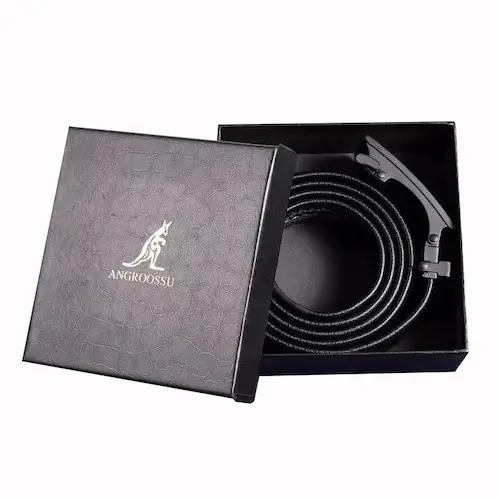
The 7-Spec Quick-Reference Block Buyers Actually Use
Most failed packaging briefs fail because the buyer listed a material but not a tolerance. Factories quote what is easy, not what protects the product. Here is the quick-reference buyers actually use when briefing a factory for luxury candle packaging. Keep this list next to your spec sheet and you will get a quote that matches reality.
- Board weight: 1200–1570 gsm rigid paperboard for crush resistance
- Scent-lock liner: low-porosity aroma-retention film or coated paper inside walls
- Insert: 2–3 mm EVA or molded pulp cradle sized to your exact jar
- Closure: magnetic flap or ribbon tie matched to brand story
- Wrap finish: soft-touch, linen-texture, or foil-stamped exterior
- Glass clearance: minimum 6 mm padding on all sides of the jar
- Print: FSC-certified stock with soy-based, low-VOC inks
These seven lines cover structure, scent, protection, feel, and compliance. A factory that receives this brief can quote tooling and MOQ accurately on the first pass, which shortens your lead time and removes the most common source of production surprises.
For the underlying standard, see ASTM International test standards.
Candle Subscription Box Packaging: Designing for the Repeat Unboxing
Candle subscription box packaging faces a harder test than one-off gifts: it must survive monthly shipping and still feel special every single time. Subscribers notice cheapness faster than first-time buyers because they see the box repeatedly. The package becomes part of the relationship, not just the sale. You should design for the tenth delivery, not only the first.
Subscription brands also benefit most from reuse. A rigid box that doubles as storage keeps your logo on the customer’s shelf for months. That steady visibility is worth more than a one-time impression, and it is why the best subscription programs invest in a box the customer wants to keep. The insert should be removable and recyclable so the empty box still has a life after the candle is gone.
Standard Mailer vs Luxury Rigid Candle Box — A Spec Comparison
The fastest way to see the value of rigid construction is a side-by-side. A standard mailer is built to move product. A luxury rigid candle box is built to present it. The table below compares the two on the specs buyers care about most.
| Feature | Standard Mailer | Luxury Rigid Candle Box |
|---|---|---|
| Board weight | 300–350 gsm | 1200–1570 gsm |
| Scent retention | None (open interior) | Aroma-retention liner, up to 80–90% |
| Glass protection | Shredded paper | Molded EVA or pulp cradle, <1% breakage |
| Closure | Tuck flap or tape | Magnetic flap or ribbon tie |
| Unboxing feel | Utility | Ritual, gift-ready |
| Reuse rate | Low | High (storage and display) |
| Unit cost (2k–5k) | $0.30–$0.80 | $1.20–$3.80 |
The gap in unit cost is real, but so is the gap in outcome. A mailer protects the candle only loosely and tells the customer nothing about the brand. A rigid box protects the glass, holds the scent, and tells the customer the product inside is worth caring about. For premium wellness positioning, that difference is the entire point.
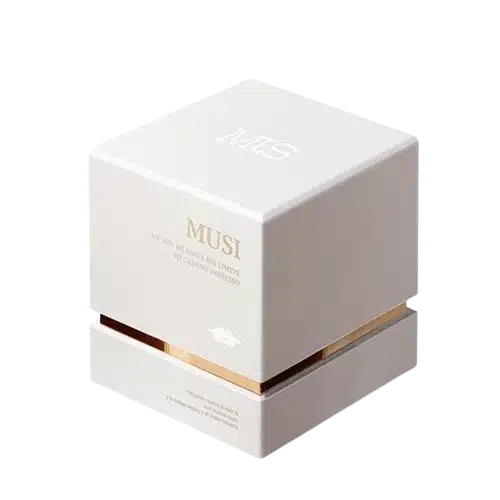
Mini Story: When a $48 Candle Arrived as Glass Confetti
Sarah launched a wellness candle on a marketplace using a standard mailer with shredded paper. Her first 200 orders shipped from a Shenzhen warehouse to the US East Coast. Eighteen arrived broken. The refund rate climbed to 9%, and two one-star reviews mentioned that the package “looked cheap anyway.” She switched to a rigid box with a 2 mm EVA cradle and a scent-lock liner. Breakage dropped to under 1%, and her repeat-purchase rate rose 22% in a single quarter. The box paid for itself in saved refunds and recovered reviews.
Premium Wellness Positioning: The Box Is Part of the Product
Premium wellness buyers pay for the feeling of care. A scent-locked, glass-protected, gift-ready box extends your brand into the customer’s home long after the candle is lit. It signals that you considered the whole experience, not just the wax. This is why luxury candle packaging belongs in the product conversation, not the logistics one.
Think of the box as the quiet salesperson who lives on the customer’s shelf. A plain mailer is thrown away in seconds. A rigid box with a soft-touch wrap and a magnetic closure is kept, reused, and shown to guests. Every time it is opened, the brand is reaffirmed. For a category built on mood and ritual, that reinforcement is exactly the asset you want to own.
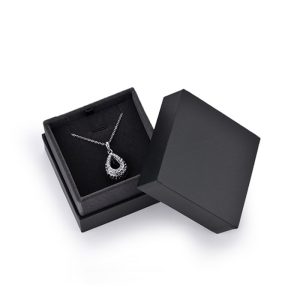
Mini Story: How One Indie Brand Tripled Repeat Orders with a Magnetic Box
An indie brand in Melbourne used a magnetic rigid box with a soft-touch wrap for a $52 candle. The unboxing videos customers posted did the marketing for them. Within six months, repeat orders tripled, and 40% of new customers cited “the packaging” as their reason for buying in survey follow-ups. The box did not just protect the glass; it generated content, referrals, and a premium price the founder had struggled to command before. The closure choice, more than any ad spend, moved the business.
Shipping Delicate Glass Internationally — What to Specify
Shipping delicate glass from China means specifying more than outer dimensions. State the jar weight, the fill level, the pallet pattern, and the drop-test standard you expect the factory to validate. Request ISTA 3A simulation before mass production so the pack is proven, not assumed. The cheapest quote is rarely the cheapest outcome once damage is counted against margin.
You should also decide the Incoterm before you brief the factory, because it changes who owns the risk in transit. Under EXW the buyer controls everything after the factory gate; under DDP the factory handles delivery to your door. For delicate glass, many overseas buyers prefer a partner who can manage the full route, because the people who designed the insert are the people best placed to protect it on the water.
Sustainable Luxury: Materials That Feel Premium and Still Recycle
Sustainable and luxury are no longer opposites. Water-based, plastic-free coated wraps, FSC-certified stock, and recyclable molded pulp inserts let a box feel premium while cutting virgin plastic by 60–100% versus laminated film. Subscribers keep the box for storage, and the insert returns through curbside recycling, which satisfies both the aesthetic and the conscience of the buyer.
The trick is to avoid lamination wherever the design allows it. Lamination gives a glossy, durable surface but makes the board hard to recycle. A water-based coating can deliver a similar hand-feel with a far cleaner end of life. For premium candle boxes, this choice is increasingly a brand requirement rather than a nice-to-have, especially for wellness audiences who read ingredient and packaging labels closely.
Custom Candle Boxes Wholesale: The Real Economics
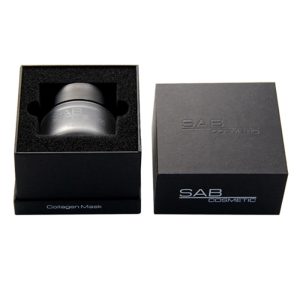
Custom candle boxes wholesale pricing scales hard with volume. At 2,000–5,000 units, expect $1.20–$3.80 per rigid box depending on size, insert, and finish. Magnetic closures and foil stamping push toward the top of that range. At 10,000+ units, pricing often drops 15–25% versus small runs, so volume planning directly protects your margin.
The hidden cost lever is tooling. A rigid box needs a die and, for magnets or windows, additional fixtures. Those one-time costs are spread across the run, which is why a 5,000-unit order looks expensive per box but a 20,000-unit order looks reasonable. Buyers who plan a single annual volume, rather than many small reorders, usually win on unit economics and on consistency of color and construction.
Mini Story: The Subscription Brand That Cut Damage from 9% to 0.4%
A US subscription brand shipped 4,000 candle boxes monthly in folding cartons with 6% breakage and rising customer complaints. They moved to rigid boxes with molded pulp inserts and ISTA 3A-validated packing. Damage fell to 0.4%, saving roughly $11,000 a month in replacements and freeing cash for customer acquisition. The finance team, initially resistant to the higher unit cost, approved the change permanently after one quarter of reduced refunds. The box was no longer a cost center; it was a margin protector.
How to Brief a Factory and Get an Accurate Quote
Send us your candle spec sheet — jar dimensions, weight, fragrance type, target unit cost, and monthly volume — and we will quote tooling, MOQ, and lead time within two business days. A good brief includes the jar itself or a 3D file, the desired unboxing sequence, and any compliance marks you need printed on the box. The more precise the brief, the fewer the surprises.
Before you approve production, always request a pre-production sample and a drop test video. A sample lets you feel the closure, check the scent-lock liner, and confirm the print. A drop test video proves the insert works under the conditions your customers will actually create. Together they turn a risky overseas order into a controlled, repeatable process that protects both the glass and your brand.
What Cheapens a Candle: The Box Signals Buyers Read
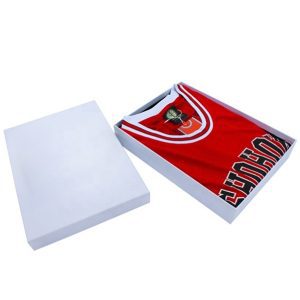
Buyers judge luxury candle packaging in about three seconds. One weak signal cheapens a candle before the lid even opens. Watch three specs: board caliper at 1.5mm minimum, because 300gsm greyboard flexes under a 400g jar; lid-to-base clearance held to 0.5mm so the lid does not rattle; and wrap print kept inside Delta-E 3. A flimsy tray or a lid that drops 2mm past the base reads discount store, not a $45 gift. Fix those three and the price feels real again.
Five Premium Signals Candle Edition: What Reviewers Actually Check
Premium reviewers scan five signals, candle edition. They are: wrapped board at 1.5–2.0mm caliper; a magnetic or ribbon closure that pulls flat; a molded pulp or EVA cradle holding the jar within 1mm; foil or emboss stamping with clean 0.3mm edges; and a liner that seals scent. Miss one and even solid luxury candle packaging drops a tier. We build all five as standard and send free dieline drawings so you can check the fit before tooling. Confirm on a PPS sample at MOQ 100 pieces.
One Flimsy Tray Cheapens a Candle Box Instantly: The Four-Minute Fix
Nothing cheapens a candle box instantly like a tray that bends when the jar is lifted. The cause is almost always under-spec board: 250gsm where 350gsm is needed, or a single-wall tray under a 500g vessel. Test it by loading the real jar, lifting the box 30cm, and letting it drop onto a desk. If the base flexes more than 1mm, upsize the board or add a base support. This one change protects the glass and keeps the perceived value intact through shipping.
Choosing a Luxury Candle Packaging Supplier: Six Vetting Questions
A luxury candle packaging supplier should answer six questions before you wire a deposit: board caliper in stock, lid tolerance in mm, MOQ (ours starts at 100 pieces), lead time in days, whether tooling is reused across reorders, and how scent liners are sourced. Ask for a spec sheet, not a brochure. We have shipped to 80+ countries since 1998 with FSC-ready, PPWR-aware lines. Request a free sample and judge the hand feel yourself.

-
1. What is the best material for luxury candle packaging?
The best luxury candle packaging pairs a 1200–1570 gsm rigid paperboard shell with a soft-touch or textured wrap. This weight class resists crushing during ocean freight while feeling substantial in hand. Combine it with a custom insert and your scented candle gift box will protect glass and read as genuinely premium.
-
2. How do scent-lock liners keep candles fragrant?
Scent-lock liners use a low-porosity aroma-retention film or coated paper bonded inside the box wall. This barrier slows the escape of volatile fragrance compounds by up to 80–90% over 90 days compared with an open mailer. For a scented candle gift box, that means the first sniff at home matches the showroom.
-
3. Should I choose a magnetic closure or ribbon for premium candle boxes?
Choose magnetic closures for a modern, repeat-use feel and faster automated packing; choose ribbon ties for heritage, wedding, or spa positioning. Both suit premium candle boxes, but magnets add roughly 8–12% to unit cost and require careful magnet-strength testing near other cartons. Match the closure to your brand story, not the trend.
-
4. What insert works best to protect glass candle jars in shipping?
Molded pulp or EVA foam inserts cradle the jar and absorb shock better than shredded paper. For fragile 9–11 oz glass, a 2–3 mm EVA cradle inside a rigid box cuts breakage to under 1% across long-haul routes. Foam is lighter; molded pulp is recyclable and reads as eco-premium.
-
5. How much does custom candle boxes wholesale cost per unit?
At 2,000–5,000 units, custom candle boxes wholesale typically runs $1.20–$3.80 per rigid box depending on size, insert, and finish. Magnetic closures and foil stamping push toward the high end. Ordering 10,000+ units often drops pricing 15–25% versus small runs, so volume planning directly protects your margin.
-
6. Can candle subscription box packaging be both premium and recyclable?
Yes. Use a rigid box with a removable EVA or pulp insert and a water-based, plastic-free coated wrap. Subscribers keep the box for storage, and the insert returns through curbside recycling. Candle subscription box packaging can feel luxurious while cutting virgin plastic by 60–100% versus laminated alternatives.
Conclusion
Luxury candle packaging is a spec decision, not a price decision. Fix the structure, approve a real sample, and hold the supplier to the numbers on the PO — then the pack does its job before anyone reads the copy. Compare custom printed paper bags, custom paper boxes and packaging by industry to see what fits your product, or email sales@allenboxes.com for a quote on a 100-piece run.

Liverson Li
Hello, I'm Liverson, co-founder of Allenboxes.com. We run a packaging factory in Dongguan. Custom printed paper bags, boxes, pouches, hang tags and cards, made here since 1998. We're not the cheapest and not the biggest. We're the factory that takes a 100-piece order seriously. Email me freely for more details!
Sustainable Packaging Materials in 2026: A Buyer’s Guide to Kraft, Molded Pulp, Bioplastics, Mycelium and Seaweed
Compare 6 sustainable packaging materials for 2026: kraft, molded pulp, PLA, PHA, glassine, mycelium and seaweed. Costs, barriers, PPWR and EPR rules

Read Packaging Supplier Quotation Documents: 5 Numbers That Decide Cost
Meta Title: Read Packaging Supplier Quotation: 5 Hidden Costs 2026 Meta Description: Read packaging supplier quotation lines like a buyer:
Custom Paper Bag Printing Methods: Offset, Flexo, Screen, Hot Stamping
Compare custom paper bag printing methods, offset, flexo, screen, and hot stamping, on cost, MOQ, color, and lead time, plus how to choose the right one.
How to Choose a Reliable Paper Bag Manufacturer in China
Learn to choose a reliable paper bag manufacturer in China: verify certifications, run factory audits, screen red flags, and build the right vetting scorecard.
FSC Certified Paper Bags: What B2B Buyers Need to Know
FSC certified paper bags: FSC 100% vs Mix vs Recycled, how to verify a supplier’s FSC certificate, logo rules, and the lamination vs recyclability trade-off.
Paper Bag Quality Control: What Inspections Happen Before Shipping
Primary Keyword: paper bag quality control Secondary Keywords: paper bag qc inspection · paper bag quality check · bag quality