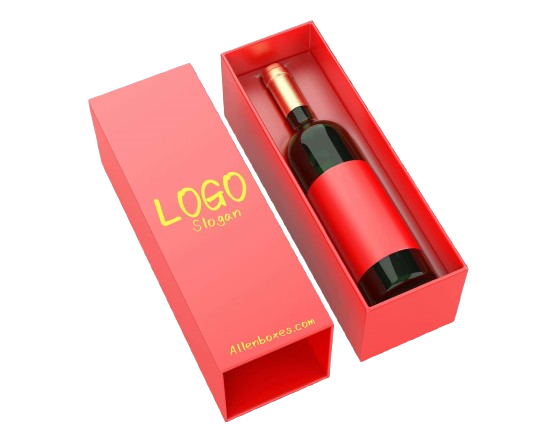
The wine bottle gift box is the package Marco wishes he had specced correctly before his first holiday shipment. He ran a small wine import business and ordered 1,000 printed boxes from a low-cost supplier. They looked sharp at the trade show, but a third of the bottles arrived with damp inserts and a couple had leaked through the base. His freight forwarder rejected the pallet, and the retailer pushed the launch. The lesson: a beautiful box means nothing if the liner is not thermo-sealed and the format is wrong for the bottle count.
Every spec below comes out of our own plant in Dongguan — see Allen Paper Products for the full capability list.
Key Takeaways
- A wine bottle gift box ships safest in single (one bottle) or double (two bottle) formats, with a thermo-sealed liner that locks the glass and captures any leak before it reaches the carton.
- Leak-proof thermo-sealed liners cut transit wine loss to under 0.5% on ISTA-tested runs, versus 3-6% in taped-card inserts.
- Rigid and folding formats span 0.8-2.2 mm board; pick 1.5 mm greyboard for double bottles over 1.3 kg each.
- Shipping compliance means meeting alcohol carrier rules, food-contact board, and ISTA 3A drop performance before the first pallet leaves the factory.
- Request a liner burst and seal sample on every new order, because a quote that omits the liner spec is reserving a cheaper insert.
For the related spec, see custom printed paper bags — same board grades, same tolerances.
Wine Bottle Gift Box Formats: Single vs Double
The most common mistake buyers make is choosing a format by shelf look alone. A single bottle format is the default for DTC gifting, retail promotions, and corporate thank-yous. A double bottle format doubles the glass weight and demands a stiffer base and a divider that will not shear during a tilt. For three or more bottles you usually move to a rigid mailer with molded pulp or EVA, not a folding carton.
The board choice drives both cost and protection. Folding boxes use 300-350 g art paper over 1.0-1.5 mm greyboard; rigid boxes use 1.5-2.2 mm greyboard wrapped in printed paper. Heavier bottles (1.3 kg+) need the upper end, while a 0.75 kg standard bottle is fine on 1.0-1.2 mm board.
| Format | Bottles | Board / liner | Typical weight | Best use |
|---|---|---|---|---|
| Single folding | 1 | 1.0-1.2 mm + taped insert | 0.75-1.0 kg | DTC gifts, retail |
| Single rigid | 1 | 1.5 mm greyboard + sealed liner | 0.9-1.2 kg | Premium, corporate |
| Double folding | 2 | 1.5 mm + divider | 1.6-2.2 kg | Pairs, duos |
| Double rigid | 2 | 2.0-2.2 mm + sealed liner | 2.0-2.6 kg | Luxury sets |
Estimates only; actual figures depend on your specs — request a quote.
For the related spec, see custom paper boxes — same board grades, same tolerances.
For the underlying standard, see FSC chain-of-custody certification.
Leak-Proof Thermo-Sealed Liners
A thermo-sealed liner is a plastic or foil pouch bonded to the insert by heat, not glue or tape. Heat bonding closes the seam at a molecular level, so wine that escapes the cork stays inside the liner instead of wicking into the carton and the outer print. Taped or glued inserts can reopen under pressure and humidity, which is exactly when leaks show up mid-transit.
Mini-story — Daniel’s Leaky Launch. Daniel imported 600 double bottle sets for a hotel group. His first supplier used glued cardboard cradles. On a warm truck leg, two bottles sweated through and the adhesive let go, staining the hotel’s logo print. He switched to a thermo-sealed EVA liner at 0.4 mm and reran an ISTA 3A drop sequence; the second batch arrived with zero leaks. Daniel now treats the liner as a spec line, not a footnote.
Seal quality is measurable. A good liner passes a 48-hour inverted soak with no transfer, and the bond holds past a 2 kg static load. Ask for the seal width (aim 6-8 mm) and the film gauge. For food-contact safety, the inner film should meet FDA food-contact packaging rules, which matters for any bottle that may touch the liner during a leak.
| Liner type | Seal method | Leak rate (ISTA 3A) | Cost index |
|---|---|---|---|
| Taped cardboard | Adhesive | 3-6% | 1.0x |
| Glued insert | Cold glue | 2-4% | 1.1x |
| Thermo-sealed EVA | Heat bond | <0.5% | 1.4x |
| Foil thermo-sealed | Heat bond | <0.3% | 1.7x |
Estimates only; actual figures depend on your specs — request a quote.
For the related spec, see packaging by industry — same board grades, same tolerances.
Shipping Compliance for Wine Boxes
Wine is a regulated liquid. Carriers treat alcohol differently from cosmetics, and a wine box must clear three gates before it ships: carrier alcohol acceptance, food-contact board, and drop performance. Skipping any one of them is how pallets get kicked back at the dock.
The transit test most factories cite is the ISTA 3A protocol, which simulates the drops, vibrations, and low-pressure events a parcel sees. For bottles, you want at least a 10-drop sequence with the carton in mixed orientation and a leak check afterward. A box that passes print QA but fails the drop is still a returns problem. A wine bottle shipping pack supplier can also advise on per-lane limits before you tool up.
Mini-story — Priya’s Compliance Catch. Priya’s team designed a gorgeous rigid wine box but forgot carrier rules on inner bottle count. The forwarder refused the carton because it held two bottles above the per-parcel alcohol limit on that lane. She moved to single bottle formats for that market and reserved the double format for markets where the limit was higher. The fix cost nothing in tooling and saved a cancelled purchase order.
Material sourcing also touches sustainability claims. If you market recycled or FSC board, confirm the certificate chain so the claim survives a buyer audit. Our food-grade box certification guide explains the board tests, and wine bottle shipping pack covers the fill, divider, and tape choices that keep a single bottle stable in a master carton.
For the related spec, see our packaging factory — same board grades, same tolerances.
For the underlying standard, see the EU Packaging and Packaging Waste Regulation (PPWR).
Specifying Your Wine Box with the Factory
Write the liner, board, and test into the purchase order, not just the conversation. A custom wine bottle gift box wholesale run should list board grade, liner film and gauge, seal width, divider material, and the ISTA drop level you expect. Reputable suppliers return a drawing and a sample; if the quote omits the liner spec, assume a cheaper insert is coming.
Buyers often ask how much does a wine box insert cost, and the answer scales with liner gauge, board, and print area; compare the China wine box factory price across at least two mills before you approve. For a clean handoff, use our custom packaging spec sheet template to capture every line, and read cardboard box quote China so the price you compare includes the liner and the test, not just the print. If you are choosing between a folding and a rigid build, the insert choice walks through cradle, divider, and foam options by bottle weight.
For the underlying standard, see the Fibre Box Association.
Your Next Step
A wine gift box lives or dies on the liner and the format, not the print. Stop treating the insert as an afterthought and start specifying board, seal, and drop test on the drawing. Before your next order, read our gift box insert choice guide to pair the right cradle with the right carton, and put the liner spec in writing so what arrives is what protects the bottle.
Work with a factory that returns a sample and a mill-backed board cert, not just a low price. Request a thermo-sealed liner sample on your next run, confirm the ISTA level you need, and you will cut leak returns from a few percent to near zero. That is the difference between a gift that delights and a pallet the forwarder rejects.
-
1. What is a wine gift box?
A wine gift box is a printed carton built to hold one or two bottles for gifting or retail. It pairs a rigid or folding outer with an insert or liner that cradles the glass. A leak-proof thermo-sealed liner captures any spill, while the board grade sets how much stacking and drop load the box survives in transit.
-
2. Which format is better, single or double?
Single bottle boxes suit DTC gifts and retail because they are lighter and cheaper to ship. Double bottle boxes work for pairs and duos but need 1.5-2.2 mm board and a divider that will not shear. Choose by bottle weight and carrier alcohol limits; a 1.3 kg bottle almost always wants the stiffer double rigid build with a sealed liner.
-
3. How does a thermo-sealed liner prevent leaks?
A thermo-sealed liner bonds plastic or foil to the insert with heat, closing the seam at a molecular level. Unlike tape or glue, the bond will not reopen under pressure or humidity. Wine that escapes the cork stays inside the liner, so the carton, print, and outer shipping box stay dry through drops and long warm truck legs.
-
4. What shipping compliance applies to wine boxes?
Wine boxes must clear carrier alcohol acceptance, food-contact board rules, and drop performance such as ISTA 3A. Carriers treat alcohol differently by lane and per-parcel bottle count, so confirm limits before tooling. The inner film should meet food-contact standards, and the carton should pass a drop and leak check before the first pallet ships.
-
5. How do I specify a wine box to a factory?
Put board grade, liner film and gauge, seal width, divider material, and the ISTA drop level in the purchase order. Request a drawing and a sealed sample so the delivered box matches the spec. A quote that omits the liner is quietly reserving a cheaper insert, so confirm the liner line in writing before you approve bulk production.
Conclusion
Wine bottle gift boxes leak proof thermo sealed liners is a spec decision, not a price decision. Fix the structure, approve a real sample, and hold the supplier to the numbers on the PO — then the pack does its job before anyone reads the copy. Compare custom printed paper bags, custom paper boxes and packaging by industry to see what fits your product, or email sales@allenboxes.com for a quote on a 100-piece run.
Liverson Li
Hello, I'm Liverson, co-founder of Allenboxes.com. We run a packaging factory in Dongguan. Custom printed paper bags, boxes, pouches, hang tags and cards, made here since 1998. We're not the cheapest and not the biggest. We're the factory that takes a 100-piece order seriously. Email me freely for more details!
Sustainable Packaging Materials in 2026: A Buyer’s Guide to Kraft, Molded Pulp, Bioplastics, Mycelium and Seaweed
Compare 6 sustainable packaging materials for 2026: kraft, molded pulp, PLA, PHA, glassine, mycelium and seaweed. Costs, barriers, PPWR and EPR rules
Read Packaging Supplier Quotation Documents: 5 Numbers That Decide Cost
Meta Title: Read Packaging Supplier Quotation: 5 Hidden Costs 2026 Meta Description: Read packaging supplier quotation lines like a buyer:
Custom Paper Bag Printing Methods: Offset, Flexo, Screen, Hot Stamping
Compare custom paper bag printing methods, offset, flexo, screen, and hot stamping, on cost, MOQ, color, and lead time, plus how to choose the right one.
How to Choose a Reliable Paper Bag Manufacturer in China
Learn to choose a reliable paper bag manufacturer in China: verify certifications, run factory audits, screen red flags, and build the right vetting scorecard.
FSC Certified Paper Bags: What B2B Buyers Need to Know
FSC certified paper bags: FSC 100% vs Mix vs Recycled, how to verify a supplier’s FSC certificate, logo rules, and the lamination vs recyclability trade-off.
Paper Bag Quality Control: What Inspections Happen Before Shipping
Primary Keyword: paper bag quality control Secondary Keywords: paper bag qc inspection · paper bag quality check · bag quality