
Child-Resistant Custom Mylar Bags: CRCP Certified Compliance Guide
Table of Contents
Child-resistant custom mylar bags are a compliance product first and a branding product second, get the certification wrong and the SKU cannot legally ship. Regulators in the US (CPSC 16 CFR 1700) and the EU (EN 14375) require a child-resistant closure on cannabis and many CBD formats, tested by real children and seniors before the pouch is approved. When a buyer searches “child-resistant custom mylar bags,” they are buying a certified closure system, not a prettyfoil pouch. This guide covers CRCP certification, the closure types that pass, and the wholesale brief lines that keep a compliant bag from becoming a recall in 2026.
Why Compliance Comes Before Print
A child-resistant (CR) pouch must pass a protocol where a panel of children fails to open it within a time limit, and a panel of seniors can open it. The closure, not the print, not the foil, is what is certified. A mylar bag with a standard zipper is decorative packaging that fails the law the moment it holds a regulated product. For cannabis and THC formats, non-compliant packaging is a fines-and-recall event, not a warning. The print and the brand sit on top of a closure that must already be certified, so the CR mechanism is the first spec, not the last.
CRCP Certification: What It Actually Means
CRCP (Child-Resistant Certified Packaging) means the closure passed the relevant standard:
| Market | Standard | Test basis |
|---|---|---|
| United States | 16 CFR 1700.20 | CPSC protocol, child + senior panel |
| European Union | EN 14375 | Child-resistance for liquid refills |
| ASTM D3475 | ASTM guide | Closure design classification |
Certification is per closure design, not per print. A new zipper style or a different bag dimensions can require re-testing, because the opening force changes with the format. A child-resistant custom mylar bags supplier should show the valid certificate for the exact closure and size you order; a certificate for a similar bag is not your certificate. Keep the cert number in the PO and the bulk release.
Closure Types That Pass
The CR closure is usually a press-and-slide or a multi-step zipper:
- Press-to-open slider: squeeze both sides, slide to open. Common, certified.
- Push-and-turn: two motions, higher assurance.
- Double zipper (CR + reseal): child-resistant plus resealable.
- Tin tie / heat seal: used on exit bags, not resealable.
A press-and-slide slider is the wholesale default because it certifies and reseals. The trap is dimension: a smaller pouch can change the squeeze force and void the cert. State the exact bag width and height in the PO so the closure is tested at your size, not the supplier’s sample size.
Mylar Barrier and UV Protection
Mylar (metallised PET) is the film of choice because it blocks oxygen, moisture, and UV, all of which degrade cannabinoids and terpenes. Spec:
- MET PET outer: UV and oxygen barrier.
- ALU foil laminate: maximum barrier for potency retention.
- Opaque print: extra light block for shelf.
- Heat-sealable inner: keeps the content sealed.
A clear window on a cannabis mylar bag lets UV in and can fail a light-exposure clause in some markets. A child-resistant custom mylar bags spec should state opaque or UV-blocking film unless the market permits a window. The barrier protects the product; the CR closure protects the child; both are in the PO.
Exit Bags and the Secondary Layer
Many markets require a certified exit bag, a outer CR bag the product leaves the store in, even if the inner pouch is also CR. The exit bag is usually a thicker press-to-open film:
- Outer exit bag: CR, opaque, often printed with warning.
- Inner pouches: CR mylar with product.
- Double CR: highest compliance, higher cost.
A dispensary that sells a CR mylar pouch inside a non-CR tots bag can still fail the exit-bag rule. Brief both layers: the inner pouch certified, and the exit bag certified to the local rule. Name the rule (state or national) so the factory builds to the right standard, not a generic “compliant” claim.
Wholesale MOQ and Lead Time
CR mylar bags are flexible packaging with a certified closure, so cost is closure plus film plus print:
- Digital / short-run: 1,000–3,000 units, 2–3 weeks, higher per-unit.
- Gravure / flexo: 10,000+ units, 4–6 weeks, lower per-unit.
- New closure certification: adds 2–4 weeks and test fees.
Reordering against a kept, certified closure skips re-testing and ships faster. Redesigning the bag or changing the zipper restarts certification, so brands that lock the closure and only refresh print keep the lowest cost and the valid cert. Plan the closure as a fixed asset across the catalogue.
Senior-Adult Opening Force and Usability
Child-resistance is only half the standard, the same closure must open for a panel of seniors (usually 50–70 years old) within a time limit. A closure tuned so hard that children fail but seniors also struggle fails the senior limb and is rejected. The sweet spot is a two-motion closure (press-and-slide, push-and-turn) with a named force that children cannot manage but adults can. Over-tightening the seal to pass the child panel is the common mistake that fails the senior panel.
Brief the factory for both limbs of 16 CFR 1700.20 and ask for the senior-panel pass data, not just the child-panel fail data, so the pouch is usable as well as compliant and the elderly customer is not locked out of their own product.
Storage, Shelf Life, and the Cert Validity Window
A CR pouch is certified for a closure at a size, and the certificate has a validity window tied to the tested sample. Store pouches away from heat and UV so the metallised film and the adhesive keep their barrier and the closure keeps its force; a pouch aged in a hot warehouse can drift out of spec before it is filled. Track the cert expiry against your reorder date so a fresh run does not ship on a lapsed certificate. For wholesale, keep the closure fixed and the cert current, and reorder against the same certified asset so every batch is covered by a valid number rather than a memory of one, and the SKU stays shippable across seasons.
Mini Story: The Bag That Failed the Panel
A CBD brand ordered mylar pouches with a standard slider and labelled them child-resistant to save the certification fee. A market check pulled the SKU; the closure opened in the child panel within seconds, the brand faced a recall, and the unopened stock was destroyed. The replacement used a certified press-and-slide closure at the exact bag size, passed 16 CFR 1700.20, and shipped with the cert number in the PO. The certification cost less than the destroyed run. The lesson: the cert is the product; the print is the wrapper.
Mini Story: The Window That Failed the Light Rule
A vape brand specified a clear window on CR mylar bags for “shelf appeal.” The market required UV-opaque packaging for the potency claim, and the window broke the rule. The brand switched to opaque metallised film with a printed product illustration instead of a window, kept the certified closure, and passed. The fix was a print change, not a closure change, and the cert stayed valid. The window, not the zipper, was where the compliance died.
How to Brief a Factory for CR Mylar
A CR brief must name the standard, the closure, and the size:
- Market and standard stated (16 CFR 1700.20 / EN 14375).
- Closure type and cert number required.
- Exact bag width and height for the test.
- Barrier film named (MET PET / ALU).
- Exit-bag rule stated if applicable.
- Cert number in PO and bulk release.
A child-resistant custom mylar bags supplier that fills all six is shipping a compliant SKU. One that leaves the standard blank is shipping a recall.
PO Checklist for CR Mylar Bags
- [ ] Market and standard stated
- [ ] Closure type and cert number required
- [ ] Exact bag width and height specified
- [ ] Barrier film named (MET PET / ALU)
- [ ] Exit-bag rule stated if applicable
- [ ] Cert number in PO and bulk release
- [ ] MOQ and ex-factory date in contract
CR Mylar Sourcing Summary
Child-resistant custom mylar bags succeed when the certified closure leads and the brand follows. Pick the press-and-slide or push-turn closure tested at your exact bag size, pair it with an opaque metallised or foil barrier that blocks UV, and state the market standard in the PO so the factory certifies to the right rule. Buyers who name the standard, the closure cert number, and the dimensions before they quote get pouches that pass inspection and protect children; buyers who order “compliant mylar bags” get a closure that may never have been tested at their size.
Keep the spec in your packaging template so every reorder repeats the same certified numbers, and the bag stops being the reason a SKU is pulled. The certification is the product; everything else is the label on it.
CR Mechanisms Compared: Press-Slide, Push-Turn, Zipper+Lock
The closure is the certified part, and the mechanisms differ in assurance and cost. Pick by product risk and user age.

| Mechanism | Motions | Assurance | Note |
|---|---|---|---|
| Press-and-slide slider | 2 | High | Resealable, default |
| Push-and-turn | 2–3 | Higher | Harder for seniors if over-tuned |
| Zipper + lock patch | 2 | Medium | Budget CR |
| Tin-tie / heat seal | 1 | One-shot | Exit bags only |
A press-and-slide slider is the wholesale default because it certifies and reseals; the trap is dimension, a smaller pouch changes the squeeze force and can void the cert, so state the exact bag size. Push-and-turn gives higher assurance but risks the senior limb if over-tightened. For child-resistant custom mylar bags, the mechanism and the tested size are one spec, not two.
The Testing Protocol, Step by Step
Certification is not a stamp; it is a panel test. Under 16 CFR 1700.20 the sequence is:
- A panel of children (typically 42–51 months) is given the package and a scripted prompt.
- The package passes only if a set percentage fail to open within the time limit.
- A panel of seniors (50–70 years) must then open it within a time limit.
- The closure is certified for that exact design and size.
A new zipper style or a different bag dimension can require re-testing, because the opening force changes with format. The certificate is per closure at a size, so the cert number you file must match the pouch you ship, a cert for a similar bag is not your cert. Keep the cert number in the PO and the bulk release so every batch is covered by a valid, matching number.
Mylar vs. Foil vs. Kraft for Cannabis
The film decides potency retention, and the three options trade barrier against cost and print:
| Film | UV/O2 block | Cost | Use |
|---|---|---|---|
| MET PET mylar | High | Mid | Default wholesale |
| ALU foil laminate | Very high | Higher | Long shelf, export |
| Kraft (no metallise) | Low | Low | Non-sensitive only |
MET PET blocks UV, oxygen, and moisture at mid cost and is the default for CR mylar. ALU foil laminate gives maximum barrier for long shelf life and export but costs more. A plain kraft pouch without metallisation lets light and oxygen through and can fail a light-exposure clause in some markets, so it is the wrong call for potency claims. State opaque or UV-blocking film unless the rule permits a window.
Where the Rules Differ: A Market Snapshot
Child-resistance is not one global rule. The US runs 16 CFR 1700 via the CPSC; the EU uses EN 14375 and the PPPA-style testing; the UK applies the CPSR under product safety law. Some US states add exit-bag and labelling rules on top of the federal standard, and cannabis rules differ from CBD rules by state.
| Market | Rule | Note |
|---|---|---|
| United States | 16 CFR 1700.20 | State add-ons common |
| European Union | EN 14375 | Plus general product safety |
| United Kingdom | CPSR / GPSR | Similar panel test |
A child-resistant custom mylar bags brief must name the market so the factory certifies to the right standard and prints the right warning. Ordering “compliant” without a market is how SKUs fail at the border or on a shelf audit. Name the rule, the closure cert, and the dimensions, and the pouch passes where it is sold. The cost of getting the market wrong is not a warning, it is a hold at the border or a pull from a shelf, both of which strand inventory and miss a launch window.
A brand that certifies to the US standard but ships to the EU without EN 14375 equivalence can be stopped at import, and the rectification means a new closure test and a new print run. The cheap insurance is to name the destination market in the PO and ask the factory for the certificate that matches it, then verify the cert number against the issuer’s public list before bulk. Treat the standard as a spec line, not a legal footnote, and the pouch clears customs and the shelf instead of sitting in a compliance queue.
Buyers who bake the market into the brief avoid the most expensive lesson in packaging: a certified bag that cannot legally be sold where it lands.
FAQ
What does CRCP certified mean for mylar bags?
CRCP means the closure passed a child-resistance standard, 16 CFR 1700.20 in the US or EN 14375 in the EU, tested by a child and senior panel. Certification is per closure design and bag size, so the cert must match the exact pouch you order, not a similar one.
Which closure passes child-resistant testing?
Press-and-slide sliders and push-and-turn zippers are the common certified types; a double zipper adds reseal. The key is that the exact closure at your bag dimensions passed the panel. State width and height in the PO so the certified size matches your product.
Do I need an exit bag as well as a CR pouch?
Often yes. Many markets require a certified exit bag the product leaves the store in, even when the inner pouch is also CR. Brief both layers to the local rule, inner pouch certified and outer exit bag certified, or the SKU can still fail compliance.
What barrier film should CR mylar bags use?
MET PET blocks UV, oxygen, and moisture at mid cost and is the default; ALU foil laminate gives maximum barrier for potency retention. Use opaque or UV-blocking film unless the market permits a window, because UV can break a light-exposure clause.
What MOQ should I expect for CR mylar bags?
Digital short-run starts around 1,000–3,000 units in 2–3 weeks at higher per-unit cost; gravure above 10,000 units lowers the price over 4–6 weeks. A new closure certification adds 2–4 weeks and test fees, so keep the closure fixed across reorders.
How do I avoid a recall on cannabis packaging?
Name the market standard, require the closure cert number for your exact bag size, state opaque barrier film, and include the cert in the PO and bulk release. A certified closure at your dimensions with a valid cert number is what passes inspection; a vague “compliant” claim is what gets pulled.
Related Reading
- FSC and compliance documentation
- verify the certification holder
- CR mylar MOQ and lead times
- sustainable film alternatives
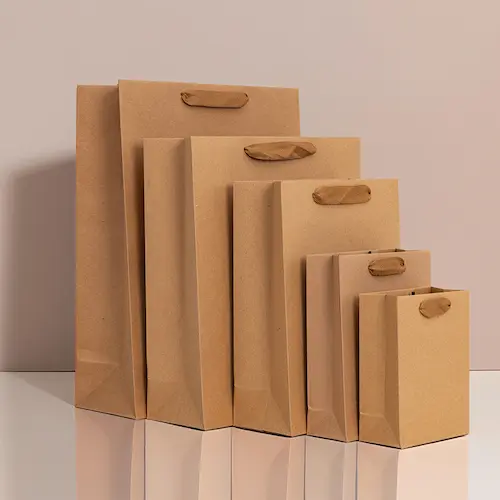
- custom paper bags
Frequently Asked Questions
Q: What does CRCP certified mean for mylar bags?
A: CRCP means the closure passed child-resistance testing — typically 16 CFR 1700.20 in the US or EN 14375 in the EU — and is certified for regulated products like cannabis or CBD. “Certified” is the operative word: it is not a design feature, it is a tested, documented result. Our team supplies the test report and cert holder details so your SKU clears the legal bar before it ships, not after a regulator calls.
Q: Which closure passes child-resistant testing?
A: Certified press-slide, push-turn, and zipper-plus-lock mechanisms all pass when properly tested; the right one depends on your product and shelf format. Press-slide suits flat pouches, push-turn suits rigid lids, and zipper-lock suits resealable flower formats. None is “safest” in the abstract — each must be tested as configured. Allenboxes stocks tested CR closures and will match the mechanism to your fill weight and how customers open it.
Q: Do I need an exit bag as well as a CR pouch?
A: In many US states, yes. A secondary exit layer is required even when the inner pouch is already CR-certified, because the rule targets the outer retail package. Skip it and your compliant inner bag can still fail a state inspection. Our team tracks the state-specific requirements and builds the exit bag into the spec so your assembled package passes both the closure test and the retail-layer rule.
Q: What barrier film should CR mylar bags use?
A: A multi-layer foil or PET laminate gives the moisture, oxygen, and light barrier regulated product demands; confirm the film carries the right food-contact and compliance certs. A pretty pouch that lets in light or oxygen fails the product even if the closure passes. Allenboxes specifies barrier films by shelf life and territory, and we document the film certs so your compliance file is complete, not just your artwork.
Q: What MOQ should I expect for CR mylar bags?
A: Stock CR styles often start at 100–500 units; custom-printed runs begin higher because the certified closure and print plates add setup. Exact floors move with size, finish, and whether you need a custom dieline. Our team can usually start a branded CR run at a few hundred units, so a first test order is realistic without committing to a 10,000-piece minimum on an unproven SKU.
Q: How do I avoid a recall on cannabis packaging?
A: Keep the test report on file, match the exact certified closure in production, and verify state-specific rules before launch — do not assume one cert covers every market. Recalls usually trace to a swapped closure or a missing exit layer, not the print. Our team holds the certs and flags the jurisdiction differences up front, so the bag that passes in one state does not fail in the next.
Conclusion
核心金句:A child-resistant bag is a certified closure system, not a pretty pouch — get the cert wrong and the SKU cannot legally ship.
决策问句:Do you have the test report and the right exit layer on file, or are you one state audit from a recall?
- ① Request stock CR samples to test the closure
- ② Ask Allenboxes for the cert holder and state rules
- ③ Start a small custom-printed CR run to prove the market
行动 CTA:Talk to Allenboxes’ team for a free quote and CR-certified compliance docs.