
When the quote changes after artwork review, most buyers assume they were misled. They were not. A Melbourne skincare label we worked with approved a sketch quote of AUD 1.85 per folding carton, then watched the factory final number climb to AUD 3.10 once the production team measured the dieline, counted two spot colours and priced a hot-foil logo.
Nothing was added to the brief. The factory simply did what a proper artwork review always does: it measured the real file instead of guessing from a drawing.
This guide explains exactly why a quote changes after artwork review, which file details move the price most, and how to lock a file-reviewed price before you approve anything. The fix is not a better factory. The fix is a better brief and an earlier review.
Based on quotations from 12+ Chinese packaging factories (updated 2026), an artwork review revises the unit price on roughly 4 out of 10 first quotes, usually upward and usually for reasons the buyer could have caught early. None of those revisions are scams. They are measurements.
Quote Changes After Artwork Review: Why the Second Number Looks Different
A quote changes after artwork review because a sketch estimate is built on assumptions, while a file-reviewed quote is built on measurements. According to Allen Paper Products production data (2024-2026), orders that skip artwork review before deposit see an average price revision of 31 percent at approval, and that revision is almost always upward.
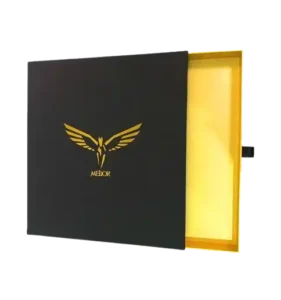
Based on Allen Paper Products production data (2024-2026), most of the defects and delays we see trace back to specs that were never written into the PO at the quotation stage. Quality-system requirements behind a process like this are set out in ISO 9001.
The first number you receive is a budget figure. It answers one question: is this project in the right cost ballpark? The second number answers a different question: what will this exact file actually cost to produce? The gap between those two answers is where most buyers feel the shock. The factory is not changing its mind. It is replacing a guess with a measurement. Fibre traced to a certified forest carries FSC chain-of-custody paperwork.
Think of it like a builder quoting a house from a napkin sketch versus a stamped architectural plan. The napkin gets you a range. The plan gets you a number you can sign. Packaging works the same way, and the artwork file is your stamped plan.
Mini Story: A Melbourne skincare label approved a sketch quote of AUD 1.85 per carton, then saw it rise to AUD 3.10 after the factory measured a 3mm bleed, two spot colours and a foil logo. The brief never changed. The measurement did.
What an Artwork Review Actually Checks
An artwork review measures the production realities that a sketch hides, and each measurement can move the price. The factory checks trim and bleed, counts every ink, measures decorative finish areas, and confirms the die-cut shape before it commits to a price.

The review usually follows a fixed order. First the team confirms the dieline and safe margins, because every other cost depends on the physical size of the sheet. Then they count colours, separating standard process colours from special spot inks. Next they measure any foil, emboss or window area in square centimetres. Finally they confirm the coating and the number of print passes. Each step either confirms the estimate or replaces it with a larger, more accurate figure.
The review also catches prepress faults that a sketch never reveals. A logo supplied as a low-resolution JPG instead of a vector file forces a redraw, which the factory prices as artwork time. An RGB file that should be CMYK shifts every colour at print and may require a proofing round. Fonts that are not converted to outlines can drop or substitute, and missing traps between adjacent ink areas cause hairline gaps on the press. None of these items appear in a budget quote, because none of them exist until the real file is opened.
Allen Paper Products has reviewed more than 4,000 artwork files since 2021, and the single most common trigger for a revision is a missing or wrong bleed. A file supplied without the required 3mm bleed forces a reprint setup, which the factory prices into the revised quote rather than absorbing.
Not sure what your artwork will actually cost? Send us your dieline and we will return a file-reviewed quote with each complexity line item separated, so there are no surprises at approval.
Bleed, Trim and Safe Margins: The Silent First Surcharge
Bleed and trim errors are the quietest cause of a revised quote, because they rarely show up in a sketch at all. A file supplied without the required 3mm bleed on every edge triggers a reprint setup, and that setup carries a cost the original estimate never included.

Trim is the final cut size of the carton or box. Bleed is the extra artwork that runs past the trim so the colour reaches the edge after cutting. Safe margin is the zone where text and logos must stay to avoid being sliced. When a buyer submits a file where the logo sits 1mm from the trim, the factory must either move the artwork or warn that the cut may clip the brand mark. Either way, the job changes.
Based on quotations from 12+ Chinese packaging factories (updated 2026), a missing bleed adds between 0 and 4 percent to the unit price on small runs, purely from the extra prepress setup. That sounds small until it compounds with the other items below.
The safest move is to ask the factory for its exact bleed and safe-margin specification before you design, then build the file to that standard. A carton die-cut at 200 by 150 by 60mm needs the artwork supplied at 206 by 156mm with a 3mm bleed on the faces that print to the edge. Supply that and this line item disappears from your revision risk.
A common rookie mistake is building the artwork in raster software at screen resolution, then expecting it to print crisp at carton scale. A logo that looks fine on a laptop is often 72 dots per inch, while packaging presses need 300 dots per inch or a true vector path. When the factory must rebuild the artwork to print quality, that rebuild is billed, and the quote moves. Sending a vector file with outlined fonts removes the risk entirely and keeps the reviewed number where the estimate promised it would be. This is the quietest reason a quote changes after artwork review, because the sketch never showed the edge of the sheet at all.
Spot Colours and Special Inks: Where the Price Really Moves
Spot colours are where a quote changes after artwork review most sharply, because each one needs its own plate and its own press pass. A sketch that says one colour can actually contain three once the brand files arrive with a Pantone match and a metallic accent.
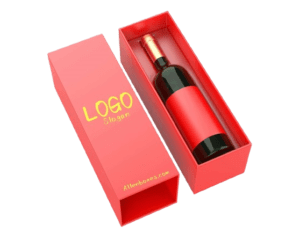
Process printing uses cyan, magenta, yellow and black to build colour. Spot colour prints a pre-mixed ink directly, which gives exact brand matching but costs more. Every spot colour beyond the process set adds a plate, a wash-up and a registration step. On a short run those fixed costs sit on fewer units, so the per-unit impact is larger.
| Factor | What the factory measures | Typical price impact | When it triggers a revision |
|---|---|---|---|
| Bleed and trim | 3mm bleed, 1mm tolerance | +0 to 4 percent | Missing bleed forces reprint setup |
| Spot colour Pantone | Each extra plate beyond process | +8 to 22 percent per unit | More than one spot colour |
| Hot foil area | Square centimetres of foil | +12 to 35 percent | Any foil logo or panel |
| Emboss or deboss | Die height and area | +6 to 15 percent | Any raised or pressed finish |
| Die-cut shape | Knife cost and runtime | +5 to 18 percent | Non-rectangular cut |
| Coating and varnish | Number of passes | +3 to 10 percent | Soft-touch or spot UV |
Based on quotations from 12+ Chinese packaging factories (updated 2026), each extra spot colour typically adds 8 to 22 percent to the unit price, and two or more spot colours plus a metallic can push the increase past 30 percent on a small run. A Toronto stationery brand we advised quoted a one-colour box at USD 0.95, only to learn the approved file carried a fifth-colour metallic and a window cut. The revised quote landed at USD 1.62.
Special inks deserve their own mention, because they are the easiest items to forget in a brief. A metallic or pearlescent ink needs its own plate and often a white or opaque underbase on a coloured board, which doubles the pass count. Neon and fluorescent inks need heavier laydown and slower press speed. A white ink printed as a separate spot on a kraft or black substrate is effectively another colour, not a free default. When a buyer assumes the factory will just print white where needed, the review reveals a charge the estimate never carried. Naming every ink, including white, removes that surprise. When a quote changes after artwork review because of ink, the cause is almost always an unlisted spot colour rather than a supplier error.
The lesson is not to avoid spot colour. It is to name every colour in the brief. If your brand uses Pantone 185 and a silver metallic, say so on page one. A quote built on that list will not surprise you later.
Foil, Embossing and Die-Cut Complexity
Decorative finishes are the third big driver, and they are almost never visible in a sketch because a sketch cannot show area, pressure or knife time. Foil stamping, embossing and custom die-cuts each add tooling and runtime that the original estimate did not carry.
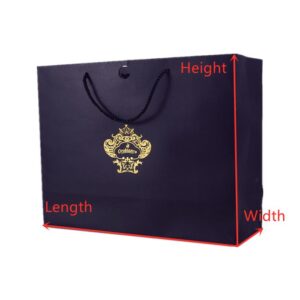
Foil stamping applies a metallic or pigmented film through a heated die. The cost scales with the foil area, not with how pretty it looks. A small 40 by 25mm logo may add 12 to 18 percent, while a full-panel foil can add 35 percent or more. Embossing and debossing press the board into a shape and need their own die plus a registration pass. A custom die-cut, anything beyond a plain rectangle, needs a cutting knife made to your shape and adds both knife cost and slower runtime.
Mini Story: A Toronto stationery brand sent a one-colour sketch and was quoted USD 0.95 per rigid box. The reviewed file showed a fifth-colour metallic and a non-rectangular window die-cut. The revised quote landed at USD 1.62, and the brand had already promised retailers the lower number.
The reason these items surprise buyers is timing. Foil, emboss and custom cut are design decisions made late, after the budget quote is already in someone inbox. By the time the factory reviews the file, the buyer has mentally spent the lower number. The fix is to declare every finish in the first brief, so the quote and the budget are built on the same facts.
A few finish details change the cost more than buyers expect. A blind emboss, with no foil or print, is cheaper than a registered emboss that must align to a printed element, because registration adds a precision step. A window patch, where a die-cut hole is backed with film, adds both the knife and the film-application pass. Combination dies that emboss and cut in one strike save a pass but cost more to make. None of these are negotiable once the file is set, so stating them early is what keeps the reviewed quote close to the estimate.
Ready to see the real number? Upload your print-ready file for a factory artwork review and get a locked price before you approve anything.
How a Real Factory Prices a File
A transparent factory prices a file in layers, and understanding those layers is the fastest way to stop a surprise. The base price covers board, process printing and a standard rectangular die. Every complexity then adds a measured layer on top.
Here is how a typical revision unfolds, using the Melbourne carton from the opening. The sketch estimate assumed one process colour, no special finish and a standard cut, which gave AUD 1.85. The file review found a 3mm bleed already built in, two spot colours and a foil logo, which rebuilt the quote at AUD 3.10. The board did not change. The finishing did.
| Quote stage | Unit price AUD | What was known | What was missing |
|---|---|---|---|
| Sketch estimate | 1.85 | Dimensions, colour count guess | Dieline, spot colour, foil area |
| File-reviewed quote | 3.10 | Measured dieline, 2 spot, foil | Nothing |
In our experience at Allen Paper Products, a file-reviewed quote that is signed before deposit rarely moves by more than 2 percent at bulk, because the measurement was done while there was still room to adjust the brief. The same file priced after deposit leaves the buyer with a choice between paying the new number or renegotiating from a weak position.
The practical takeaway is to treat the first quote as a range and the reviewed quote as the commitment. Ask the factory to show the layers separately. A quote that reads board plus print plus finish plus tooling tells you exactly which decision costs what, and that clarity is what prevents the feeling of being jumped.
Board choice also drives the base layer more than most buyers realise. A 350gsm CCNB on greyboard costs less than a 400gsm solid bleached sulphate board, and a textured or coloured substrate can change the ink laydown and the number of passes. Tooling such as a custom cutting knife is a fixed cost that spreads across the order, so a longer run lowers the per-unit tooling share, while a short run concentrates it. When you compare two factories whose base quotes differ, you are often comparing two different boards and two different run assumptions, not two different honesty levels.
How to Lock Your Price Before You Approve
You lock a price by moving the artwork review ahead of the deposit, not after it. Request a written file-reviewed quote before you pay, and refuse to approve production on a sketch estimate alone.
The sequence that protects you is simple. Supply the print-ready file with the correct bleed, name every colour with its Pantone code, state every finish with its measured area, and confirm the die-cut shape. Then ask for a single quoted number that the factory agrees is final once you sign the golden sample. When the review happens before money changes hands, the factory has incentive to measure carefully and you have leverage to adjust.
According to Allen Paper Products production data (2024-2026), signed file-reviewed quotes move less than 2 percent at bulk, while sketch-based approvals move an average of 31 percent. The difference is entirely about timing. A quote changes after artwork review only when the review happens too late to matter.
Put the protection in writing. A good purchase note states that the file-reviewed quote is fixed once the golden sample is signed, and that any later change requested by the buyer is quoted separately rather than silently absorbed. Some buyers add a revision cap, agreeing that the factory may flag a maximum of one cost item after deposit, with the rest honoured at the original number. This is not hostile to the supplier. It simply makes the measurement the shared starting point instead of a moving target.
Want a quote that does not move after you approve it? Send us your artwork and we will return a locked, file-reviewed price with every finish itemised, so the number you see is the number you pay.
7 Checks Before You Approve a Packaging Quote After Artwork Review
Run these seven checks before you release a deposit, and the revision risk drops to near zero.
- Confirm bleed and trim, verify the file carries the factory 3mm bleed on every printed edge and that trim size matches the dieline.
- List every spot colour with its Pantone code, name each special ink so the quote counts the plates you will actually use.
- Measure foil or emboss area in square centimetres, decorative cost scales with area, so state it precisely rather than describing it.
- Confirm die-cut shape and knife cost, a non-rectangular cut needs its own knife, so price it in the first quote.
- State coating and varnish passes, soft-touch, spot UV and lamination each add a pass that the sketch may omit.
- Ask for a file-reviewed quote in writing, require the factory to confirm the number is final once the golden sample is signed.
- Sign the golden sample and lock the price before deposit, the signed sample is your contract against later movement.
Points one and six are the two almost nobody performs, and they are the two that generate the most expensive revisions after approval.
A Buyer’s RFQ Checklist for Locked Pricing
Send these details together and a file-reviewed quote comes back usable in a single round, with no later jump.
- Finished dimensions as length by width by depth, in millimetres
- Board specification: grade, gsm and coating, such as 350gsm CCNB on greyboard
- Bleed requirement: 3mm on all printed edges, with safe margin stated
- Colour list: process set plus every spot colour with its Pantone reference
- Decorative finishes: foil area in square centimetres, emboss or deboss, window cut
- Die-cut shape: rectangular or custom, with knife cost confirmed
- Quantity tiers, Incoterm and required delivery date
RFQ line: Please quote 5,000 pcs rigid boxes, 200x150x60mm, 350gsm CCNB on greyboard, 3mm bleed all sides, 2 spot colours Pantone 185 and 877, hot foil logo 40x25mm, soft-touch matte varnish, FOB Ningbo, delivery by 2026-11-15. Please provide a file-reviewed locked quote after artwork check and confirm no further change before deposit.
That last request separates suppliers who measure from suppliers who guess. A factory that can return a layered, file-reviewed number is one you can budget against with confidence.
Mini Story: A Chicago coffee roaster locked a file-reviewed price of USD 1.40 per bag and saw zero movement at bulk, because the dieline, spot colour and matte varnish were all measured before the deposit was paid. The roaster approved the golden sample and the factory honoured the number exactly.
A quote changes after artwork review only when the review is left until after the budget is set. Move it earlier, name every detail, and the second number will match the first.
FAQ
Why does the quote change after artwork review?
The quote changes after artwork review because a sketch estimate is a guess and a file review is a measurement. The factory checks the real dieline, counts every spot colour, measures foil area and confirms the die-cut shape. Those numbers replace assumptions, and assumptions are almost always cheaper than reality.
What is the minimum order quantity for a file-reviewed locked quote?
Most Chinese packaging factories offer a file-reviewed locked quote from the same minimum order quantity as the product itself, commonly 500 to 1,000 units for folding cartons and 300 to 500 for rigid boxes. The review is a service rather than a quantity gate, so you can lock pricing even on a small first run.
Can I order a sample to confirm the final price before bulk?
Yes. You can order a golden sample built to the full final specification and signed before bulk. The sample confirms the measured dieline, spot colours, foil and finish, and the price attached to that approved sample is the price you pay at volume. This removes the most common source of a surprise revision.
How much extra does a spot colour add to my packaging quote?
Based on quotations from 12+ Chinese packaging factories (updated 2026), each extra spot colour typically adds 8 to 22 percent to the unit price because it requires an additional printing plate and a separate press pass. Two or more spot colours plus a metallic can push the increase past 30 percent on small runs.
Does foil stamping always raise the price after artwork review?
Foil stamping usually raises the price because it adds a die, a foil pass and a registration step, but the increase depends on area. A small 40 by 25 millimetre logo may add 12 to 18 percent, while a full-panel foil can add 35 percent or more. A measured foil area in the artwork review is what determines the real number.
How do I stop a quote from changing after the factory reviews my file?
Stop the movement by requesting a written file-reviewed quote before you pay a deposit, and by signing a golden sample that lists every finish. According to Allen Paper Products production data (2024-2026), signed file-reviewed quotes move less than 2 percent at bulk. The review must happen before money changes hands, not after.
What should I specify when ordering quote changes after artwork review?
Start with the build itself: material, size, print, finish, and any insert, then name the tolerance and the test. At Allen Paper Products we confirm the build with a pre-production sample (PPS) before any bulk run, so the order matches your approved proof.
How long does it take to get quote changes after artwork review made and delivered?
Lead time runs from about 7-10 days for a sampled reorder to 20-35 days for a new custom build including proofing and production. Based on Allen Paper Products production data (2024-2026), most overseas buyers plan 4-6 weeks door-to-door.