
Marcus approved a coffee bag redesign from a train, tapped the email, and assumed the factory would print the version he had just signed. Three days later a video from the line showed his old logo still on the film.
The right moment to stop production after error found is the instant you see it, not after the cartons are sealed. Most buyers lose money not because the mistake was large, but because they hesitated, messaged vaguely, and let the press keep running while they thought about it.
This guide shows how a written confirmation gate, a clear stop order, and a contract clause keep a spotted error small instead of turning it into a full rejected shipment.
A single afternoon of indecision can turn a proof correction into a container of scrap, and the difference is almost always whether a stop was issued in writing at the first sign of trouble.
Stop Production After Error Found: The Written Confirmation Gate
When you stop production after error found, you convert a small fix into a prevented disaster. The mechanism that makes this possible is a written confirmation gate: a clause in your purchase order stating that no bulk production begins until you sign off a final proof. With that gate in place, spotting an error means sending one message that legally halts the job. Without it, you are begging a busy factory to interrupt a run it already started on your instruction.
The gate works because it shifts the default. Instead of the factory assuming your silence means go, it assumes your signature means go. Anything short of a signed approval keeps the line paused. That single reversal removes the most common failure mode in packaging production, which is an unapproved file reaching the press because nobody was explicitly told to wait.
Mini Story: A Berlin cosmetics importer noticed the wrong Pantone on a printed proof at 4pm on a Friday. Because her PO included a confirmation gate, she replied stop, do not print, and the factory held the job over the weekend. The change cost one revised proof. A colleague at another brand, with no gate, sent a friendly note asking them to double check and returned Monday to 8,000 printed cartons in the wrong colour.
Common Errors That Should Trigger an Immediate Stop
Not every small issue justifies halting a run, but a clear list of stop-worthy errors removes hesitation when seconds count. The mistakes that should trigger an immediate, written stop share one trait: they are visible on the proof or the first sheets and they compound through the entire order if ignored. Fibre traced to a certified forest carries FSC chain-of-custody paperwork.
Wrong colour or brand shade. A Pantone mismatch on the makeready is cheap to fix and devastating once 10,000 lids are printed. Wrong dimensions or dieline. A box that does not fit the product cannot be salvaged by a reprint of the artwork; the tooling is wrong. Wrong material or weight. A 300gsm board substituted for 350gsm changes structure and print, and the difference shows at goods-in. Missing or wrong barcode and SKU. A carton that scans to the wrong product creates fulfilment chaos downstream. Typos and legal text errors. A misprinted ingredient list or country of origin is a compliance risk, not a cosmetic one. Recyclability duties for packaging sold in Europe sit in EU packaging waste rules.
Mini Story: A Melbourne supplement brand caught a missing allergen line on the pre-production sample at 6pm. Their PO carried a confirmation gate, so they issued a written stop and the factory reprinted the film overnight. The corrected run shipped on the original vessel. A competitor who noticed the same gap after bulk had already printed faced a full reprint, a missed launch, and a contractual fight over who approved the text.
Some issues sit in a grey area and should not trigger a full halt. A faint scuff on one sample, a colour shift inside an agreed tolerance, or a cosmetic mark that the product will hide are not stop-worthy on their own. The skill is to separate a defect that runs through the whole order from a one-off blemish, because halting for the latter wastes the very speed you rely on. When in doubt, request a photo of the press sheet and decide from evidence rather than from alarm.
The Cost of Not Stopping in Time
A rejected shipment is rarely the only cost. The larger damage is often the opportunity lost while you remake stock and the gap on the shelf while customers look elsewhere. A brand that misses a seasonal window because a print error was caught late loses the revenue of the window itself, not just the cost of the boxes. That is why the stop order is a profit-protecting tool, not a bureaucratic brake.
Insurance rarely covers a defect you could have caught, which surprises first-time importers. Cargo policies pay for transit damage and total loss, not for a print error that existed before the box left the factory. A stopped run that costs you a proof revision is cheap next to a claim that an insurer declines because the fault was visible at production. The stop order is your own quality insurance, written into the order where the insurer never looks.
Brands that fail to stop production after error found pay for the entire run plus the rework, the air freight to recover the launch date, and the shelf absence while stock is remade. The arithmetic is brutal. A 10,000-unit carton order printed in the wrong colour is not a 10,000-unit problem; it is a 10,000-unit scrap plus a second 10,000-unit order rushed at a premium, often with express ocean or air surcharges on top.
The loss grows with every hour the press runs after the error is visible. Paper gets cut, ink gets laid, boxes get folded, and each step adds value you will never recover. The cheapest correction in packaging is always the one made before the machine moves, which is why the stop order must be immediate, written, and unambiguous rather than a polite question floated into a chat thread. Based on Allen Paper Products production data (2024-2026), runs halted at a signed confirmation gate before bulk printing cost on average a small fraction of runs stopped after the press had already run, because the scrap never got made.
Why Errors Get Printed Before Anyone Approves
The factory proceeds because nobody told it to stop production after error found at a defined checkpoint. In a typical line, prepress uploads a file, the operator loads plates, and the press starts a makeready. If your approval was verbal, assumed, or buried in a long email, the team on the floor has no instruction to pause. They optimise for throughput, so they print, and they print the file in front of them. This speed is normal and not something to fight; it is something to channel. A factory that moves fast is efficient when the file is right and disastrous when it is wrong. The confirmation gate is the only lever that redirects that speed in your favour, because it gives the floor a concrete instruction to wait. Without it, the same throughput that keeps your lead time short becomes the force that prints your mistake across the whole order.
This is not malice. It is the absence of a rule. A factory that runs hundreds of jobs a week cannot remember which client wanted a written sign-off and which trusted the salesperson. The confirmation gate removes that ambiguity by making the rule part of the order itself. When the PO says no bulk without your signed proof, the floor has a clear instruction and follows it without needing to ask.
The Written Confirmation Gate That Prevents It
A written confirmation gate is what lets you stop production after error found without a fight. It is a short paragraph in the purchase order that names the exact file, the approved colour, and the sample the factory must match, and states plainly that bulk production starts only after you sign off a proof. The gate turns a vague promise into a contractual checkpoint the supplier must respect before running the job. In our experience at Allen Paper Products, the single clearest control is a written approval checkpoint built into the purchase order before any plate is made, because it removes the factory’s assumption that your silence means proceed. Make the gate specific enough that the floor cannot mistake it. Name the proof format, the approver, and the consequence of printing without sign-off. A gate that says approval required is weaker than one that says bulk production of this order begins only after the named approver signs the pre-production sample, and any printing before that sign-off is at the supplier’s risk. The extra words are what make the clause enforceable rather than decorative.
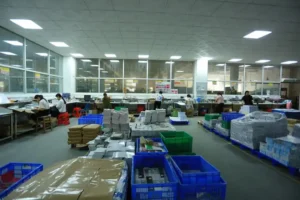
Write the gate before you pay the deposit, not after doubt sets in. State the proof type, whether a physical pre-production sample or a high-resolution digital proof, and name the single person authorised to approve. Require the factory to confirm in writing that it received your sign-off before it schedules the press. That confirmation is your evidence later, proving the run should not have started if an error slipped through after it.
Who Pays When You Stop Production After Error Found
Responsibility splits cleanly once you stop production after error found at the right milestone. If you halt before bulk printing, you usually owe only the setup, the plates or die, and any material already consumed, not the full run. If the error was yours, that limited cost is fair. If the factory printed without your sign-off, it bears the loss because it broke the confirmation gate written into the order.
The split depends on which checkpoint the stop happened at, so document the milestone precisely. Note whether you halted during prepress, during makeready, or after bulk began, and keep the timestamped message that issued the stop. A clear record removes the annual ritual of both sides arguing about who approved what, and it lets a fair settlement happen in days instead of weeks.
The Responsibility Split by Production Milestone
The cost you carry depends almost entirely on where the stop lands, which is why documenting the milestone matters as much as issuing the halt. The earlier you catch the error, the less value the factory has added and the less you owe. A clear table keeps both sides aligned before a dispute starts.
| Stop Milestone | What You Owe | What the Factory Bears | Evidence That Decides It |
|---|---|---|---|
| During prepress, before plates | Setup and approved file work | Its own prepress time | Approved file versus printed file |
| During makeready, after plates | Consumed substrate only | Remake of makeready | Photos of the press sheet |
| After bulk printing begins | Full or partial run | Depends on whose fault | Stop timestamp and proof shown |
| After cartons are sealed | Entire rejected order | Negotiated partial credit | Inspection report and photos |
Use this table as the backbone of your responsibility conversation. When the stop happens during prepress, your exposure is small and the factory should absorb its own wasted prepress hours. Once plates are made or paper is cut, some material cost is fair. After bulk runs, the split turns on fault, and that is exactly why the timestamped stop message and the proof are non-negotiable records rather than nice-to-have notes.
How to Issue a Production Stop Order
Issuing a stop order is the practical step that turns stop production after error found from intent into action. Send a written message to the factory and to your freight and inspection contacts, stating halt production now, do not print, with a timestamp and a photo of the error. Name the purchase order, the suspected mistake, and the contact who will issue the corrected approval. Keep the tone factual; you are invoking a clause, not starting a debate.
Follow the message with the same instruction by a second channel if the line runs on a tight shift, because a chat message can be missed between changes. Ask the factory to confirm receipt and to state exactly how much was produced before the halt. State the must-haves of the stop message so nothing is left to interpretation: the purchase order number, the exact error and where it appears, the word halt or stop in capitals, the name of the authorised approver, and a request for a written confirmation of receipt. A stop that omits the PO number or the specific fault creates ambiguity the factory can later exploit, so write it as if a stranger will act on it without context. That confirmation caps your exposure and gives you the number you need to negotiate responsibility. Speed and documentation together are what make a stop order effective rather than symbolic. Allen Paper Products recommends naming a single authorised contact on both sides who can issue a stop order, so a spotted error triggers a halt within the hour rather than after a shift change nobody noticed.
7 Checks Before You Approve a Production Run
Run these seven checks the moment you must stop production after error found, and ideally before you ever reach that point.
- Confirmation gate in the PO, confirm the purchase order states no bulk starts without your signed proof.
- Approved file version named, the exact artwork filename and version are written into the order, not assumed.
- Single authorised approver, one named contact on each side can issue approvals and stop orders.
- Proof type defined, physical pre-production sample or digital proof is specified, with who pays for it.
- Error spotted, message sent, a written stop with timestamp and photo goes out the moment doubt appears.
- Factory confirms receipt, the supplier acknowledges the halt and states how much was already produced.
- Responsibility recorded, the milestone and cause are filed so the cost split is decided by evidence.
Points two and five are the two most buyers skip, and they are the two that decide whether a stop is honoured or ignored.
A Buyer’s RFQ Checklist to Build a Stop Gate
Send these points with the order so the confirmation gate exists before production, not after a mistake. Send the clause with every order, not only with the first, because a gate that exists on one purchase order and vanishes on the reorder is the gap where errors slip through. Attach the stop procedure to the order so the factory sees it at quotation stage and prices the risk accordingly, rather than discovering the constraint after the job is on the floor.
- Purchase order clause: no bulk production without signed proof from the named approver
- Exact approved artwork filename, version and Pantone or colour reference
- Required proof type, physical or digital, and who bears the cost
- Named contact on both sides authorised to approve and to stop
- Defined checkpoint at which the gate is enforced, before plates or dies are made
- Instruction that silent substitutions are rejected and reapproved
- Requirement for written confirmation the factory received sign-off before press
RFQ line: Please confirm PO-2026-027 includes a written confirmation gate: no bulk production of 10,000 cartons begins until our named approver signs the pre-production sample. Any printing before signed approval is at your risk. Please acknowledge receipt of this clause and state the enforceable checkpoint.
That line makes the stop right contractual on day one, so a spotted error halts the line instead of becoming a shipment you must reject.
Making the Stop Authority Part of Your Contract
Build the stop authority into your contract so stop production after error found is a clause, not a favour. A supplier that respects a written gate protects your margin as reliably as a supplier that prints well, because most losses come from process, not craft. Put the confirmation gate, the authorised approver, and the responsibility split into the master agreement you reuse across every order, not into a one-off email that disappears. Revisit the clause at least once a year, because your approval process will change as your team grows and new people join. A gate that names a contact who left the company six months ago is as good as no gate. Keep the authorised approver current, and brief every new buyer on the stop procedure so the first time they use it is not during a live crisis.
Make stop production after error found a written right, and a single spotted mistake stays a single fixed proof instead of a warehouse of scrap. Send us your current purchase order template and we will insert a confirmation gate, an authorised-approver line, and a responsibility split you can drop into every future packaging order without renegotiating from scratch.
Ready to protect your next run from an unapproved print? Send us your PO template and we will add a written confirmation gate and a stop clause you can reuse on every order.
FAQ
What should I do when I find an error during production?
Halt the run the moment you see the mistake and notify the factory in writing with a timestamp and a photo. Do not wait for a call or assume someone else caught it. A written stop order protects you because it creates a clear record of when production should have paused, which decides who pays for what printed after.
Who pays if I stop production after an error is found?
If you stop production after error found before bulk printing, you usually owe only the setup and any consumed material, not the full run. If the error was yours, that cost is fair. If the factory printed without your sign-off, it bears the loss. The split depends on which checkpoint the stop happened at, so document the milestone.
How do I set a written confirmation gate with my supplier?
Write a confirmation gate into the purchase order that names the exact file, colour and sample the factory must match, and states that no bulk production starts until you sign off. Require a press proof or pre-production sample at a defined stage. The gate turns a vague promise into a contractual checkpoint the supplier must respect before running the job.
Can a factory refuse to stop production after I spot an error?
A factory cannot refuse if your purchase order contains a written stop clause and you issued the halt before bulk began. If it printed anyway, that is a breach you can hold it to. The risk rises after plates are made or paper is cut, so act at the earliest checkpoint. Keep the contract language simple and unambiguous so there is no room to argue.
What proof should I keep when I halt a packaging run?
Keep the original approved file, the mistaken proof, a timestamped stop message, and photos of the error on the press or sample. Save the purchase order clause that granted the stop right, and note which production milestone you were at. This file is what decides responsibility later, so build it the moment you issue the halt rather than after the dispute starts.
How do I prevent an unapproved file from reaching the press?
Require a written sign-off on the final artwork before any plate or die is made, and state that bulk begins only after your approval of a physical or digital proof. Name the approved version and forbid silent substitutions. A confirmation gate plus a single authorised approver stops unapproved files from ever reaching the press, which is cheaper than halting a run mid-print.
What should I specify when ordering stop production after error found?
Start with the build itself: material, size, print, finish, and any insert, then name the tolerance and the test. At Allen Paper Products we confirm the build with a pre-production sample (PPS) before any bulk run, so the order matches your approved proof.
How long does it take to get stop production after error found made and delivered?
Lead time runs from about 7-10 days for a sampled reorder to 20-35 days for a new custom build including proofing and production. Based on Allen Paper Products production data (2024-2026), most overseas buyers plan 4-6 weeks door-to-door.