
Eco-Friendly Packaging Wholesale: Recyclable vs Biodegradable vs Compostable
Table of Contents
Eco-friendly packaging wholesale is now a procurement requirement, not a nicety — European and North American buyers screen suppliers on material claims before they open a quote. When a buyer searches “eco-friendly packaging wholesale,” they are navigating three overlapping labels that get confused constantly: recyclable, biodegradable, and compostable. Each means a different thing, each needs a different certificate, and each fails a greenwashing claim differently. This guide separates the three, shows the FSC and PCR paperwork that backs a real claim, and gives B2B buyers the brief lines that keep a sustainability promise from becoming a compliance liability in 2026.
The Three Labels Buyers Mix Up
The confusion starts with the words. They are not synonyms, and a buyer who treats them as one will mislabel stock and invite a regulator letter.
| Label | What it means | Needs | Fails when |
|---|---|---|---|
| Recyclable | Can re-enter a material stream | Local stream exists | Contaminated or multi-layer |
| Biodegradable | Breaks down by microbes (time open) | Right environment | Landfilled, no oxygen |
| Compostable | Breaks down to soil in defined window | Industrial or home compost | Sent to landfill |
Recyclable is the safest wholesale claim because most curbside streams take clean paper and board. Biodegradable is the weakest claim — everything biodegrades eventually, so the word alone proves little. Compostable is strong but demands the right facility; a “compostable” mailer in a landfill behaves like plastic. A buyer who picks the label by the local infrastructure, not the marketing, avoids the claim that cannot be honoured.
Recyclable Packaging Wholesale
Recyclable board and paper are the wholesale default for a reason: the stream exists in most markets, and the claim survives scrutiny. Spec it as:
- Mono-material: one fibre type, no mixed plastic window.
- FSC-certified: chain-of-custody paper from managed forests.
- Water-based coatings: not PET lamination, which breaks recycling.
- Soy or water-based inks: easier to de-ink.
A recyclable mailer with a PET window is not recyclable at the curb — the window must be PET-free or the claim is false. Name “plastic-free window” or “PET-free” in the PO so the factory does not sub in the cheap window. The FSC code on the certificate, not the logo on the box, is what an auditor checks.
Biodegradable Packaging: The Weakest Claim
Biodegradable means microbes will break the material down given the right conditions — but “right conditions” rarely means a landfill, which is airless and slow. A biodegradable bag in a sealed dump may persist for years. The claim is legal in some markets only with a defined time frame and standard (e.g., ASTM D6400 context). Wholesale buyers should treat “biodegradable” as a supporting note, not a headline, and pair it with a standard and a time window. Without those, the word is a liability that a competitor or regulator can challenge.
Compostable Mailer Boxes and Film
Compostable is the strongest environmental claim when the facility exists. Two tiers:
- Industrial compostable: breaks down in a commercial facility (ASTM D6400 / EN 13432).
- Home compostable: breaks down in a backyard bin (slower, stricter).
A compostable mailer box uses PLA or starch-based window film and water-based adhesive so the whole unit composts. The trap is infrastructure: if the buyer’s market has no industrial composter, the box lands in landfill and the claim is moot. Brief the factory for the standard your market honours, and print the disposal instruction on the box so the end user composts it correctly. For wholesale buyers, the composter map is the real spec: a compostable claim only pays off where industrial composting is collected, and in markets without it a recyclable mono-material box is the honest greener choice.
Ask the factory which standard your destination honours and print the matching disposal line, so the carton composts where it can and recycles where it cannot, instead of making one promise the infrastructure cannot keep.
FSC Certified Sourcing for Wholesale
FSC (Forest Stewardship Council) certification is the document that makes a “responsibly sourced” claim real. For eco-friendly packaging wholesale, require:
- FSC 100%: all virgin fibre from FSC forests.
- FSC Recycled: all from reclaimed material.
- FSC Mix: mixed sources, still chain-of-custody tracked.
The certificate number and the chain-of-custody (CoC) code are what an auditor verifies; the logo on the carton is decoration without the number. A factory that cannot show a current FSC CoC is selling the logo, not the fibre. Ask for the certificate number and verify it against the FSC database before the bulk run.
PCR Content: Post-Consumer Recycled Percentages
Recycled content is where numbers get abused. “Recycled” can mean 10% or 90%; the percentage is the claim. For recycled cardboard packaging:
- PCR 30–50%: common, affordable, visibly grey board.
- PCR 70–100%: premium, higher cost, stronger green claim.
- PIR (post-industrial): factory scrap, easier but weaker story.
A buyer who specifies “PCR 50%” gets a defensible number; a buyer who specifies “recycled” gets whatever the factory had. Require the percentage in the PO and the mill certificate that proves it, because the percentage is the difference between a real claim and a slogan.
Mono-Material Design: The Recyclability Shortcut
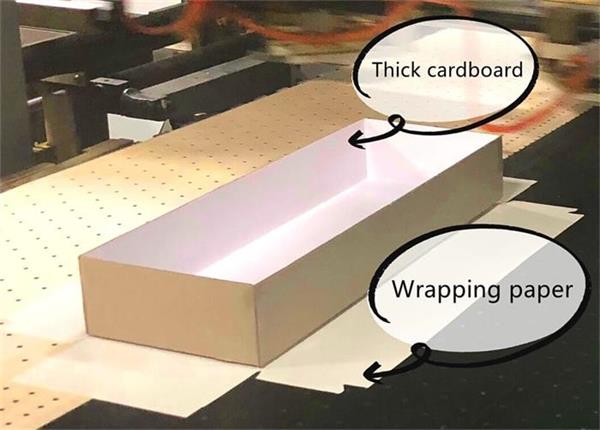
The single biggest lever on a recyclable claim is mono-material construction — one fibre type, no mixed plastic window, no metal hinge. A mixed-material box may look recyclable but is rejected at the MRF (material recovery facility) because the sorters cannot separate the layers. A mono-material kraft or coated board with a PET-free window and water-based adhesive sails through the curb stream and the audit. The cost of mono-material is usually lower too, because there is one substrate to source and one adhesive to spec. A buyer who asks “can this be separated by a sorter?” before approving the dieline avoids the mixed-material trap that voids the claim and quietly raises the board cost at the same time.
Communicating the Claim on the Shelf
A correct claim printed wrong still misleads. Print the exact label, the standard, and the percentage — “FSC Mix 70%”, “Compostable EN 13432”, “PCR 50%” — not a vague leaf icon and the word “eco”. The disposal instruction matters as much as the claim: “Recycle where facilities exist” tells the user what to do; a leaf alone tells them nothing. Pair the printed claim with the certificate number available on request so a buyer or regulator can verify in seconds.
A carton that prints the number invites trust; one that prints only a slogan invites a challenge. Keep the printed claim and the PO claim identical so the box and the contract tell the same story, and the sustainability promise stops being the riskiest line in the file.
Mini Story: The Window That Broke the Claim
A skincare brand launched “100% recyclable” boxes with a clear PET window for the product peek. A customer complained to a recycling group; the window made the box a mixed-material item the curb stream rejected. The brand recalled the window, switched to a die-cut peek with no film, and re-issued with “plastic-free window” in the claim. The fix cost a die change, not a redesign, and the certificate finally matched the carton. The lesson: the window, not the board, is where recyclable claims die.
Mini Story: The 10% That Became a Fine
A distributor advertised “recycled packaging” with no percentage on a tender that required PCR 60%. The buyer audited, found 10% PCR, and the contract carried a mislabelling penalty. The distributor had assumed “recycled” satisfied the clause; the clause wanted a number. After that, every quote listed the exact PCR percentage and the mill certificate. The fine cost more than the correct board would have, and the tender was lost on a word the PO never defined.
How to Brief a Factory for Green Claims
A sustainability brief must be specific or it defaults to the cheapest material:
- Name the label (recyclable / biodegradable / compostable).
- Name the standard (FSC, EN 13432, ASTM D6400).
- Name the percentage (PCR 50%, FSC 100%).
- Name the window and adhesive (PET-free, water-based).
- Name the disposal instruction printed on the box.
- Require the certificate number in the PO.
An eco-friendly packaging wholesale supplier that fills all six is shipping a defensible claim. One that leaves the percentage blank is shipping a risk.
PO Checklist for Sustainable Packaging
- [ ] Label named (recyclable / biodegradable / compostable)
- [ ] Standard named (FSC / EN 13432 / ASTM D6400)
- [ ] PCR or FSC percentage stated
- [ ] Window and adhesive specified PET-free
- [ ] Disposal instruction printed on box
- [ ] Certificate number required in PO
- [ ] Mill certificate attached to bulk release
Sustainable Packaging Sourcing Summary
Eco-friendly packaging wholesale succeeds when the label matches the infrastructure and the certificate matches the carton. Pick recyclable when the curb stream exists, compostable only where a composter does, and treat biodegradable as a footnote with a standard and a time window. Require the FSC code, the PCR percentage, and the PET-free window in the PO so the green claim survives an audit instead of inviting one. Buyers who write these lines before they quote get packaging that is genuinely greener and legally safer; buyers who trust the logo get the fine. Keep the spec in your packaging template so every reorder repeats the same defensible numbers, and the sustainability promise stops being the riskiest line in the contract.
Industrial vs. Home Compost: The Infrastructure Gap
“Compostable” hides a fork that decides whether the claim pays off. Industrial composting runs hot (50–70 °C) with controlled microbes and breaks materials down in weeks; home composting is cooler, slower, and rejects many films that pass industrial tests. A bag certified EN 13432 (industrial) may sit intact in a backyard bin for a year, which is not what the buyer pictured.

| Tier | Temp | Standard | Facility needed |
|---|---|---|---|
| Industrial | 50–70 °C | EN 13432 / ASTM D6400 | Commercial composter |
| Home | Ambient | OK Compost HOME | Backyard bin |
Wholesale buyers should brief for the tier their market can actually process. In cities with industrial collection, an EN 13432 mailer is honest; where only landfill exists, a recyclable mono-material box is the truthful greener choice. The composter map, not the marketing, is the real spec — print the matching disposal line so the end user composts where the box can and recycles where it cannot.
Certification Marks Compared: FSC, PEFC, BPI, TÜV, OK Compost
A logo without a verifiable standard is decoration. The marks that back a real eco claim each map to a test and a database:
| Mark | Backs | Verified by |
|---|---|---|
| FSC | Responsible forestry | FSC certificate number |
| PEFC | Mutual-recognition forestry | PEFC cert number |
| BPI | Industrial compost (US) | BPI listing |
| TÜV | Compost / OK labels (EU) | TÜV test ID |
| GRS | Recycled-content claim | GRS transaction certificate |
For eco-friendly packaging wholesale, require the certificate number and check it against the issuer’s database before bulk. A carton printed with a mark the factory cannot document is a mislabel risk, not a green win. Pair the mark with the percentage (FSC Mix 70%, PCR 50%) so the claim is specific and auditable.
The Cost Premium by Material
Green usually costs more, and the buyer should know which premium pays back. Recyclable mono-material board is near-parity with standard board; FSC-certified virgin is a small uplift; high-PCR and compostable films carry a larger one.
| Material | Typical premium | Pays back when |
|---|---|---|
| FSC virgin board | +3–8% | Buyer requires certification |
| PCR 50% board | +5–12% | Tender demands recycled % |
| Compostable film | +15–30% | Market has compost infrastructure |
| PLA window | +8–15% | Replaces PET window claim |
The premium is justified only where the claim opens a contract or a market. A compostable film in a market without composters is a cost with no return; a recycled board in a tender that requires PCR 60% is the line that wins the bid. Brief the material to the requirement, not the trend.
Greenwashing Risk and Substantiation
Regulators now police vague environmental claims. In the US the FTC Green Guides warn against unqualified “biodegradable” and “recyclable” without a basis; in the EU the Green Claims Directive pushes claims to verified, third-party methods. A carton that says “eco-friendly” with no standard invites a challenge; one that says “FSC Mix 70%, recyclable where facilities exist” with a certificate number invites trust.

Substantiation is the buyer’s shield: keep the mill certificate, the FSC code, and the test ID in the PO file so any claim can be proven in seconds. An eco-friendly packaging wholesale supplier that hands you the paperwork with the carton is shipping defensibility; one that points to a leaf icon is shipping exposure. Print the claim and the proof as one story, and the sustainability promise becomes an asset instead of the riskiest line in the file.
The practical rule is strict: if a claim cannot be proven with a certificate number you already hold, do not print it as a headline — move it to a footnote or drop it entirely. Buyers who audit their own packaging copy against the certificates before launch avoid the expensive correction that arrives after a regulator or a competitor flags a vague line. In the EU the burden now sits with the brand to show the method; in the US the FTC can challenge a claim with no basis.
The certificate is the claim, and the carton is only where you print it — so keep the paperwork and the packaging in the same file, and the sustainability promise stays defensible instead of becoming the riskiest line in the contract. Most of these failures are invisible on a screen and obvious in a hand, which is exactly why the physical certificate, not the render, is the last word.
FAQ
What is the difference between recyclable and compostable?
Recyclable means the material re-enters a stream and is remade into new product; compostable means it breaks down to soil in a defined window under specific conditions. A compostable item in landfill behaves like plastic, so the claim only holds where the right facility exists.
Is biodegradable packaging a strong claim?
Not on its own. Everything biodegrades eventually, so the word proves little without a standard and a time frame. Treat biodegradable as a supporting note paired with ASTM or EN context, not a headline claim that a regulator or competitor can challenge.
What FSC percentage should wholesale buyers require?
Require a named tier: FSC 100%, FSC Recycled, or FSC Mix, plus the chain-of-custody code. The certificate number — not the logo on the box — is what an auditor verifies, so ask for it and check it against the FSC database.
What PCR percentage is realistic for recycled board?
PCR 30–50% is common and affordable with visibly grey board; 70–100% is premium and costlier with a stronger claim. Always state the exact percentage in the PO and require the mill certificate, because the number is the difference between a real claim and a slogan.
Can a compostable mailer box have a window?
Yes, if the window film is PLA or starch-based and the adhesive is water-based, so the whole unit composts to standard. Avoid PET windows, which break the claim. Print the disposal instruction on the box so the end user composts it correctly.
How do I avoid greenwashing in packaging claims?
Name the label, the standard, the percentage, and the window material in the PO, and require the certificate number. A claim with a verifiable standard and a number survives audit; a vague “eco-friendly” slogan invites a challenge and a penalty.
Related Reading
- FSC-certified packaging
- window boxes and recyclability
- child-resistant mylar bags for regulated SKUs
- recyclable paper bags
- sustainable packaging materials
Frequently Asked Questions
Q: What is the difference between recyclable and compostable?
A: Recyclable means the material re-enters a recycling stream as the same substance; compostable means it breaks down biologically, usually needing industrial composting above ~58°C. Home compost and industrial compost are different infrastructures — a “compostable” claim that only degrades in an industrial facility fails for most customers. Our team specifies mono-material PET-on-board or FSC board so the recyclable claim actually holds at the curb, not just on paper.
Q: Is biodegradable packaging a strong claim?
A: It is the weakest of the three. “Biodegradable” has no fixed timeline or recognized standard, so regulators treat it as high greenwashing risk. Something can “biodegrade” over 400 years and still qualify. If you want a defensible claim, use recyclable or certified compostable with a certificate number instead. Allenboxes avoids vague biodegradable language on specs and steers buyers toward claims they can actually substantiate with paperwork.
Q: What FSC percentage should wholesale buyers require?
A: Require FSC-certified board with a valid chain-of-custody number on file — ideally FSC 100% or FSC Recycled rather than FSC Mix if you want the strongest claim. The percentage matters less than the CoC certificate you can show a retailer. Our team supplies the license code and CoC documentation with every FSC order so your EU or US buyer can verify the claim in the public database before listing.
Q: What PCR percentage is realistic for recycled board?
A: Post-consumer recycled content from 30% to 100% is achievable, though very high PCR can roughen the print surface. The realistic sweet spot for clean branding is 30–70% PCR with FSC fiber making up the rest. Always verify per grade, because two “recycled” boards can print very differently. Allenboxes quotes PCR percentage explicitly per substrate so you can balance your eco claim against the print quality your shelf demands.
Q: Can a compostable mailer box have a window?
A: Only with a compostable film such as PLA — a PET or PVC window voids the compostable claim because those plastics do not break down in the same stream. If you need visibility, either go windowless or commit to PLA film and label it correctly. Our team designs compostable mailers without plastic windows by default, since a single PET patch can turn a compliant bin into a contamination problem for your customer.
Q: How do I avoid greenwashing in packaging claims?
A: Substantiate every claim with a certificate number and approved wording; drop vague “eco” or “biodegradable” labels. Regulators in the EU and US now fine unbacked claims, so the safe move is a claim you can prove on demand. Allenboxes provides the exact certificate references and pre-approved phrasing for each material, so your packaging copy passes a retailer’s compliance check instead of triggering one.
Conclusion
核心金句:Recyclable, biodegradable, and compostable are three different promises — only the one you can prove with a certificate number is safe to print.
决策问句:Can you back every green claim on your box with a certificate number, or are you one retailer audit away from a fine?
- ① Request FSC-certified board with chain-of-custody docs
- ② Ask Allenboxes for approved claim wording per material
- ③ Get a PCR-per-substrate quote that balances eco and print
行动 CTA:Talk to Allenboxes’ team for a free quote and compliant green-claim wording.