
A paper bag that photographs beautifully on the showroom shelf is worthless if it splits open in a customer’s hands two steps from the checkout. For importers and B2B buyers sourcing custom printed paper bags, paper bag load performance is the single most important specification that never shows up in a product photo. A weak handle or an under-rated substrate turns a premium unboxing moment into a return, a complaint, or a damaged brand. This guide shows you exactly how to measure, specify, and verify load capacity, handle strength, and the test methods (burst test, drop test, and AQL sampling) that separate a bag that survives transit from one that fails on the shelf.
Every spec below comes out of our own plant in Dongguan — see Allen Paper Products for the full capability list.

Why Paper Bag Load Performance Matters More Than Print Quality
Print quality is what sells the bag to the buyer; load performance is what keeps the customer loyal. A misregistered logo is an aesthetic nitpick. A torn handle is a safety incident.
When a bag fails under load, the cost is rarely just the bag itself. You absorb the replacement, the freight re-shipment, the retailer penalty, and the reputational damage when a customer’s purchase spills onto a shop floor. B2B buyers who import at scale — container loads of 20,000 to 200,000 units — cannot afford a 3% failure rate that compounds across every store in a chain.
The good news: load performance is entirely predictable and entirely contractable. If you specify it, test for it, and sample against it, you control it. The rest of this article gives you the vocabulary and the checklists to do exactly that.
For background on how print and structure interact, see our overview of custom printed paper bags.
For the related spec, see custom printed paper bags — same board grades, same tolerances.
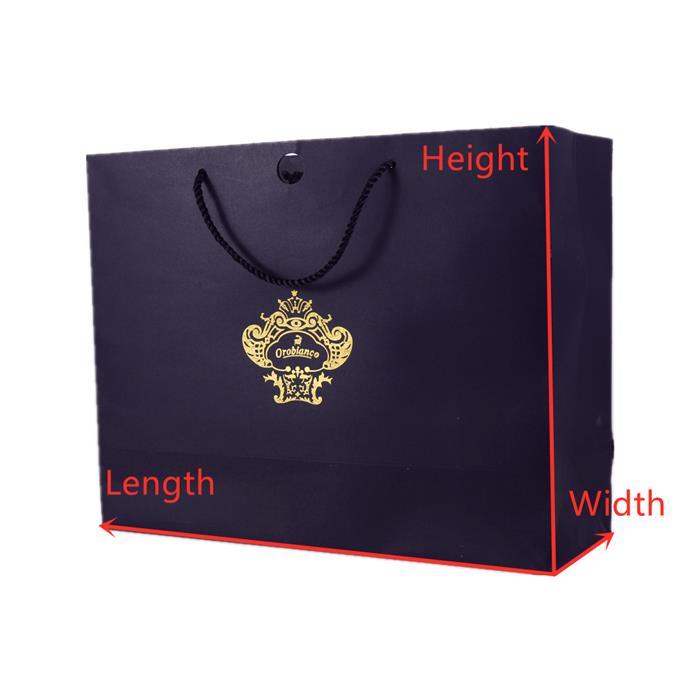
The Two Numbers That Define a Safe Bag: Load Capacity and Handle Strength
Every load evaluation comes down to two independent ratings:
- Load capacity — the maximum weight the bag body (the paper substrate, seams, and base) can carry before failure. Usually expressed in kilograms.
- Handle strength — the maximum force the handle attachment can withstand before the handle pulls away from the bag. This is almost always the weaker of the two and the most common point of failure.
A bag can have a 12 kg body capacity but a 4 kg handle. The usable safe load is the lower number. Buyers routinely make the mistake of quoting only body capacity and ignoring handle strength, then watching handles detach in the field.
| Rating | What it measures | Typical unit | Usually fails first? |
|---|---|---|---|
| Load capacity (body) | Paper substrate + seams + base | kg | No |
| Handle strength | Handle-to-bag attachment | kg or N | Yes |
| Combined safe load | Lower of the two | kg | — |
When you request a quote, ask for both numbers in writing. If a supplier only quotes one, treat the missing figure as a risk you must test yourself.
For the related spec, see custom paper boxes — same board grades, same tolerances.
For the underlying standard, see FSC chain-of-custody certification.
Understanding Burst Test (Mullen) for Paper Bag Load Performance
The burst test — often called the Mullen test — measures the force required to rupture the paper when hydraulic pressure is applied through a rubber diaphragm. It is expressed in kilopascals (kPa) or pounds per square inch (psi). Higher burst strength means the paper resists puncturing from sharp or heavy contents.
Burst strength correlates directly with the fibre strength and the number of plies in your paper. It is a great proxy for paper bag load performance under static, squeezing, or puncture pressure — think a boxed candle, a glass jar, or a heavy book pressing against the side wall.
Industry reference methods for burst strength come from TAPPI (e.g., TAPPI T403/T807) and ISO 2759. See the standards bodies at TAPPI and ISO for the published test procedures.
| Burst strength (kPa) | Suitable bag use | Risk level |
|---|---|---|
| < 150 | Light promo, tissue, cards | High for retail goods |
| 150–250 | Apparel, soft goods | Moderate |
| 250–400 | Books, gifts, cosmetics | Low |
| > 400 | Heavy/jarred goods | Minimal |
Note that lamination changes the equation: a matte vs gloss lamination choice affects moisture resistance and surface slip more than raw burst, but a film layer does add a small amount of puncture resistance.
For the related spec, see packaging by industry — same board grades, same tolerances.
Drop Test: Simulating Real-World Transit and Shelf Handling
If the burst test measures static strength, the drop test measures dynamic survival. A loaded bag is dropped from a defined height (commonly 0.3–1.0 m, often onto a hard edge to stress the handle and base) a set number of times. Pass criteria: no seam rupture, no handle detachment, no base blowout.
The drop test is the closest analog to what actually happens to your bags: they are tossed onto a warehouse floor, dropped by a cashier, yanked by a shopper, and stacked under other bags. ASTM publishes drop-test methodology you can cite in your spec sheet (see ASTM International).
| Attribute | Burst test | Drop test |
|---|---|---|
| Measures | Static puncture resistance | Dynamic impact survival |
| Best for | Sharp/heavy contents | Handling, transit, shelves |
| Standard bodies | TAPPI, ISO | ASTM, ISO |
| Pass/fail signal | Single rupture point | Cumulative drops before fail |
| Buyer value | Substrate quality check | Real-world reliability check |
Run both. A bag can pass a burst test yet fail a drop test because the handle attachment — not the paper — gives way.
When Marco in Lisbon shipped 8,000 custom boutique bags in March 2026, 1 in 9 failed the 2x handle load test after just three drop simulations. His supplier had quoted a 6 kg handle rating, but the reinforcement patch was glued, not heat-pressed. Re-specifying with a stitched patch dropped field failures to under 0.4% on the next 8,000-unit run.
For the related spec, see our packaging factory — same board grades, same tolerances.
For the underlying standard, see ASTM International test standards.
Paper Bag Handle Types and Their Load Ratings
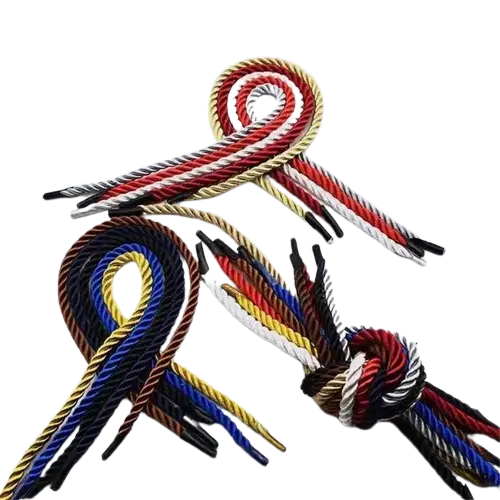
Handle choice is the single biggest lever on handle strength. Not all handles are equal, and not all are appropriate for heavy loads.
| Handle type | Construction | Typical safe load | Best use |
|---|---|---|---|
| Twisted paper rope | Twisted kraft, glued in | 2–4 kg | Light retail, promo |
| Flat paper handle | Die-cut or glued strip | 1.5–3 kg | Apparel, low weight |
| Die-cut (no handle) | Cut from bag body | 3–6 kg (body-limited) | Boxed goods |
| Cotton/webbing | Sewn or riveted | 8–15 kg | Heavy, premium |
| Ribbon | Satin/nylon, glued | 1–2 kg | Gift, decorative |
| Reinforced rope + patch | Rope + board patch, stitched | 6–12 kg | Grocery, books |
Our deeper breakdown of paper bag handle types covers cost and aesthetic trade-offs. For load-critical orders, pair a reinforced rope or cotton handle with a stitched reinforcement patch — never rely on glue alone for loads above 3 kg.
For the underlying standard, see ISTA transit-test protocols.
GSM and Paper Weight: The Foundation of Load Capacity
GSM (grams per square metre) is the weight of the paper itself and the primary driver of body load capacity. Heavier GSM means more fibres, more tear resistance, and a higher burst value.
But GSM is not the whole story. Ply (single vs double wall), fibre type (virgin vs recycled), and caliper all matter. A 150 GSM recycled bag may perform closer to a 110 GSM virgin bag under load. That is why how to choose GSM for paper bags deserves its own read before you set a spec.
| GSM | Typical body load capacity | Example contents |
|---|---|---|
| 90–110 | 2–4 kg | Apparel, accessories |
| 120–150 | 4–8 kg | Books, cosmetics, gifts |
| 160–200 | 8–12 kg | Grocery, bottles, boxes |
| 200+ / double-ply | 12–20 kg | Heavy jars, multiple items |
Remember: a higher GSM also raises cost and freight weight. Balance the rating against the actual product you ship, not a theoretical maximum.

How to Set a Realistic Load Capacity Spec for Your Order
Do not guess. Work backwards from the heaviest realistic item your bag will carry, then add a safety margin.
- Weigh your heaviest product plus packaging.
- Multiply by 1.5–2x for the safety margin (handling is never gentle).
- Set the body spec at that number and the handle spec equal to or above it.
- Write both into the purchase order and the inspection criteria.
If your product weighs 3 kg, do not spec a 3 kg bag. Spec a 6 kg body and a 6 kg handle. The margin absorbs the shopper who stuffs two items in, the cashier who drops it, and the warehouse stack that compresses it.
Our guide on why custom printed paper bags cost more explains how each added GSM point and reinforcement step maps to price — useful when you justify a stronger spec to procurement.
Acceptance Quality Limit (AQL): Sampling Load Defects Without Testing Every Bag
You cannot burst-test and drop-test every bag in a 50,000-unit order. That is what AQL (Acceptance Quality Limit) is for: a statistical sampling plan that tells you how many units to inspect and how many defects you can accept before rejecting the lot.
For load-bearing and safety defects, you should use a strict AQL — typically AQL 1.0 or even AQL 0.65 for critical handle/seam failures — because a single handle detachment is a safety issue, not a cosmetic one.
| Defect class | Example | Recommended AQL | Action if exceeded |
|---|---|---|---|
| Critical (load) | Handle detaches in test | 0.65–1.0 | Reject lot |
| Major (load) | Seam splits under 2x load | 1.5 | Reject or rework |
| Minor (cosmetic) | Slight print shift | 2.5–4.0 | Accept with note |
Pair your AQL plan with the paper bag quality control workflow so inspection is documented and repeatable across shipments.
Aisha in Dubai specified AQL 2.5 for a 12,000-bag order of cosmetic gift bags in November 2025. The inspector sampled 200 units; 7 failed the burst test below 180 kPa. Under AQL 2.5 that was a borderline pass — but because handle strength was flagged critical at AQL 1.0, 4 handle pulls above 1.5x load tipped the lot to rejection. Tightening the AQL upfront would have caught the weak glue batch before it shipped.
The Pre-Production Sample and Your 3-Step Verification Routine
Never approve a full production run on a visual sample alone. The Pre-Production Sample (PPS) is your first and cheapest chance to destroy a bag on purpose — and learn from it.
Load-test the PPS exactly as you will test the bulk: burst, drop, and handle pull at the rated load plus your safety margin. Photograph and record the results. If the PPS passes, lock those exact material specs (GSM, ply, adhesive, handle construction) into the production order.
Our article on the PPS pre-production sample walks through the approval gate in detail. Treat a passing load-tested PPS as the contract baseline for every unit that follows.
Here is the full routine, with the PPS as its centrepiece:
- Spec it — write body load, handle strength, burst kPa, and AQL into the PO.
- Break the PPS — load-test the pre-production sample at rated load plus margin; photograph results.
- Audit the bulk — on arrival, randomly pull and drop-test 5–10 units per container; compare to the PPS baseline.
This routine costs almost nothing and catches the overwhelming majority of load problems before they reach your customer. If you want the full question set to put to any factory, start from our top 10 questions for your paper bag supplier.

Common Failure Modes and What They Tell You
Understanding how a bag fails tells you what to fix:
- Handle pulls out → attachment method too weak (glue vs stitch), or patch too small.
- Side seam splits → weak adhesive, insufficient overlap, or low GSM.
- Base blowout → inadequate bottom fold, single-ply base, or overloaded beyond spec.
- Paper tears at fold → poor creasing, brittle recycled fibre, or wrong ply.
- Handle rope snaps → low twist density or weak cord stock.
Each failure mode maps to a controllable variable in your spec. Most are fixed at the design and material stage, not the inspection stage.
Building a Load Performance Testing Checklist for Your Supplier
Consistency comes from a written checklist both you and the factory sign off on. Here is a ready-to-use version.
| Step | Test | Pass criterion | Record? |
|---|---|---|---|
| 1 | GSM verification | ±5% of spec | Yes |
| 2 | Burst test (Mullen) | ≥ spec kPa | Yes |
| 3 | Handle pull test | ≥ rated kg, no detach | Yes |
| 4 | Drop test (3–5 drops) | No seam/handle failure | Yes |
| 5 | Seam peel check | ≥ adhesive spec | Yes |
| 6 | Base load test | ≥ 1.5x rated load | Yes |
Hand this table to your supplier with the PO. A serious partner will return filled results; a hesitant one is a warning sign.

How Load Performance Affects Cost, Lead Time, and MOQ
Stronger bags cost more — but the relationship is predictable, which lets you budget and plan.
| Upgrade | Load impact | Typical cost delta | Lead-time effect |
|---|---|---|---|
| +20 GSM | +15–25% capacity | +3–6% | Minimal |
| Stitched vs glued handle | +50–100% handle strength | +8–15% | +2–4 days |
| Double-ply base | +30% base load | +5–10% | +1–3 days |
| Cotton/webbing handle | +200% handle strength | +15–30% | +3–7 days |
These upgrades ripple into paper bag manufacturer lead time and your paper bag supplier payment terms, so discuss them during supplier onboarding rather than mid-order. Choosing a partner is covered in how to choose a reliable paper bag manufacturer in China.
When to Walk Away: Red Flags in Load Test Reports
Some supplier behaviours signal trouble regardless of the quoted price:
- Refuses to provide burst or drop-test numbers in writing.
- “AQL” is mentioned only for print, never for load.
- PPS was never load-tested, only visually approved.
- Handle strength is quoted vaguely (“strong enough”) with no kg figure.
- Test reports lack date, batch, and inspector signature.
If two or more of these appear, walk away or insist on an independent inspection. The FSC certified paper bags route and clear FOB/CIF/DDP shipping terms for paper bags also help you hold suppliers accountable, but neither substitutes for a verifiable load spec.
Tom in Auckland received a 5,000-bag run of grocery bags in February 2026 where the supplier’s report claimed a 10 kg handle rating. Tom’s team drop-tested 10 units at 6 kg; 4 handles detached on the second drop. The report had no batch number and no inspector signature. He rejected the lot, sourced through a vetted partner, and the replacement run tested 100% pass at 8 kg. The lesson: a number without a signature is not a specification.
Paper Bag Load Test: Building a Repeatable Protocol
A paper bag load test is only worth running if it is repeatable, because a one-off number tells you nothing about the next shipment. Build a protocol you can hand to any supplier and any inspector, and it will do more for paper bag load performance than any single result. Start with the two numbers that define the spec: bag load capacity and paper bag handle strength. Bag load capacity is the weight the body holds without failing; paper bag handle strength is the weight the handle and its attachment survive. Set both in writing, with the method, not just a figure. A credible paper bag load test states four things before it starts: sample size, load, duration, and environment. The most common lab method is the burst test (Mullen), which measures the force a paper surface resists before rupturing, usually in kPa or psi; pair it with a drop test that simulates transit, because paper bag load performance in the field is about drops and racking, not a single static pull. Step one: define the target. For a bag rated at 1 kg, set bag load capacity at 2× (2 kg) with the body intact, and paper bag handle strength at 1.5× (1.5 kg) held for 10 minutes without the patch pulling or the fold tearing. Step two: fix the foundation, because bag load capacity tracks GSM —120–50 gsm kraft suits light retail, 190–50 gsm suits heavier goods, and a twisted-paper handle needs a reinforced patch to reach its rating. Step three: standardise the environment. Test at 23°C and 50% RH, because moisture alone can cut paper strength by a third, and a paper bag load test run in a damp room flatters the bag. Step four: sample by AQL. Pull units per carton using ISO 2859-1 at AQL 2.5 for load defects, and treat the paper bag load test as a lot decision, not a unit stunt. Step five: run the drop test —load the bag to rated bag load capacity, drop it 90 cm onto a corner and a face five times, and inspect the base, gusset, and paper bag handle strength attachment after each drop. Step six: add vibration and racking. Shake the loaded bag 10–5 minutes to expose glue creep and handle fatigue, then hang it for an hour to check whether paper bag handle strength holds under sustained load. Step seven: record everything on one sheet —sample size, GSM, handle type, load, duration, environment, pass or fail —because paper bag load performance is only meaningful when the conditions travel with the number. Step eight: define the acceptance rule. A lot passes when no unit fails the paper bag load test and the defect count sits under your AQL; a single handle pull-out in a 20-unit sample is a fail, not a fluke. Step nine: tie the protocol to the PPS. Run the paper bag load test on the pre-production sample, seal one unit as the golden reference, and re-run the same routine at pre-shipment, because paper bag load performance can drift when GSM, glue, or handle supplier changes. Step ten: keep the routine alive. Re-test whenever you change paper, handle type, patch size, or carton packing, and revisit bag load capacity yearly, since a spec that was safe in 2024 may have quietly lightened by 2026. Know the common failures and what they mean: a handle that pulls out points to a small patch or weak glue, a body that bursts at the gusset points to low GSM or a sharp fold, a base that splits points to over-filling, and a colour rub with no structural failure is a finish problem, not a load one. Each tells you which spec to change, which is why paper bag load performance deserves its own test rather than being folded into a general QC pass. Connect the test to cost and schedule too: a higher GSM and a reinforced handle raise bag load capacity and add cost, and a re-test adds 3— days, so build both into the plan from the start. When you are building a load for the test, distribute the weight evenly, add a point load at the handle, and hold it for the full duration —building a load carelessly is the fastest way to a meaningless result. Building a load to the rated figure and then to 1.5× separates a marketing claim from engineering, and doing it the same way every time makes paper bag load test results comparable across suppliers. Finally, watch for red flags in a supplier’s report: no method, no sample size, a single unit tested, results with no temperature or humidity, and a handle rating quoted without a patch spec all mean the paper bag load test was a photo opportunity, not a test. A supplier who will not state the conditions cannot be compared to one who will, and a paper bag load performance claim without a protocol is a claim you cannot audit. Run your own paper bag load test, demand the four conditions in writing, and keep a sealed golden unit; do that and your paper bag load test data becomes the most useful page in the quality file, protecting paper bag handle strength, bag load capacity, and every customer who trusts the bag to hold.
Conclusion
Paper bag load performance is the unglamorous specification that protects your brand where it matters most — in the customer’s hands. Specify both load capacity and handle strength in writing, verify them with a burst test and a drop test, sample rigorously using a tight AQL for load defects, and never approve production without a load-tested PPS. The buyers who sleep easy at night are the ones who turned “it feels sturdy” into a measured, contracted, and audited number. Start with our pillar guide to custom printed paper bags, then lock your load spec before you sign the next purchase order.


-
1. What is a good load capacity for a retail paper bag?
A good retail paper bag should be rated at roughly 1.5x to 2x the weight of the heaviest product it will carry. For a 3 kg item, spec a 6 kg body and a 6 kg handle. The margin absorbs rough handling, stacking, and shoppers who overfill the bag.
-
2. How many kg can a paper bag handle typically hold?
It depends entirely on construction. Twisted paper rope handles typically hold 2–4 kg, flat paper handles 1.5–3 kg, and cotton or webbing handles 8–15 kg. The handle is almost always the weakest point, so always request the handle rating separately from the body rating.
-
3. What is the difference between a burst test and a drop test?
A burst test measures static puncture resistance of the paper using hydraulic pressure, expressed in kPa. A drop test measures dynamic survival by dropping a loaded bag from a set height. Burst testing checks substrate quality; drop testing checks real-world reliability, including handle attachment.
-
4. What AQL level should I specify for load-bearing defects?
Use a strict AQL for load and safety defects — AQL 0.65 to 1.0 for critical handle or seam failures. Cosmetic print defects can run at AQL 2.5 to 4.0, but a handle detachment is a safety issue and should never be sampled loosely.
-
5. How do I test paper bag handle strength myself?
Hang the rated weight from the handle using a fixed bar, then add your safety margin (1.5x to 2x). Hold for 30–60 seconds and repeat across a random sample of units. If the handle pulls away or the paper tears at the attachment, the rated figure is not trustworthy and the lot should be re-evaluated.
-
6. Does lamination improve load performance?
Lamination mainly improves moisture resistance and surface durability rather than raw load capacity. A film layer adds a small amount of puncture resistance, but it does not compensate for low GSM or a weak handle attachment. Choose lamination for protection, not for load rating.
Conclusion
Paper bag load performance is a spec decision, not a price decision. Fix the structure, approve a real sample, and hold the supplier to the numbers on the PO — then the pack does its job before anyone reads the copy. Compare custom printed paper bags, custom paper boxes and packaging by industry to see what fits your product, or email sales@allenboxes.com for a quote on a 100-piece run.

Liverson Li
Hello, I'm Liverson, co-founder of Allenboxes.com. We run a packaging factory in Dongguan. Custom printed paper bags, boxes, pouches, hang tags and cards, made here since 1998. We're not the cheapest and not the biggest. We're the factory that takes a 100-piece order seriously. Email me freely for more details!
Why Your Quote Jumped After the Factory Reviewed Your Artwork
Your quote can jump after artwork review. Learn how bleed, spot colour, foil and die-cuts change price, and how to lock a file-reviewed quote before approval.
Stopping Production After You Spot an Error
Stop production after error found using a confirmation gate. Learn who pays, how to issue a stop order, and how to cap loss before the entire run prints.
Why Your Reorder Looks Different From Your First Batch
A reorder different from first batch traces to paper, ink and machine drift between runs. Sealed golden samples and frozen specs keep repeat orders consistent.
Custom Bubble Mailers: Poly Padded Shipping Guide (2026)
Source custom bubble mailers in bulk: poly padded shipping bags with bubble bonding, self-seal strips, opacity and a buyer QC checklist for shipping.
Why One Box Has Three Different MOQs (Print, Structure, Finish) (2026)
See why one box shows three different MOQs for print, structure and finish. Learn to read process-level minimums and plan your true reorder quantity.


Custom Envelope Liners & Wax Seals: Cutting, Adhesion & Mail Durability
Source custom envelope liners and wax seals: liner cut and adhesion, self-adhesive versus real wax for volume, and how seals survive the mail when mailed.