
Is a Chinese Packaging Factory Safe to Work With?
Is a Chinese Packaging Factory Safe to Work With?
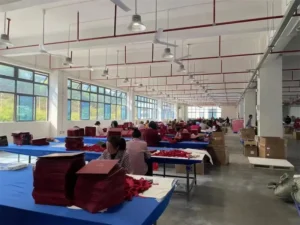
Is a Chinese packaging factory safe to hand a deposit to? Marcus decided the answer was no, and it cost him six months of margin. A friend had lost $4,000 to a website that vanished after taking a deposit, so Marcus paid triple for local boxes until his numbers stopped working. His worry was real, but the lesson was different: the problem was never the country, it was the lack of verification. You can safely import custom packaging from China when you know how to spot real manufacturers and protect your money. This guide walks you through exactly that, from red flags and certifications to contracts and quality control.
Key Takeaways
- A Chinese packaging factory safe enough to pay is one that shares a business licence, a unified social credit code and a factory address before you transfer any deposit.
- Standard payment structure is 30% deposit and 70% against the bill of lading; a supplier demanding 100% upfront with no escrow is the single loudest warning sign.
- Verify ISO 9001, FSC and SGS certificate numbers on the issuer database, because scammers photocopy genuine certificates and simply swap the company name on them.
- A paid
40 sample in your real material and artwork is the cheapest insurance available against a4,000 bulk run that misses colour, board weight or structure.
- Budget a pre-shipment inspection against AQL 2.5 on every order; the
280 Tom skipped on one container cost him6,000 in destroyed stock and a missed launch.
Why Overseas Brands Keep Choosing Chinese Packaging Manufacturers
China remains one of the world’s largest producers of paper and paperboard packaging for a simple reason: scale. A single industrial cluster in Guangdong or Zhejiang can source paper, printing, die-cutting, and finishing within a short radius. That vertical integration keeps unit costs low and lead times short.
For a brand owner, the math is hard to ignore. Custom printed boxes that cost 1.80 each in a Western market often run 0.40–0.70 from a qualified Chinese partner at volume. When your packaging is a hero element of the unboxing experience, those savings compound across every unit you ship.
But cost is only part of the story. Established custom packaging suppliers offer finishes, soft-touch lamination, foil stamping, embossing, that smaller local shops simply cannot match at price. The capability exists. The challenge is finding the right partner and managing the relationship well.
Why the Incoterm Quietly Sets Your Landed Cost
A quote is only comparable in the same term. Buyers see $0.39, $0.43, and $0.51 and pick the lowest, missing that the first is EXW, the second FOB, the third DDP, three different bundles of work and risk. The real number is landed cost: under FOB or CIF add freight, insurance, handling, broker, duty, and trucking; under DDP those sit inside the price. Normalize every quote to “bags on your dock” and the spread often flips. Our complete guide to custom printed paper bags keeps the spec constant so the only variable is the term.
The Three Worries Holding You Back (and Why They’re Fair)
Every importer I talk to names the same three fears. They are valid, and pretending they don’t exist helps no one.
Scams. Yes, fake trading companies pose as factories. Yes, some disappear after a deposit. This is the most cited reason brands hesitate to import custom packaging from China.
Quality. A beautiful sample that becomes a sloppy production run is a real risk. Color drift, weak glue, bent corners, these happen when oversight is thin.
Communication. Time zones, language gaps, and vague replies can turn a simple reorder into a two-week email thread.
The good news: each of these fears has a concrete antidote. The rest of this article is that antidote.
Keeping a Chinese Packaging Factory Safe Starts Before You Pay
Key points
- Verify the supplier’s legal entity before transferring any deposit.
- Always order a physical sample and approve it in writing.
- Use secure payment terms that protect your money.
- Treat prices far below market rate as a warning, not a win.
- Document every specification so “misunderstanding” can’t become an excuse.
Sourcing safely is a mindset more than a location. The buyers who get burned almost always skipped the verification step. They saw a low price, felt urgency, and wired money to a vague account. You will not be that buyer.
Start with a simple rule: no business license, no payment. A legitimate manufacturer will share its registered company name, unified social credit code, and factory address without hesitation. If someone stalls or redirects, that is your answer.
How to Verify a Chinese Packaging Manufacturer in 5 Steps
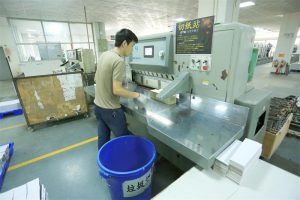
Verification does not require a flight to Shenzhen. You can do most of it from your laptop in an afternoon.
1. Ask for the Business License
Request the official license (business registration). Cross-check the company name on a public registry if you can. The document should show a manufacturing scope, not just “trading.”
2. Request a Live Video Factory Tour
A real factory will walk you through production on a video call. You should see presses, a sampling room, and staff, not a rented showroom. For a recorded walkthrough, see our guide on the remote factory audit video method.
3. Check Third-Party Certifications
ISO 9001, FSC, and SGS reports are hard to fake well. Ask for the certificate number and verify it against the ISO 9001 quality management standard scope the supplier claims. We cover the full list in packaging factory certifications.
4. Order a Sample
Pay for a real prototype. Hold it, bend it, drop-test it. A supplier confident in its work ships samples fast.
5. Search the Company Name Plus “Scam”
Old complaints surface in forums and trade groups. One negative thread is noise; a pattern is a signal.
Ready to run your own checks? Our step-by-step guide on how to verify a Chinese packaging factory covers documents, video tours, and sample requests in detail.
Red Flags: How to Avoid Packaging Scams
Most scams share a predictable shape. Learn it once and you will spot it every time.
The deposit trap. A “factory” asks for 100% payment upfront, refuses escrow, and grows quiet after the wire clears. Real manufacturers typically ask for 30% deposit and 70% against a bill of lading.
The too-good price. If a quote is 40% below every other supplier, someone is not planning to deliver the spec you approved.
No physical address. A WeChat-only “supplier” with a glamorous website and no verifiable factory is a classic fake.
Mini-story: A US candle brand owner, “Elena,” found a supplier offering rigid boxes at $0.30 each, half the market rate. The company had no business license and pushed for full payment via a personal account. Elena’s freight forwarder flagged the address as a shared mailbox. She walked away. Two months later, three other buyers in her Facebook group reported the same “factory” vanishing with deposits. The lesson: the cheapest quote is sometimes the most expensive mistake, and the best way to dodge these scams is to slow down before you pay.
Before you shortlist any supplier, review our full list of fake manufacturer red flags so you know exactly what to watch for.
Certifications That Prove a Reliable Packaging Supplier China
Certifications are not decoration. They are evidence that a reliable packaging supplier China operates to a standard you can audit. A certificate alone is not enough, verify the number on the issuer’s website. Scammers photocopy real certificates and swap the company name. Cross-check the registration date and scope. Where the report comes from an inspection body, confirm it directly with SGS third-party inspection rather than trusting the PDF you were emailed.
| Certification | What it proves | Where to verify |
|---|---|---|
| ISO 9001 | Documented quality management system | ISO.org |
| FSC | Paper sourced from responsible forests | FSC.org |
| SGS Test Report | Materials meet safety and spec limits | SGS |
| BSCI / Sedex | Social compliance in the factory | Sedex registry |
Sample Orders: Your Cheapest Form of Insurance
Key points
- A
40 sample beats a4,000 bad bulk order.
- Approve color, material, and structure in writing before production.
- Use the sample as the benchmark for your pre-shipment inspection.
- Keep the approved sample on file to resolve disputes later.
A sample is the single highest-return step in the entire sourcing process. It converts a stranger’s promise into a physical object you can judge. When you import custom packaging from China, treat the approved sample as the contract’s silent clause: if bulk does not match it, you have leverage.
Request the sample in your actual material and print. Do not accept a “similar stock” substitute. Color matching especially needs your real artwork and a printed proof.
Quality Control from Prototype to Bulk Run
Approving a sample is the start, not the finish. Production runs drift. Here is how to keep them honest.
Pre-production sample (PPS). Lock this version. Sign off on it.
During-production check. At 20–30% completion, inspect early batches for color and structure issues.
Pre-shipment inspection (PSI). Hire a third-party inspector (or use a remote video audit) to check AQL standards before the container leaves.
Mini-story: “Tom’s” tea brand approved a gorgeous matte box sample. He skipped the pre-shipment inspection to save
280. The container arrived with 30% of lids misaligned. His freight forwarder's photos, taken after the fact, could not trigger a refund. Tom now budgets inspection on every order, the280 he skipped cost him $6,000 in destroyed stock and a missed launch window. The pattern repeats across the industry: the brands that save on inspection usually pay for it later.
Inspection is also what keeps a Chinese packaging factory safe to reorder from, because it turns a promise into a measured pass or fail on every run.
Communication That Prevents Expensive Mistakes
Most “quality problems” are actually communication problems wearing a costume. A clear spec sheet removes the costume. Use cloud-shared files (not attachment ping-pong) so both sides see the same version. Summarize every call in an email: “As agreed, 350g SBS, matte lamination, PMS 485 red.” Written confirmation is your friend when memory differs.
| Risk | Simple mitigation |
|---|---|
| Vague emails | Send a one-page spec with drawings and tolerances |
| Time-zone delay | Set a 24-hour reply expectation in writing |
| Lost in translation | Confirm key points in both English and simple Chinese |
| Scope creep | List exactly what is and isn't included in the quote |
Payment Terms That Keep Your Deposit Safe
Never, ever wire 100% upfront to a new supplier. The standard safe structure is 30% deposit / 70% balance against shipping documents. For larger first orders, consider:
- Alibaba.com Trade Assurance, escrow that releases funds only on verified shipment.
- Letter of credit (L/C), bank-backed, better for big orders.
- Third-party inspection hold, release balance after PSI passes.
These tools exist precisely so you can import custom packaging from China without gambling your working capital. Use them.
Contracts, Incoterms, and Protecting Both Sides
A handshake over WeChat is not a contract. Write one. Even a one-page agreement should name the product spec, price, lead time, Incoterm (FOB Shenzhen is common), defect tolerance (AQL 2.5 is typical), and dispute process.
Incoterms decide who pays for freight and risk at each leg. FOB means the supplier handles goods to the port; you take over from there. DDP means they deliver to your door, convenient but hides true shipping cost. Read the current definitions in the ICC Incoterms rules before you sign, and know which one you agreed to.
Logistics: What Shipping Actually Looks Like
Ocean freight from South China to a US port runs roughly 18–35 days, plus customs. Budget for that. Air is 3–7 days but costs multiples more. A dependable Chinese packaging partner will help you book and provide clean documentation: commercial invoice, packing list, and bill of lading.
Plan around Chinese holidays, the Lunar New Year shutdown can freeze production for two to three weeks. Order early or watch your launch date slip.
Sourcing Agent vs. Going Direct, Which Is Safer?
Going direct saves margin but costs you time and risk-bearing. An agent adds 5–15% but screens factories, negotiates, and inspects. For your first order, an agent is often the safer path; once you have a vetted partner, going direct makes sense.
Key points
- First order: consider an agent for screening and inspection.
- Repeat orders with a trusted factory: go direct to save margin.
- Either way, keep your own verification checklist.
- Agents vary in quality, vet them with the same rigor.
Building a Supplier Relationship That Lasts
The brands that thrive long-term do not treat sourcing as a one-off transaction. They visit (or video-audit) annually, share forecasts, and pay on time. In return, their custom packaging partner prioritizes their slots during peak season and flags material price moves early.
Mini-story: “Priya’s” snack brand started with one cautious 2,000-unit order. After three on-time, in-spec runs, her supplier began sending her new material swatches quarterly and held price for a year during a paper spike. The relationship, built on clear specs and prompt payment, became her competitive edge. Trust, earned through small consistent steps, outperformed any single low quote, and it is why she continues to import custom packaging from China with confidence.
Frequently Asked Questions
-
1. Is a Chinese packaging factory safe to work with?
Yes, a Chinese packaging factory is safe to work with once you verify it properly. Ask for the business licence, run a live video tour of the presses, check the ISO and SGS certificate numbers on the issuer database, and pay 30% deposit with 70% against the bill of lading. Thousands of overseas brands import this way every year.
-
2. How do I verify a Chinese packaging manufacturer is real?
Request the business registration and confirm the scope says manufacturing rather than trading only. Book a live video walkthrough of the presses and the sampling room, cross-check any ISO or FSC certificate number on the issuer site, and pay for a real sample. A genuine factory answers all four requests within a day or two.
-
3. What are the most common packaging scams to avoid?
The three classics are 100% payment demanded upfront, refusal to share a business licence, and a quote roughly 40% under every other supplier. A WeChat-only contact with no verifiable street address is a fourth. Use escrow or a letter of credit, and never wire a deposit into a personal bank account.
-
4. How much does custom packaging from China typically cost?
Custom paper bags usually start near 0.10 to 0.50 per unit at volume, while rigid boxes run roughly 0.50 to 3.00 depending on board, wrap and finishing. Tooling, foil dies and small quantities push the unit price up, so always compare quotes at the same MOQ and the same written specification.
-
5. Which certifications show a reliable packaging supplier in China?
Look for ISO 9001 for quality management, FSC for responsible paper sourcing, SGS reports for material safety, and BSCI or Sedex for social compliance. Ask for the certificate number and the registration scope, then verify both on the issuer database, because scammers reuse genuine certificates with a swapped company name.
Your Next Step
You now have the full picture: the risks are real but manageable, and the rewards, lower cost, richer finishes, faster iteration, are why so many brands ultimately decide to import custom packaging from China. Start small. Verify hard. Sample before you commit. And keep every agreement in writing.
The safest importers are not the lucky ones. They are the prepared ones.