
How to Ship Paper Bags from China: Sea, Air, Express, and Customs
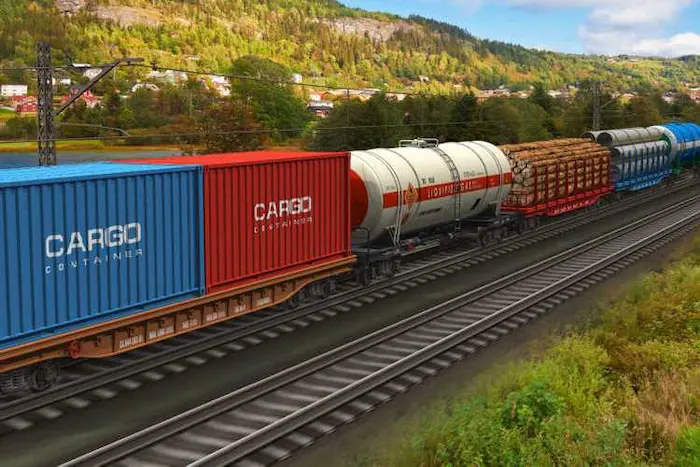
Ordering a run of custom printed paper bags from a China factory sounds simple, until the cartons land and the freight bill is larger than the print quote, or your launch bags sit in a bonded warehouse for two weeks because the commercial invoice listed the wrong HS code. Most shipping mistakes are not about bad luck; they are about a missing reference point. This playbook gives B2B buyers, brand owners, and promotional-product purchasers a practical, copy-ready map of the three ways to move cartons out of China, the incoterms that decide who pays and who risks, the HS codes and duty that decide your landed cost, and the packing and clearance steps that decide whether the shipment arrives intact. If you plan to ship paper bags from China for your retail or e-commerce brand, treat this as your spec sheet before you brief the forwarder.
The factory price is only half the story. The lane you choose, sea, air, or express, sets your landed cost, your cash-flow timing, and how fast a sold-out SKU gets replenished. Most first-time importers obsess over the print quote and ignore freight until the supplier asks, “FOB or CIF?” Too late. Memorising the three standard lanes below is the fastest way to brief a factory and a forwarder without ambiguity, and to stop a “cheap” quote from quietly becoming the expensive one.
Key Takeaways
- The realistic choice is sea (FCL/LCL), air, or express, match the lane to order size, urgency, and shelf date, not habit.
- Paper bags ship on volume, not weight: cost per CBM drives sea quotes, and above ~15–18 CBM, FCL beats LCL.
- FOB gives experienced importers the most control and usually the lowest real cost; always benchmark the supplier’s CIF against your own forwarder’s FOB quote.
- Duty is calculated on the CIF value using HS 4819.30; confirm the rate for your exact destination before the PO to avoid holds and penalties.
- Build lead time backward from the event date, sea runs 35–55 days door-to-door, so a 30-day “production” promise is never 30 days to shelf.
The Three Lanes Out of China: Sea, Air, Express
There are exactly three practical lanes for getting custom bags out of China: ocean freight (FCL or LCL), air freight, and international express courier. Ocean is cheapest per carton and slowest. Air is fast and brutal on cost. Express is the easiest door-to-door option for samples and small reorders under 200 kg. Your job is to match the lane to the order size, the urgency, and the shelf-date of the promotion the bags support.
Before you book anything, confirm your supplier’s readiness. A pre-production sample lets you lock specs, GSM weight, handle type, and lamination finish, so the shipment you receive actually matches what your customers see on the shelf. Shipping the wrong spec in a full container turns a freight problem into a write-off, because the cost of ocean freight makes re-shipping or destroying a mismatched run painful. When you ship paper bags from China, the freight decision and the spec decision are the same decision: get both right on the sample, and the rest of the order falls into place.
A useful mental model is the “urgency versus volume” axis. If the bags are cheap, bulky, and not time-critical, sea wins every time. If a stockout would cost more than the freight, air or express wins. And if you are still validating a manufacturer, express is how you move a single carton of samples without hiring a forwarder or learning incoterms at all.
FCL vs LCL Sea Freight: Pick by Volume, Not Habit
Ocean freight splits into two modes. FCL (Full Container Load) means you rent the whole 20- or 40-foot container. LCL (Less than Container Load) means your cartons share space with other importers’ goods inside one consolidated container. The break-even is usually around 15–18 cubic meters: below that, LCL wins on price; above it, FCL is cheaper per cubic meter and far less likely to suffer damage from excessive handling during consolidation and de-consolidation.
| Mode | Best for | Typical cost (China→US West) | Transit time | Risk |
|---|---|---|---|---|
| FCL 20ft | 10–28 CBM, full container | △2,400 | 18–28 days | Low (sealed) |
| FCL 40ft | 28–68 CBM | △3,400 | 18–30 days | Low |
| LCL | 1–15 CBM | △95 / CBM + AMS | 25–40 days | Medium (consolidation) |
Estimates only; container rates swing with fuel and season, request a current quote.
When you ship paper bags from China in cartons, volume matters more than weight. Paper bags are light and bulky, so you will almost always hit the CBM (volume) threshold before the weight limit. A 40-foot container holds roughly 1,200–1,500 standard cartons of custom bags depending on standard sizes and how tightly they are stacked. FCL also means one sealed unit from factory to port, which cuts the chance a mislabeled carton from another shipper ends up in your delivery, a real risk in LCL, where your goods are handled at least twice more: once to consolidate, once to de-consolidate.
“For our first container we were two cartons short of FCL and let the forwarder talk us into LCL to ‘save a week,'” says Tomás, operations lead at a Lisbon gift brand, June 2025. “The consolidation added nine days and one carton arrived crushed from double handling. Next run we padded the order to fill the 20ft, same goods, lower cost per carton, zero consolidation damage.” The lesson: treat 15 CBM as a floor, not a suggestion, and only drop to LCL when the order truly cannot wait or truly cannot fill a container.
Air Freight: Pay for Speed, Not Comfort
Air freight is the right call only when a stockout costs more than the freight. Expect 4–8 per kg from major Chinese gateways (Shenzhen, Shanghai, Ningbo) to the US or EU, with transit of 3–7 days plus 1–2 days of clearance. For a 500 kg reorder, that is 2,000–4,000, often 3–5x the sea cost for the same goods. Because paper bags are voluminous, the number that bites is chargeable weight: the greater of actual or volumetric weight, where bulky cartons frequently trigger the volumetric rate.
Use air when: a trade show, launch, or seasonal peak is in the next three weeks; the bags are high-margin; or you are testing a new custom printing method and need market feedback fast. Do not use air for routine replenishment of plain or FSC-certified paper bags where margin is thin. Always ask the forwarder for both the actual and the volumetric weight quote before you commit, because the spread on a light, bulky bag carton can be 30–50%.
A subtle trap: air quotes often exclude destination trucking and clearance, while a DDP air quote bundles them. Compare like for like. When you ship paper bags from China by air, the fastest way to overspend is to compare an “all-in” express number against a bare air-freight number and conclude air is cheaper than it is.
Express Courier: Samples and Sub-200 kg Reorders
DHL, FedEx, and UPS give you door-to-door delivery with built-in customs brokerage, ideal when you ship paper bags from China as a small batch or a single carton of samples. Rates run 6–12 per kg with declared value affecting duty, and delivery is 3–6 days globally. The trade-off: express is the most expensive per kg and the least transparent on origin handling, but it removes every incoterm and brokerage decision from your plate.
“We nearly missed a Berlin launch because our first 300 bags were stuck in LCL consolidation for six weeks,” says Lena, logistics lead at a Berlin cosmetics brand, April 2026. “Next reorder we sent 180 kg by DHL Express at €9.40/kg, €1,692 all-in, and the cartons were on our shelf in four days. The freight cost more than the bags, but the launch shipped on time.”
If you are still validating a supplier, an express sample is also how you confirm manufacturer certifications and print quality before committing to a full container. Many buyers run a 50–100 kg express sample order as a live test of the factory’s packaging and the courier’s clearance before they trust the same supplier with an FCL sea move.
Cost, Time, Volume: The Comparison That Matters
The single figure that drives your quote on a bulky, light product is cost per CBM for sea and cost per kg for air and express. Never let a supplier quote you only a per-kg sea number, because you will pay on volume. Use this cheat table as a first-pass selector, then refine with the incoterm and packing sections below.
| Lane | Cost per kg | Cost per CBM | Transit (door-to-door) | Min viable order | Best use |
|---|---|---|---|---|---|
| Sea FCL | △0.25 | △90 | 25–40 days | ~10 CBM | Bulk restock |
| Sea LCL | △0.60 | △95 | 30–45 days | 1 CBM | Mid orders |
| Air | △8 | — | 5–10 days | 100 kg | Urgent |
| Express | △12 | — | 3–7 days | 1 kg | Samples |
Estimates only; actual rates depend on your specs and lane, confirm with your forwarder before booking.
At volume, sea freight is unbeatable for paper bags. When you ship paper bags from China for a one-off event, express is the sanity-preserving choice. Note how the cost-per-kg bands overlap between air and express but the service model differs: air drops at the airport and needs your broker; express lands at your door. For a true urgent sample, pay the express premium for the door-to-door certainty; for a 300 kg urgent top-up, air plus your own broker is usually cheaper than express.
Incoterms: Who Pays, Who Risks, Who Clears
Incoterms decide who owns the shipment at each hand-off. For paper bag imports the three that show up constantly are FOB, CIF, and DDP. FOB (Free On Board) means you take risk once goods cross the ship’s rail at the Chinese port, you hire and pay the ocean carrier. CIF (Cost, Insurance, Freight) means the supplier pays freight to your destination port, but risk still transfers at origin. DDP (Delivered Duty Paid) means the supplier handles everything including customs duty and delivers to your door, convenient but you lose visibility on the real freight cost.
| Incoterm | Freight paid by | Risk transfers at | Import duty paid by | Best for |
|---|---|---|---|---|
| FOB | Buyer | Origin port | Buyer | Experienced importers with a forwarder |
| CIF | Seller | Origin port | Buyer | Buyers wanting one supplier invoice |
| DDP | Seller | Destination door | Seller | First-timers, low-volume, no broker |
“Our forwarder in Shenzhen quoted 2,050 for a 20ft FCL of 1,300 cartons to Los Angeles, versus the supplier's CIF number of 2,900,” notes Marcus, procurement manager at a US apparel label, March 2026. “Same boat, same terminal, we saved $850 and got the bill of lading in our name. FOB plus our own forwarder was the unlock.”
For a deeper breakdown of who-owns-what at each step, see our FOB vs CIF vs DDP guide. If you want control over your freight forwarder relationship and real landed-cost math, FOB is usually the sharpest choice. CIF looks simpler on paper but the supplier’s “included” freight is rarely the market rate, and you cannot contest it. DDP is the right training-wheels option for a first order, but once you have two shipments under your belt, moving to FOB typically pays back the forwarder fee within one container.
HS Codes and Customs Duty by Destination
Every carton you ship paper bags from China needs a correct HS (Harmonized System) code on the commercial invoice. Paper bags of paper or paperboard typically fall under HS 4819.30 (sacks and bags of paper/paperboard) or related packaging headings; exact sub-heading and duty rate depend on material, coating, and destination. Get this wrong and you invite inspection, re-classification, and penalty interest.
| Destination | Common HS heading | Indicative duty | Notes |
|---|---|---|---|
| USA | 4819.30 | 0–3.4% (often 0% MFN) | Check HTS sub-line |
| EU | 4819.30 | 0–5.7% | Verify with TARIC |
| UK | 4819.30 | 0–6% | Post-Brexit UKGT |
| Australia | 4819.30 | 0–5% | Often free under FTA |
Indicative only; verify the exact sub-heading and rate with your destination customs authority before the PO.
Duty is calculated on the CIF value (goods + freight + insurance), not the factory price, so ocean vs air changes your duty bill slightly, a DDP or CIF air shipment carries a higher duty base than a FOB sea shipment of the same goods. Confirm the exact rate with an official lookup before you agree payment terms. Authoritative references: the World Customs Organization HS database and the US ITCC HTS lookup. For US entry rules, US Customs and Border Protection is the source of truth. A coated or laminated bag may fall under a different sub-heading than a plain kraft bag, so state the material precisely on the invoice rather than letting the broker guess.
Customs Clearance: The Documents You Cannot Skip
Customs clearance fails for boring reasons: a missing invoice, a wrong HS code, or a commercial value that looks too round to be real. When you ship paper bags from China, assemble these before the vessel sails:
- Commercial invoice (value, HS code, incoterm)
- Packing list (cartons, dimensions, gross/net weight)
- Bill of lading (sea) or air waybill (air)
- Certificate of origin if claiming FTA preference
- FSC chain-of-custody certificate if you market the bags as certified
A freight forwarder or your own broker files these with the destination authority, for example UK HMRC import guidance if you land in Britain. Build clearance time (2–5 days) into your lead time plan so a cleared container does not sit on a dock accruing demurrage. Missing or inconsistent documents are the single most common cause of a hold, and a hold costs storage every day it sits. The cheapest insurance is a pre-flight document check: confirm the invoice value, HS code, and incoterm match the packing list and the bill of lading exactly, because a one-character mismatch between documents is enough to stop a container.
Carton Packing and Container Loading Specs
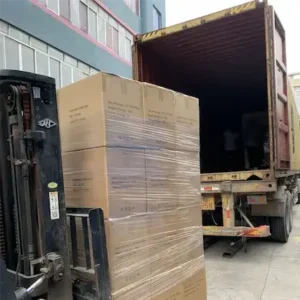
Paper bags crush easily and absorb moisture, so packing is a shipping problem, not just a factory problem. Standard export cartons are 5-ply (double-wall) with 40–60 bags per carton, carton size roughly 40×30×35 cm, gross weight 8–12 kg. Palletize at 40–48 cartons per standard pallet, stretch-wrapped, with desiccant inside the container for humid routes.
| Spec | Recommendation | Why |
|---|---|---|
| Carton ply | 5-ply double-wall | Stacking strength |
| Bags per carton | 40–60 | Keep under 12 kg gross |
| Pallet | 40–48 cartons | Forklift-safe |
| Container | 20ft / 40ft, desiccant | Moisture control |
| Loading | Block stow, no lean | Prevent collapse |
Align the container-loading spec with your inspection plan: a third-party QC check at the factory before loading catches crushed cartons and wrong SKUs while they are still cheap to fix. This is also where why custom bags cost more becomes visible, premium handles and coatings need more careful packing, and that care should be written into the packing list you hand your forwarder. For humid summer crossings (August trans-Pacific, for example), add 2–3 desiccant bags per container and request a lined container if the cargo is FSC-certified and must arrive presentation-clean. A container that arrives with wavy, damp cartons turns a winning order into a returns problem.
Freight Forwarder vs Express Courier: Who to Call
A freight forwarder consolidates and negotiates rates, handles documentation, and gives you FOB/CIF control. An express courier gives you a single tracking number and handles clearance automatically but at a premium. Use a forwarder for anything over ~200 kg or any FCL/LCL sea move. Use express for samples and urgent sub-200 kg parcels.
| Factor | Freight forwarder | Express courier |
|---|---|---|
| Best volume | >200 kg / LCL+ | <200 kg |
| Door-to-door | Optional (DDP) | Standard |
| Customs | You/your broker | Built-in |
| Rate control | High | Low |
| Tracking | Per leg | End-to-end |
If you have not yet chosen a reliable manufacturer, ask them which forwarders they work with; most Chinese bag factories have a preferred partner who already knows their carton dimensions and can quote a 20ft FCL without a site visit. The forwarder relationship is the lever that turns a supplier’s CIF number into your own verifiable FOB cost, and it is the difference between “the ship sailed” and “I know exactly where my cartons are.”
Lead Time: Factory Floor to Your Warehouse
Total lead time is not just transit. It is: production (15–30 days, longer for custom print), pre-shipment QC (1–3 days), origin customs (1–2 days), ocean (18–30 days) or air (5–10 days), destination clearance (2–5 days), and last-mile delivery (1–5 days). Realistically, a sea shipment runs 35–55 days door-to-door; air runs 10–18 days; express runs 5–9 days.
| Leg | Sea (days) | Air (days) | Express (days) |
|---|---|---|---|
| Production | 15–30 | 15–30 | 15–30 |
| Pre-shipment QC | 1–3 | 1–3 | 1–3 |
| Origin handling | 1–2 | 1–2 | 0–1 |
| Main transit | 18–30 | 5–10 | 3–6 |
| Destination clearance | 2–5 | 2–5 | 1–2 |
| Last mile | 1–5 | 1–5 | 1–2 |
| Total door-to-door | 35–55 | 10–18 | 5–9 |
Build a buffer. Promotions slip when a buyer treats “30-day production” as “30 days to shelf.” For a fixed event date, count backward from the event, not forward from the PO. Our manufacturer lead-time guide shows how to pressure-test supplier promises and build the freight leg into the calendar instead of hoping it fits. A printed launch banner that arrives the day after the event is the most expensive “free” mistake in this category.
Common Shipping Mistakes (and the Fix)
The most expensive errors are invisible until the invoice arrives. Mixing LCL when you are one carton short of FCL; accepting CIF without comparing to FOB; under-declaring value and triggering a customs hold; skipping desiccant on a humid August crossing; and forgetting that handle type and coating change carton weight and therefore per-kg air cost.
| Mistake | The fix |
|---|---|
| Quoting only per-kg on sea | Always ask for the per-CBM number — bags ship on volume |
| LCL when you’re near FCL | Pad the order to fill a 20ft; consolidation adds cost and risk |
| Accepting CIF unseen | Get one FOB quote from your own forwarder to benchmark |
| Under-declaring value | Declare real sample cost + freight; holds cost more than duty |
| No desiccant on humid lane | Add 2–3 bags per container in summer crossings |
| Ignoring print panel vs carton | Confirm carton dimensions from the factory before quoting air |
“We declared our first LCL at 0.20 a bag to ‘save duty’ and customs flagged it against market price,” recalls Priya, founder of a Mumbai gifting startup, February 2026. “The hold cost us 11 days of storage and a 220 re-classification fee. Now we declare the real pre-production sample cost plus freight, always.”
Before you book, run through the top 10 questions to ask your supplier so freight terms, HS codes, and packing standards are nailed down in writing. A five-minute email now prevents a five-day hold later. The pattern across every mistake above is the same: a number left unstated becomes a number decided by someone else, usually against you.
Decision Matrix: Match the Lane to the Order
Use this matrix as a final check before you send the purchase order. It locks the lane, the incoterm, and the packing spec together in one line, so find your situation, confirm the lane, then confirm the incoterm and the carton rule alongside it.
| If your situation is… | Start with lane | Incoterm | Also confirm |
|---|---|---|---|
| First sample / new factory | Express <200 kg | DDP (couriers handle it) | Manufacturer certifications on the sample |
| Event in <3 weeks, high margin | Air 100–500 kg | FOB + your broker | Both actual and volumetric weight quotes |
| Steady restock, >15 CBM | Sea FCL 20/40ft | FOB + your forwarder | Desiccant, block stow, QC at load |
| Mid order, 1–15 CBM | Sea LCL | FOB or CIF | Consolidation time baked into lead time |
| No broker, low volume | Express or DDP | DDP | Real freight cost hidden — budget for it |
| FSC-certified claim | Any, but clean | FOB | CoC certificate in the clearance file |
For the full sourcing picture, start from our pillar guide to custom printed paper bags, then drill into GSM, handles, finishes, and manufacturer selection. Pair any of these lanes with FSC-certified stock and keep your certifications verified so the claim holds up to audit at the border.
Ready to price your first shipment? Pull your specs together, size, material, print, handle, finish, and request a tiered FOB / CIF / DDP quote at 500, 1,000, and 5,000 units. That single email will tell you more than ten conflicting freight guesses ever will.
Conclusion
To ship paper bags from China well, the lane is the decision and the spec is the same decision: match the lane to the order, FCL sea for bulk restocks above ~15 CBM, LCL for mid volumes, air for urgent high-margin gaps, and express for samples and sub-200 kg reorders. Lock FOB with your own forwarder once you have volume, confirm the HS code and duty rate for your destination before the PO, and pack cartons to survive a humid ocean crossing. Build lead time backward from the event date, and keep customs documents ready before the vessel sails. Do that, and the only surprise at the port will be how predictable your landed cost turned out to be. Start your next order by asking the factory for a FOB quote alongside their CIF number, and choose with your eyes open.

-
1. How long does it take to ship paper bags from China by sea?
Door-to-door sea freight typically runs 30–40 days: 20–30 days production, 1–2 days origin handling, 20–30 days ocean, 2–5 days clearance, and 1–5 days last mile. LCL adds consolidation time, so plan for the longer end. Air runs 10–15 days and express 5–7 days if the order is urgent.
-
2. Is FCL or LCL cheaper for paper bags?
FCL is cheaper per cubic meter above roughly 18–25 CBM. Below that, LCL wins because you pay only for the space you use. Paper bags are bulky and light, so volume, not weight, usually drives the decision. FCL also avoids the double handling of consolidation, which reduces damage risk.
-
3. What HS code do paper bags use?
HS code of common paper bags is 481940.0000. Paper bags of paper commonly classify under HS 4819.30, but the exact sub-heading and duty rate depend on material, coating, and destination. Verify with the WCO HS database or your destination customs authority before shipping. A laminated bag may fall under a different sub-heading than a plain kraft bag.
-
4. Should I use FOB, CIF, or DDP?
FOB gives experienced importers the most control and usually the lowest real cost. CIF simplifies invoicing but hides the true freight. DDP is easiest for first-timers because the supplier handles duty, but you lose cost visibility. See our incoterms explainer. Move to FOB once you have a forwarder you trust.
-
5. How much does air freight cost per kg from China?
Expect 4 to 20 per kg from major Chinese gateways to the US or EU, plus clearance time. For a 500 kg reorder that is 2,000 to 4,000, using air only when a stockout would cost more than the freight. Always ask for the chargeable (volumetric) weight quote, because bulky bag cartons often trigger it.
-
6. Do I need a freight forwarder to ship paper bags from China?
Not for samples or sub 200 kg express parcels. Couriers handle clearance. For LCL or FCL sea moves and any shipment over 200 kg, a forwarder saves money and gives you control over the bill of lading and incoterms. A forwarder also benchmarks the supplier's CIF quote so you know the real freight cost.

ALLEN LEE
Hi, I’m Allen Lee, the owner of Allenboxes.com, I’ve been in the packaging industry for over 20 years and running a factory in China that produce for 10+ years, and the purpose of this article is to share with you the knowledge related to packaging from a Chinese supplier’s perspective.

3 Steps to Save Shipping costs
Step 1: Use foldable boxes instead of two-piece rigid boxes.
Step 2: Customize to a smaller box. And Order early to use economy ocean freight instead of air.
Step 3: Select Door to door service include all taxes and freight.
Why Your Quote Jumped After the Factory Reviewed Your Artwork
Your quote can jump after artwork review. Learn how bleed, spot colour, foil and die-cuts change price, and how to lock a file-reviewed quote before approval.
5 tips about Materials of Paper Boxes
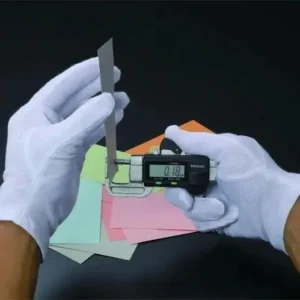
1.Measure thickness of raw material
2.Cut a 10x10cm sheet
3.Measure paper weight
4.Measure paper thickness
5.Check standard weight-thickness tables

12 Common Box Inserts Introduction
1.Sponge (with velvet or paper)2.EVA Foam 3.Pearl cotton (EPE)
4.Paper Cardboard 5.Corrugated Paper 6.Plastic Blister
7.Tissue Paper 8.Raffia Filler9.Bubble Beads
10.Satin Fabric,11.Small Pouches 12.Mini Pillows
6 steps to customize paper boxes
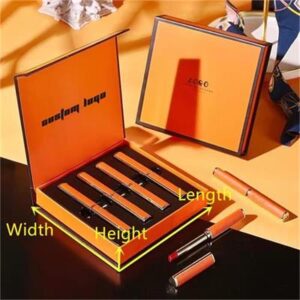
1. Design Box style, Colors, Logos.
2. Meet the budget.
3. Revisions & Prototyping
4. Final Approval & Refinement
5. Small-Batch Testing
6. Mass Production

How to control color discrepancy of paper boxes
1.Same materials /ink batch
2.Same printing machines & crew
3.Same finishing (lamination/coating)
4.Identical inspection tools + standards
5. Smart color choices (e.g., black + embossed logo)