
Medical Device Packaging Custom: A Buyer’s Guide to Sterile Barrier Solutions
The email from a procurement manager in Munich landed at two in the morning our time, and it was not a complaint. It was a near miss.
A shipment of single use surgical instruments had cleared customs, but the sterile barrier packaging had been opened by an inspector who then resealed it with ordinary tape, quietly breaking the seal integrity the whole programme depended on.
That is the world of medical device packaging custom work: one compromised pouch can recall an entire lot, and the cost is measured in patient risk rather than returns. This guide walks overseas buyers through the standards, materials and validation steps that keep a sterile device sterile until the moment of use.
Why Medical Device Packaging Custom Validation Cannot Be Skipped
The defining feature of any medical device packaging custom programme is that the sterile barrier must be validated before production ships, because a failed seal is a patient safety event rather than a quality complaint. Validation is the gate that separates a consumer box from a regulated sterile barrier system. Quality-system requirements behind a process like this are set out in ISO 9001.
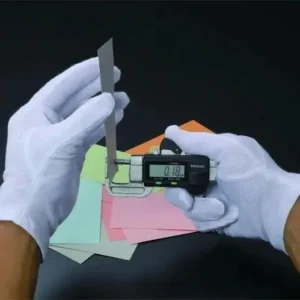
Consumer goods packaging is judged on look, protection and cost. Sterile barrier packaging is judged on whether it keeps a device aseptic through every hand, truck, warehouse and clinical step until opening. The moment a seal fails, the device is no longer sterile, and no amount of finished appearance fixes that. This is why regulatory bodies require documented validation rather than a supplier promise.
The financial logic is also different. A non sterile consumer shipment is a returns and replacement problem. A non sterile device can trigger a field corrective action, a regulatory report and a hit to your own quality system. Buyers who treat medical device packaging custom work as a printing job rather than a validation project usually learn the difference after an expensive incident.
Based on Allen Paper Products production data from 2024 to 2026, the programmes that run smoothest are the ones that engage packaging engineering before the device tooling is frozen. Early input prevents a tray shape that cannot be sealed, a film that cannot survive the chosen sterilization, or a label area too small for UDI requirements.
Mini Story: A diagnostic kit buyer in Lyon planned a launch around ethylene oxide sterilization but specified a pouch film that softened under EtO chamber heat. The first validation run showed seal creep and the lot was held. Reworking the film and re running validation delayed the launch by several weeks. The fix cost far less than a recall would have, but the schedule damage was real.
A practical way to avoid this class of incident is to define acceptance criteria before tooling. Buyers who write down the seal strength, the sterility maintenance period and the distribution profile up front give the engineer a target instead of a guess. The same discipline applies to labelling, tray geometry and the chosen sterilization route. When the criteria are explicit, the first validation either passes or fails fast, and a fast failure is far cheaper than a silent one discovered after shipment.
How ISO 11607-1 and ISO 11607-2 Govern the Build
ISO 11607 packaging standards split the work into two parts: part one covers material, design and finished sterile barrier system requirements, while part two covers validation and routine control of the packaging process. Together they form the backbone of nearly every sterile device submission.
ISO 11607-1 sets what the package must achieve. It defines the sterile barrier system, the protective packaging, and the acceptance criteria for the finished item. It addresses material characterisation, design inputs and the testing needed to prove the barrier performs. For a buyer, part one is the section that tells you whether a proposed pouch or tray actually meets the intent of the standard.
ISO 11607-2 is where the process is proven. It covers qualification of the sealing or forming equipment, the packaging process, and the ongoing controls that keep every subsequent unit consistent with the validated one. This is the part that demands documented settings, tolerances and revalidation triggers such as a material or machine change.
Layered on top sits ISO 13485, the quality management standard for medical device organisations. Where ISO 11607 tells you how to build and prove the package, ISO 13485 tells you how the manufacturer must run its whole system: traceability, change control, training and auditable records. For medical device packaging custom work, ISO 13485 is the umbrella that makes the ISO 11607 evidence trustworthy.
In practice the standard also expects a link to the device risk management file. The sterile barrier is not validated in isolation; its required performance is derived from how critical the device is and what happens if the barrier fails. A temporary external wafer shipper and an implantable device carry very different evidence expectations, even when the pouch looks similar on the bench. Buyers should expect the supplier to ask for the device classification early, because it sets the depth of testing.
Sterile Barrier Packaging Materials and the Tyvek Question
Tyvek pouches paired with a sterile barrier film remain the most common flexible sterile barrier packaging because the Tyvek membrane breathes for gas and radiation sterilization while blocking liquid and microbial entry. The porous side lets EtO gas and gamma energy through, then reseals the barrier conceptually by remaining a microbial shield.
Tyvek is a spunbonded high density polyethylene material. Its value is the combination of breathability and strength: it resists tearing better than paper, survives the sterilization chamber, and keeps a clean fiber free surface that matters in a cleanroom. The companion film, usually a polyester or polyethylene based web, forms the sealed window and the printable face.
The key decision is porous versus non porous. A porous Tyvek side is required for gas and irradiation methods because the sterilant must enter and exit. A fully non porous construction is used when the device is sterilized inside the package by a different route or when the barrier is built around a rigid container. Getting this wrong is the fastest way to fail validation.
Material choice also drives shelf life. The sterile barrier packaging must resist aging, flex cracking and seal degradation across the claimed storage period. That is why accelerated aging under ASTM F1980 is part of the evidence package rather than an optional extra. Buyers should ask which film grade was qualified and whether the print and adhesive survived the aging profile.
Sealing method is as important as the film. Most Tyvek pouches are heat sealed with a validated jaw temperature, dwell time and pressure, and the seal width is specified by the validation rather than by convenience. Some programmes use ultrasonic or cold seal formats, but the governing rule is identical: the seal must be reproducible and inspectable. A printed seal indicator or a transparent strip helps the clinical user confirm the barrier was never compromised before opening.
Mini Story: A Singapore based orthopaedic importer requested Tyvek pouches with a solvent based print that looked sharp on the bench. During gamma validation the adhesive near the print band weakened and the seal pulled at the corner. Switching to a validated radiation stable ink and moving the print away from the seal area solved it. The lesson was simple: the print process is part of the sterile barrier, not decoration on top of it.
Thermoformed Trays and Rigid Device Support
Thermoformed trays give rigid medical device packaging custom support for fragile instruments, holding the device steady inside the sterile barrier so it cannot puncture the pouch during distribution. For anything sharp, delicate or oddly shaped, a tray is often the difference between a clean opening and a hazard.
Thermoforming heats a plastic sheet, usually PETG or a similar medical grade polymer, and draws it into a mold that cradles the device. The formed tray then sits inside a lidding film or a pouch, presenting the instrument cleanly when opened. The geometry is designed so the device cannot shift, abrade or breach the barrier.
The tray also supports the clinical user. A well designed medical device packaging custom tray presents the instrument in the orientation a surgeon expects, reduces touch contamination, and can carry indicators or labels. In our experience at Allen Paper Products, the trays that perform best are those co developed with the device engineer rather than copied from a catalogue photo.
Material and thickness are driven by the sterilization route and the device weight. A heavier implant needs a stiffer, deeper draw, while a light kit can use a thinner formed web. The tray and its lidding must be qualified together as one sterile barrier system, because the seal between them is where failure most often occurs.
Choosing the lidding film is a separate decision from the tray. The lidding must peel cleanly, leave no residue on the tray flange, and survive the sterilization without delaminating. A peelable polyester or foil laminate is common, and the peel force is part of the validation because too strong a seal frustrates the clinician and too weak a seal fails in transit. Matching lidding to tray material avoids the well known problem of adhesive incompatibility at the flange.
Sterilization Compatibility: EtO, Gamma and Steam
Sterilization method decides the material: ethylene oxide and gamma suit Tyvek pouches, while steam autoclave demands a different barrier approach because heat and moisture defeat the porous membrane. Choose the sterilization route before you choose the pouch, not the other way around.

| Sterilization Method | Tyvek Pouch Suitability | Companion Barrier Need | Typical Device Examples |
|---|---|---|---|
| Ethylene oxide (EtO) | Strong | Medium gas permeable film | Catheters, procedure kits, electronics free devices |
| Gamma irradiation | Strong | Radiation stable film and ink | Implants, instruments, polymer devices |
| Steam autoclave | Limited | Non porous rigid or specialised barrier | Reusable rigid containers, heat stable goods |
Ethylene oxide is gentle on materials but requires a porous path for the gas to enter and aeration to leave. Tyvek pouches are the classic match. Gamma irradiation is a cold process that suits many polymers but demands radiation stable inks and films so the print and seal survive dose. Steam is the outlier: high heat and moisture make the standard Tyvek membrane a poor choice, and a different sterile barrier packaging design is usually specified.
Buyers sometimes assume one pouch fits every method. It does not. The same device validated for gamma may fail EtO if the film is wrong, and a steam validated pack is a different animal entirely. The medical device packaging custom specification should name the sterilization method on the first page, because every downstream material decision flows from it.
Ethylene oxide also brings aeration into the equation. Because residual gas must dissipate before the device is safe to use, the sterile barrier packaging must allow the gas to leave as well as enter, and the post sterilization handling must include a documented aeration period. This is another reason the porous Tyvek side matters: it is the path for both directions. Buyers should confirm the aeration time is compatible with their distribution plan rather than assuming the device ships immediately after the cycle ends.
Cleanroom Build: ISO Class 7 and Class 8
Sterile barrier packaging is assembled in controlled cleanroom environments, typically ISO Class 7 or Class 8, so particulate contamination on the sealing surface stays within the limits the device risk profile allows. The cleaner the build zone, the lower the bioburden load the sterilization must overcome.
ISO Class 7 and Class 8 describe airborne particle concentrations per cubic metre. The exact numerical limits are defined in the cleanroom standard and vary by particle size, so buyers should reference that document for thresholds rather than rely on a rounded figure. What matters commercially is that the build environment matches the device risk class and is monitored, not assumed.
Gowning, airflow and surface control all feed seal integrity. A speck of debris on a sealing jaw can create a channel that defeats the barrier. That is why cleanroom disciplines, routine environmental monitoring, and sealed equipment maintenance are part of a credible medical device packaging custom programme rather than optional polish.
In our experience at Allen Paper Products, the build environment is also where documentation discipline shows. Operators logging each run, monitoring results on file, and change control around the line are what a notified body wants to see. A beautiful pouch built in an uncontrolled room is still a compliance risk.
Environmental monitoring is not a one time certificate. Credible programmes trend particle counts, microbial settle plates and operator gowning results over time, and they react when a trend drifts. A single cleanroom audit photo proves little; a running record of monitored results proves the process is alive. For buyers, asking for a recent monitoring summary is a quick way to separate a genuinely controlled build from a room that was cleaned only for the visit.
UDI Labelling and Traceability on the Pouch
UDI labelling places a unique device identifier on the sterile barrier packaging so each pouch can be traced from production lot to clinical use, supporting recalls and inventory control. For regulated markets this is not a nice to have but a filing requirement.
The unique device identifier has a device identifier portion and a production identifier portion that may carry lot, serial and expiry data. On a pouch this appears as a machine readable code plus human readable text. The print must survive sterilization and the shelf life, which loops back to the radiation stable or EtO stable ink decision made earlier.
Traceability also protects the buyer. If a field issue appears, the UDI on the sterile barrier packaging lets you isolate the exact lot instead of recalling everything. For medical device packaging custom work, designing the label area, contrast and code size up front avoids a painful rework after validation is complete.
Regulations differ by market, and the label content expected in one region may not match another. Buyers should provide the target market and the required data elements early, because the pouch layout, code type and human readable block all depend on that input.
Global alignment of UDI expectations is still evolving, and what satisfies one authority may need adjustment for another. The pragmatic approach is to carry the maximum shared data set, device identifier, lot, serial where required and expiry, and to keep the code format flexible so a market specific variant can be produced without redesigning the sterile barrier. Building that flexibility into the original sterile barrier layout saves a costly reprint and revalidation later.
7 Checks Before You Approve a Medical Device Packaging Custom Order
Run these seven checks before you release a deposit on a medical device packaging custom order, because each one maps to a validation or compliance failure that is cheaper to catch on paper than in a held shipment.
- Sterilization method confirmed, the specification names EtO, gamma or steam, and every material choice downstream is justified by that route.
- ISO 11607 packaging pathway documented, part one design inputs and part two process validation are both planned, with responsible owners named.
- Material qualification on file, Tyvek grade, film grade and adhesive are characterised and matched to the device and sterilization.
- Cleanroom class verified, the build zone is ISO Class 7 or Class 8 as appropriate, with monitoring records available for audit.
- UDI layout approved, device identifier, lot, serial and expiry fit the pouch face with enough contrast and code size to scan.
- Accelerated aging plan set, ASTM F1980 and distribution testing such as ASTM D4169 are scoped before production begins.
- ISO 13485 certificate current, the manufacturer quality system is certified and covers sterile barrier packaging, not just general printing.
Points one and six are the ones buyers most often skip, and they are exactly the two that decide whether the sterile barrier performs after months on a shelf and a long ocean crossing.
A Buyer’s RFQ Checklist for Sterile Barrier Packaging
A tight request for quotation shortens the path from enquiry to a validated medical device packaging custom sample. Send the items below together and a usable quote returns in one round instead of five.
The most common delay is a missing sterilization route, because without it no material can be specified. The second is an undefined device risk class, which decides the cleanroom level and the validation depth. Give both up front and the engineering response becomes concrete rather than a list of questions.
- Device description, risk class and intended market for the sterile barrier packaging
- Sterilization method: ethylene oxide, gamma irradiation or steam autoclave
- Required sterile barrier format: Tyvek pouches, thermoformed tray with lidding, or rigid container
- Tyvek grade and film preferences, or a request for a qualified recommendation
- Cleanroom class expectation, typically ISO Class 7 or Class 8 for the build
- UDI data elements, code type and human readable content for the label
- Volume tiers, target shelf life and Incoterm for the shipment
RFQ line: Please quote medical device packaging custom for a Class II device, gamma sterilization, Tyvek pouch with PETG thermoformed tray insert, ISO Class 8 build, UDI barcode plus human readable lot and expiry, 5,000 units first order rising to 20,000, FOB Shanghai, validation report to ISO 11607 and ISO 13485 available before bulk.
That single line tells a competent supplier everything needed to respond with a qualification plan rather than a vague price.
Building a technical file for a notified body and unsure which tests apply? Contact allenboxes.com with your current device classification and sterilization route, and we will map the ISO 11607 packaging validation steps you need before production begins.
Ready to scope your programme with a packaging engineer instead of a catalogue? Send your device class, sterilization method and volume to the team at allenboxes.com and we will return a validation ready specification with material and cleanroom options laid out clearly.
FAQ
What is sterile barrier packaging and why does it matter?
Sterile barrier packaging is the combination of a sterile barrier system and its protective packaging that keeps a medical device sterile until the point of use. It matters because the barrier, not the device finish, is what prevents contamination during transit and storage. A validated sterile barrier packaging design is the only thing standing between a clean instrument and a clinical site.
What is the minimum order quantity for medical device packaging custom sterile pouches?
Minimum order quantities for medical device packaging custom sterile pouches are typically higher than for consumer goods because validation and cleanroom setup are fixed costs. Most overseas buyers plan a floor of several thousand units per configuration, with the exact number driven by device size, pouch format and sterilization route. Smaller pilot runs are possible but carry a higher per unit engineering cost.
How does ISO 11607 packaging validation work for a new device?
ISO 11607 packaging validation follows a structured path: material qualification, packaging process qualification and performance testing of the finished sterile barrier system. Tests such as ASTM D4169 for distribution and ASTM F1980 for accelerated ageing confirm the device reaches the user in a sterile state. A documented validation report is required before routine production begins for that configuration.
Can Tyvek pouches be used with steam sterilization?
Tyvek pouches are well suited to ethylene oxide and gamma irradiation but are generally not recommended for steam or autoclave sterilization because the porous membrane and heat are a poor match. For steam sterilized devices a different sterile barrier packaging approach is usually specified. Always confirm the sterilization method before finalising the pouch material to avoid a failed validation.
How long does sterile barrier packaging validation take before production?
Validation lead time depends on the device risk class and the testing scope, but buyers should plan for a process measured in weeks rather than days. Accelerated ageing under ASTM F1980 can extend the calendar if real time data is required, while distribution testing adds further steps. Early engagement with the packaging engineer shortens the overall path to a released configuration.
Why choose ISO 13485 certified manufacturing for device packaging?
ISO 13485 certified manufacturing matters because it signals a quality system built around medical device risk, traceability and documentation rather than general commercial printing. For sterile barrier packaging this means controlled processes, documented change control and auditable records that notified bodies expect. Choosing a supplier without this certification adds regulatory risk to your own device filing.
What should I specify when ordering medical device packaging custom?
Start with the build itself: material, size, print, finish, and any insert, then name the tolerance and the test. At Allen Paper Products we confirm the build with a pre-production sample (PPS) before any bulk run, so the order matches your approved proof.
How long does it take to get medical device packaging custom made and delivered?
Lead time runs from about 7-10 days for a sampled reorder to 20-35 days for a new custom build including proofing and production. Based on Allen Paper Products production data (2024-2026), most overseas buyers plan 4-6 weeks door-to-door.