
EU PPWR Packaging Compliance: A Buyer's Guide to Regulation (EU) 2025/40
What EU PPWR Packaging Compliance Actually Requires
The PPWR is built on seven mandatory pillars. Miss any one of them and your packaging can be barred, even if the other six are perfect. Most importers we talk to have heard of recycled content, but the regulation reaches far beyond that single number. Here is the full set, in plain language, because you cannot verify what you have not mapped.
Pillar 1, Substances of Concern (Article 5)
Two substance rules bite early. First, the sum of four heavy metals, lead, cadmium, mercury, and hexavalent chromium, must stay at or below 100 mg/kg in packaging and packaging components. That limit has applied since 11 February 2025, so it is live today, not a future deadline you can defer. Second, PFAS in food-contact packaging is banned from 12 August 2026. The trigger lines are specific and lab-measurable: any individual PFAS above 25 ppb, a sum of PFAS above 250 ppb, or total fluorine above 50 ppm forces you to prove the absence of intentionally added PFAS. These are not vague targets; they are pass-fail thresholds a lab can confirm in an afternoon.
Pillar 2, Recyclability Performance (Article 6)
From 1 January 2030, only packaging that meets recyclability grade A, B, or C may be placed on the market. Grades are scored on how much of the material actually gets recycled in real-world practice, not on a hopeful design intent:
| Grade | Minimum recyclability performance | Status from 1 Jan 2030 | Status from 1 Jan 2038 |
|---|---|---|---|
| A | ≥ 95% | Allowed | Allowed |
| B | ≥ 80% | Allowed | Allowed |
| C | ≥ 70% | Allowed | Not allowed (A/B only) |
Mono-material construction is strongly preferred because it scores higher and is far easier to evidence. A mixed-material laminate may look clever on the shelf but will struggle to clear even grade C. From 1 January 2038 the bar rises again: only grades A and B, meaning at least 80% recyclability, survive. Plan your material strategy for 2038 now, because the packaging you design in 2026 will still be in active use then.
Pillar 3, Minimum Recycled Content (Article 7)
Plastic packaging must contain a defined minimum of recycled material, calculated as a per-plant, per-year average using a mass-balance method. The thresholds differ by packaging type and step up in 2040:
| Packaging type | 2030 threshold | 2040 threshold |
|---|---|---|
| Contact-sensitive PET (excl. SUP bottles) | 30% | 50% |
| Other contact-sensitive plastic | 10% | 25% |
| Single-use plastic beverage bottles | 30% | 65% |
| Other plastic packaging | 35% | 65% |
Note the contact-sensitive PET carve-out explicitly excludes single-use plastic beverage bottles, which carry their own steeper curve. The key operational point is that your supplier must track recycled feedstock by plant and by year, not by a one-off certificate. Averaging across a whole plant lets you blend lots, but you still need named-source evidence for every lot you ship.
Pillar 4, Packaging Minimisation (Article 9)
From 2030, empty space in grouped, transport, and e-commerce packaging must not exceed 50% of the total volume. No false bottoms, no double walls dressed up as “premium protection.” The rule targets the oversized box shipping a tiny item across three cushion layers. Right-size your packaging or face non-compliance. This pillar is cheap to satisfy and expensive to ignore, because the fix is pure design discipline rather than a material swap.
Pillar 5, Single-Use Format Bans (Annex V)
From 2030, a list of specific single-use formats is banned outright. Examples that surprise buyers: shrink-wrap used solely to group suitcases at retail, secondary packaging around fresh fruit and vegetables under 1.5 kg, those tiny hotel toiletries, and single-use condiment portion packs. If your product relies on one of these formats, you need a redesign before 2030, full stop. There is no certificate that rescues a banned format.
Pillar 6, Reuse Targets
Reuse is no longer optional for certain streams. Transport packaging must hit 40% reuse by 2030, rising to 70% by 2040. Beverage containers must reach 10% reusable by 2030 and 40% by 2040. These are aggregate, system-level targets, but they shape what large buyers will demand from suppliers. A logistics client asking for returnable totes is not being difficult; they are steering toward the 2040 line, and they will expect your packaging to travel with them.
Pillar 7, Harmonised Labelling (Article 12)
From 12 August 2028, packaging carries colour-coded material pictograms so a consumer in Lisbon reads the same symbol as one in Helsinki: paper is blue, glass is green, plastic is yellow, composite is orange, metal is grey, and compostable is brown. Reuse information labelling follows from 12 February 2029. One label, one visual language of symbols, and no more national patchwork to design around.
Understanding these seven pillars is the first half of EU PPWR packaging compliance. The second half, proving you meet them, is where most supply chains quietly fail, because the proof lives in documents, not in good intentions.
Key Compliance Dates You Cannot Miss
Deadlines are staggered, and treating “2026” as one single event is a mistake that catches importers flat-footed. Here is the timeline that should live on your wall:
| Date | What happens |
|---|---|
| 22 Jan 2025 | PPWR published in the Official Journal |
| 11 Feb 2025 | In force; heavy-metals limit (≤100 mg/kg) applies |
| 12 Aug 2026 | Generally applies; PFAS food-contact ban; EU Declaration of Conformity required |
| 12 Aug 2028 | Harmonised colour-coded labelling pictograms required |
| 12 Feb 2029 | Reuse information labelling required |
| 1 Jan 2030 | Only A/B/C recyclable; void space ≤50%; single-use bans; first reuse targets |
| 1 Jan 2038 | Only A/B (≥80%) recyclable allowed |
The dates that bite earliest are 11 February 2025, which is already live for heavy metals, and 12 August 2026, which brings general application, the PFAS food-contact ban, and the Declaration of Conformity requirement. The 2030 cluster is the largest: recyclability grading, void-space limits, single-use bans, and the first reuse targets all land in the same year. Build your transition plan backward from 2030, not forward from today, and you will not be scrambling in a Q4 panic.
How to Verify EU PPWR Packaging Compliance
EU PPWR compliance is a verification exercise, not a form you sign and file away. A supplier’s word is not evidence. The regulation is explicit that self-declarations are not enough; you need verified, third-party or test-backed proof. This is the section to screenshot and send to your procurement team before the next purchase order.
The Evidence File You Must Hold
At minimum, your documentation pack should contain four things, and each one has to be specific rather than generic:
- Per-lot recycled-content certificates issued by named recyclers, not vague supplier letters stamped with a logo.
- Substance test reports covering the heavy-metal sum and, for food contact, a PFAS screening against the 25 ppb / 250 ppb / 50 ppm lines.
- A recyclability assessment placing the packaging in grade A, B, or C with the methodology stated.
- A full material breakdown listing every layer, adhesive, coating, and ink used in the construction.
Practical testing notes from the field matter here. Lab cut-samples of at least 50 g are acceptable, but different ink formulations need separate testing, one ink line does not cover another, because the chemistry differs. Test reports carry roughly 12 months of validity, so a certificate from two years ago is effectively expired and useless in an audit. Retain records for about five years for single-use packaging and ten years for reusable items; the longer horizon surprises people who expect a three-year shelf life on paperwork.
Conformity Path and the Declaration
Conformity runs through Annex VII internal production control, backed by a technical documentation file that describes how the product is made and checked. From 12 August 2026 you also need an EU Declaration of Conformity drawn on the Annex VIII model under Article 39. Without that DoC, you have no compliant packaging under the regulation, regardless of how clean your materials actually are. The Declaration is the capstone document; everything else feeds it.
Recognised Certifications
Three certifications are explicitly recognised and will smooth your verification conversation with buyers and customs: GRS (Global Recycled Standard), ISCC PLUS, and EN 15343 for recycled plastics traceability. A GRS or ISCC PLUS certificate from your converter answers the recycled-content pillar directly and saves you from reinventing the evidence. But a certificate is not a substitute for the per-lot evidence above; treat certifications as accelerators, not replacements, because an auditor will still want the underlying lot data.
Verifying EU PPWR packaging compliance is a documentation discipline, not a vibe. The buyers who sail through 2026 audits are the ones who built the file in 2025 and can produce it in minutes, not the ones who discover the gap during a border hold.
How Your Manufacturer Should Cooperate on Documentation
This is where a good factory earns its margin. Compliance is designed at the drawing board, but it is proven in the document folder. A serious manufacturer does not wait for you to ask; it hands you the evidence pack as a standard part of the order, the same way it ships the goods. EU PPWR packaging compliance is proven in the document folder, not the sales pitch, and the factory that understands this saves you from the most common failure mode in the entire regulation.
Consider the Ningbo cosmetics OEM we advised. They had retooled a PET jar with a kraft outer to look “green” and shipped it to a German retailer through the second half of 2025. The retailer’s own lab then flagged three failures on a routine check: a banned PFAS detected at 0.7 mg/kg, only 32% recycled PET against the 50% trajectory the buyer expected, and no recyclability evidence anywhere in the file. The jars were not yet legally banned, but the retailer suspended the line and demanded a full correction before any reorders. The fix cost the factory a reformulation run and a frantic certificate chase across two suppliers. A manufacturer that had supplied the per-lot certificates and a DoC upfront would have turned that audit into a one-page confirmation and kept the line running.
What cooperation looks like in practice, before you ever sign the tooling contract:
- The factory provides a material breakdown before tooling, so you approve compliance by design rather than discovering a problem after production.
- It issues per-lot recycled-content certificates from named recyclers with every shipment, not a single annual blanket letter.
- It runs substance testing on the actual ink and substrate combination you ordered, because a different ink changes the result.
- It delivers a draft EU Declaration of Conformity with the technical file, not after a panic call when customs asks for it.
Send us your spec for a free PPWR pre-compliance review. We will map your current packaging against all seven pillars and tell you, in writing, exactly where the gaps are before you commit to a production run.
Consequences of Getting Compliance Wrong
The enforcement architecture is staged, which sounds gentle and is not. Under Article 62, authorities first demand corrective action, then escalate. If correction fails, they move to a sales ban, market withdrawal, or recall. By the time you are at a recall, the commercial damage is done regardless of the fine, because the brand scar and the lost shelf space outlast the penalty.
The price of weak EU PPWR packaging compliance is paid first at the border, then in a delisted listing. The two failure points are different departments but the same root cause: a missing document or a non-compliant material that someone assumed would slide through.
The Money
Fines vary by member state, and the ranges are wide enough to matter to any size business. EPR failures typically run €25,000 to €200,000. Germany’s VerpackG can reach €500,000 plus disgorgement of profits earned on the non-compliant packaging. Some frameworks cite penalties of 2–6% of global annual turnover for serious breaches, which for a growing brand is an existential number rather than an annoying cost. Do not assume a small shipment means a small fine.
The Listing and the Border
Amazon requires EPR registration and a Declaration of Conformity; miss either and your listing goes dark, often through an automated check that does not send a warning first. Customs can hold non-compliant consignments at the port while you scramble for proof. Repeat offenders in Germany land on the public LUCID list, a searchable embarrassment that buyers and competitors can both see. Rivals can send warning letters under Germany’s UWG, turning your slip into their marketing weapon with a single lawyer’s letter.
A French-owned Amazon seller we advised lost three SKUs overnight in early 2026. The products were compliant in material, but the seller had never obtained a DoC and had no EPR registration in the relevant category. Amazon’s automated check caught the gap, delisted the ASINs, and froze the inventory in the warehouse. Reinstating them took six weeks, a compliance consultant, and a backlog of apologetic customer emails. The packaging was fine; the paperwork was the product, and the paperwork was missing.
Contrast that with a French importer of reusable drinkware who appointed an EU authorized representative in mid-2025, a full year ahead of the general application date. When their first container reached Rotterdam in 2026, the authorized rep’s details and the DoC were already on file with customs and the marketplace. The shipment cleared in a day with no hold and no follow-up request. The representative cost a few hundred euros a year and removed an entire class of risk that had sunk the Amazon seller above.
Get our PPWR documentation checklist so you can confirm, line by line, that your file would survive a customs or marketplace audit today rather than discovering the gap during one.
Non-EU Manufacturers and the EU Authorized Representative
If your factory sits outside the EU, as ours does, here in China, the regulation still reaches it directly. Non-EU manufacturers must appoint an EU authorized representative to act as the regulatory contact point inside the bloc. The importer is defined as the “producer” under Article 3(15) and carries the legal obligations on paper, but the manufacturer’s design decisions determine whether compliance is even possible in the first place. You cannot document your way out of a non-compliant material choice after the fact. EU PPWR packaging compliance cannot be retrofitted onto a bad material choice; the converter either built it right or did not.
The practical chain runs like this: the factory designs compliant packaging and supports the evidence; the manufacturer appoints or helps appoint an EU authorized representative; the importer registers as the producer and holds the Declaration of Conformity. Everyone has a defined role, and a single missing document sets the risk level for the whole shipment. Treat the authorized representative as infrastructure, not an optional extra, because customs and marketplaces will ask for it by name.
Stock Grandfathering: What You Can Still Sell
There is one piece of genuine good news for inventory you already hold. Packaging already placed on the EU market before the relevant deadline may be sold off; it is grandfathered and does not need to be pulled. But packaging not yet placed on the market must comply from the deadline, with no grace period for warehouse stock. The distinction that governs everything is “placed on the market,” not “sitting in a warehouse.” Stock sitting in a Shenzhen bonded warehouse on 11 August 2026 is not grandfathered; stock already on a German retail shelf is. Even grandfathering assumes your EU PPWR packaging compliance was already settled for stock genuinely placed before the line moved.
Plan your final non-compliant production run with that line firmly in mind, and do not let a supplier talk you into a giant pre-deadline dump that then sits unplaced in a non-EU warehouse past the deadline. A container that misses the placed-on-market window becomes non-compliant inventory overnight, and no one wants to eat that loss.
Your PPWR Pre-Flight Checklist
Getting EU PPWR packaging compliance right is a pre-production habit, not a post-shipment scramble. Run this list before your next production order. If you cannot tick every box, treat that order as a measured risk and close the gap before tooling starts.
- Materials: Heavy-metal sum ≤100 mg/kg confirmed by a current test report (live since February 2025).
- PFAS: Food-contact items screen below 25 ppb individual / 250 ppb sum / 50 ppm total fluorine, or you prove no intentionally added PFAS.
- Recyclability: Packaging graded A, B, or C with a written assessment; mono-material wherever the product allows it.
- Recycled content: Per-plant, per-year average meets the Article 7 threshold for your packaging type, backed by named-recycler certificates.
- Minimisation: Void space ≤50% for grouped, transport, and e-commerce formats; no false bottoms or double walls.
- Format bans: None of your formats appear in Annex V, such as shrink-wrapped suitcases, small secondary veg packs, mini toiletries, or condiment sachets.
- Reuse: If you are in transport or beverage streams, reuse targets are factored into your 2030 plan, not deferred.
- Labelling: Colour-coded pictograms ready for the 12 August 2028 deadline; reuse information ready for 12 February 2029.
- Conformity: EU Declaration of Conformity (Annex VIII, Art.39) issued from 12 August 2026, supported by the technical file and Annex VII production control.
- Representation: EU authorized representative appointed if you manufacture outside the EU; importer registered as producer.
- Records: Test reports under 12 months old; files retained five years for single-use or ten years for reusable packaging.
Ask our team about EU authorized representation if your factory is outside the EU and you want that box ticked before your first 2026 shipment rather than during your first customs hold.
EU PPWR packaging compliance is not a single certificate you buy. It is a system you build with a manufacturer who designs clean, documents thoroughly, and treats the Declaration of Conformity as part of the product, not an afterthought bolted on at the port.

-
1. When does the EU PPWR generally apply, and what changed from the old directive?
The EU PPWR (Regulation (EU) 2025/40) was published on 22 January 2025 and entered into force on 11 February 2025. It generally applies from 12 August 2026. It replaces Directive 94/62/EC and, as a Regulation, applies directly and uniformly across all 27 member states with no national transposition required.
-
2. What are the seven mandatory pillars of the PPWR?
The seven mandatory pillars are: (1) substances of concern, (2) recyclability grades A/B/C, (3) minimum recycled content, (4) packaging minimisation with ≤50% void space, (5) single-use format bans, (6) reuse targets, and (7) harmonised colour-coded labelling. Each pillar is independently enforceable, so missing even one can block your packaging.
-
3. How do I verify that my packaging meets PPWR requirements?
Verification requires more than a self-declaration. You need per-lot recycled-content certificates from named recyclers, substance test reports, a recyclability assessment, and a full material breakdown. Conformity follows Annex VII internal production control with a technical file and an EU Declaration of Conformity from 12 August 2026. Recognised proofs include GRS, ISCC PLUS, and EN 15343.
-
4. What documents must my manufacturer provide for compliance?
Your manufacturer should supply a pre-tooling material breakdown, per-lot recycled-content certificates from named recyclers, substance test reports covering the actual inks and substrates used, a recyclability grade assessment, and a draft EU Declaration of Conformity with the technical documentation file. These belong in your order pack, not in a follow-up panic email.
-
5. What are the consequences of non-compliance with the PPWR?
Enforcement is staged under Article 62: corrective action first, then sales ban, withdrawal, or recall. Fines range widely—EPR failures €25k–€200k, Germany's VerpackG up to €500k plus disgorgement, and some regimes cite 2–6% of global turnover. Marketplaces delist non-compliant listings, customs holds shipments, and repeat offenders face public LUCID listing.
-
6. Does packaging already on the EU market before the deadline get grandfathering?
Yes, with a key limit. Packaging already placed on the EU market before the relevant deadline may be sold off under grandfathering. Packaging not yet placed on the market must comply from the deadline. "Placed on the market" means sold or shipped to the EU, not merely sitting in a non-EU warehouse.
Conclusion
The EU Declaration of Conformity is not fine print, it is the product. EU PPWR packaging compliance comes down to one question: do you want to prove it at the drawing board or discover the gap at the port? Your factory designs packaging that can be documented, not just shipped. Your manufacturer appoints an EU authorized representative so customs has a name to call. Your importer holds the Declaration as the capstone of a file built in 2025, not chased in a panic in 2026. Choose the supplier relationship that treats compliance as part of the product, not a certificate bolted on at the dock, and never assume a clean sample is the finish line. Do that and the regulation stops being a threat and starts being a sourcing filter that quietly removes weak suppliers for you. Start your next order by sending one line to your factory: “Provide the per-lot certificates and a draft DoC before tooling”, and pick the partner who answers without blinking.

ALLEN LEE
Hi, I’m Allen Lee, the owner of Allenboxes.com, I’ve been in the packaging industry for over 20 years and running a factory in China that produce for 10+ years, and the purpose of this article is to share with you the knowledge related to packaging from a Chinese supplier’s perspective.


3 Steps to Save Shipping costs
Step 1: Use foldable boxes instead of two-piece rigid boxes.
Step 2: Customize to a smaller box. And Order early to use economy ocean freight instead of air.
Step 3: Select Door to door service include all taxes and freight.
Why Your Quote Jumped After the Factory Reviewed Your Artwork
Your quote can jump after artwork review. Learn how bleed, spot colour, foil and die-cuts change price, and how to lock a file-reviewed quote before approval.
5 tips about Materials of Paper Boxes
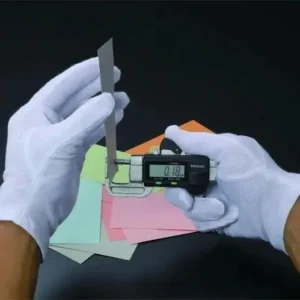
1.Measure thickness of raw material
2.Cut a 10x10cm sheet
3.Measure paper weight
4.Measure paper thickness
5.Check standard weight-thickness tables

12 Common Box Inserts Introduction
1.Sponge (with velvet or paper)2.EVA Foam 3.Pearl cotton (EPE)
4.Paper Cardboard 5.Corrugated Paper 6.Plastic Blister
7.Tissue Paper 8.Raffia Filler9.Bubble Beads
10.Satin Fabric,11.Small Pouches 12.Mini Pillows
6 steps to customize paper boxes
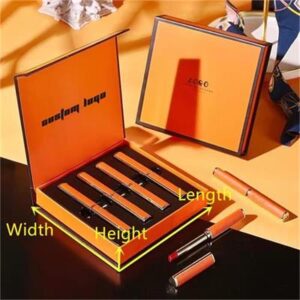
1. Design Box style, Colors, Logos.
2. Meet the budget.
3. Revisions & Prototyping
4. Final Approval & Refinement
5. Small-Batch Testing
6. Mass Production

How to control color discrepancy of paper boxes
1.Same materials /ink batch
2.Same printing machines & crew
3.Same finishing (lamination/coating)
4.Identical inspection tools + standards
5. Smart color choices (e.g., black + embossed logo)