
How to Choose the Right GSM for
Custom Paper Bags?
If you are buying custom printed paper bags and the factory asks for the GSM, that number decides more about your bag than the artwork ever will. How to choose the right GSM for custom paper bags comes down to balancing strength, print quality, cost, and sustainability against what your product actually weighs and how customers will carry it. GSM, or grams per square metre, is the single spec that most affects whether a bag feels premium or flimsy, whether the print looks crisp or bleeds, and whether your unit cost lands where you budgeted. This buyer’s guide explains what GSM means, how paper weight behaves across kraft, coated, and recycled stocks, and how to pick the right GSM for your product without overpaying for strength you will never use.
Key Takeaways
- GSM is the weight of one square metre of paper in grams. It is the closest thing to an objective “thickness” spec you can put on a purchase order.
- Heavier GSM means stronger and more rigid, but it also means higher material cost, higher freight, and a bigger environmental footprint.
- The right GSM depends on product weight, how the bag is carried, and how many times it is expected to be reused.
- Print quality improves with GSM up to a point, then depends more on coating and print method than on raw weight.
- Most retail and gift bags sit between 100 and 140 gsm; heavy or bottle items need 150 gsm and up with reinforced bottoms.
What Does GSM Mean for Paper Bags?
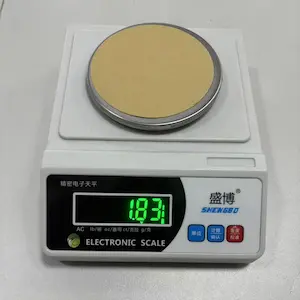
The GSM paper bag meaning is simple once you strip the jargon: GSM stands for grams per square metre, the mass of one square metre of the paper used to make the bag. The ISO 536:2019 standard for determining grammage defines how labs weigh and calculate this, so a properly tested 120 gsm is 120 gsm wherever the mill sits.
Buyers sometimes ask “what GSM for paper bags” as if there were one correct answer. There is not. GSM is a scale, not a threshold. A bigger number is not automatically better, it is simply heavier.
GSM Is the Same Thing as Basis Weight
In North American mills you may hear “basis weight” instead of GSM, measured in pounds per ream. They describe the same property in different units. When a supplier quotes GSM, they are quoting the international figure, which keeps your spec consistent across metric-quoting factories. Always confirm the unit on the proforma; a number with no unit is a number you cannot enforce.
Why GSM Beats “Thickness” in a Buyer Spec
Buyers often point at a sample and say “I want this thickness.” Thickness, or caliper, is a poor spec because two papers at the same caliper can weigh very differently depending on how much air is beaten into the pulp. GSM is denser, more reproducible, and easier for a factory to verify with a scale. If you want a spec that survives a quality dispute, write the GSM, not the feel. Our complete guide to custom printed paper bags treats GSM as the foundation every other spec builds on.
How GSM Is Measured (and Why the Number Varies)
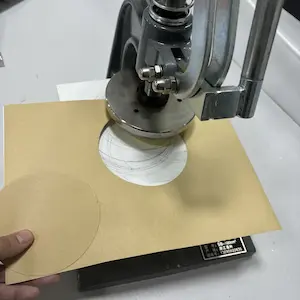
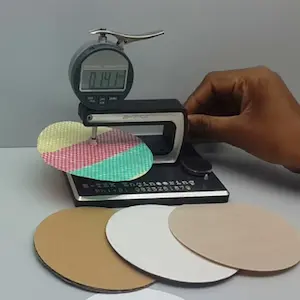
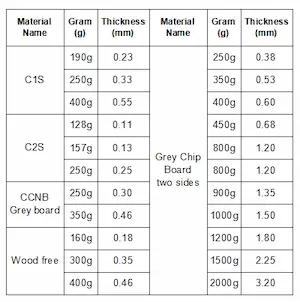
A mill measures GSM by cutting a precise sample area, conditioning it to a set humidity, and weighing it on a calibrated balance. The ISO 536 method exists so a buyer in one country can trust a number reported by a mill in another.
Grammage vs Caliper: Do Not Confuse Them
Caliper is the physical thickness in microns; GSM is the mass per area. A soft, bulky recycled sheet can read thick on calipers but light on GSM, while a dense SBS board can feel thin yet carry a high GSM. When a bag “feels sturdy,” it is usually high caliper or a stiff fibre mix, not necessarily high GSM. Spec the GSM and let caliper be a secondary check at incoming inspection.
Why Two Factories Quote Different GSM for the “Same” Bag
If factory A says 110 gsm and factory B says 128 gsm for the same-looking bag, the gap is often real. One may quote the face paper only and note the bottom board separately; the other may average the whole bag including a reinforced base. Always ask whether the quoted GSM is the body paper, and what GSM the bottom patch and handles use. The quality control before shipping step is where these gaps surface before they become returns.
GSM Range Quick Guide: Which Weight for Which Bag
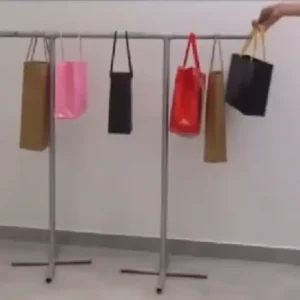
This paper bag GSM guide groups the common weights into four bands and the jobs they suit. Use it as a starting filter, then narrow with the strength and print tables below.
| GSM band | Paper feel | Typical products | Carry style | Usual capacity |
|---|---|---|---|---|
| 70–120 gsm | Light, folds easily | Tissue wraps, small cosmetics, jewelry, promo inserts | Handheld, no heavy load | Up to ~0.5 kg |
| 128–170 gsm | Standard retail | Apparel, books, accessories, light groceries | Twisted or flat paper handle | Up to ~2 kg |
| 180–210 gsm | Premium, rigid | Gift sets, bottles, multiple items, cosmetics kits | Reinforced paper or rope handle | Up to ~4 kg |
| 250–350 gsm | Heavy / box-style | Wine, jars, candles, subscription boxes | Often with base board, rigid handle | Up to ~6–8 kg |
The band you land in should follow the product, not the catalogue photo. A 90 gsm bag printed beautifully still tears if you put a 1 kg item in it.
Light Bags (70–90 gsm)
The “every purchase gets a bag” tier. Cheap and light to ship, fine for items that weigh almost nothing. Keep them for genuinely light goods, because a shopper adding a second item can pull the handle patch through.
Medium Bags (100–140 gsm)
The workhorse range for apparel, books, and gifts. A 120 gsm kraft or coated bag with a proper glued handle patch carries a 2 kg load and still prints cleanly. Most first-time importers should start their spec search here.
Heavy and Box-Style Bags (150–300 gsm)
Past 150 gsm you are usually building a structural bag: wine carriers, candle boxes, or rigid gift boxes. At this weight the bottom board and handle attachment matter more than the face GSM, because the load travels through the base.
Right GSM for Kraft Paper Bags
The right GSM for kraft paper bags depends on whether the kraft is natural (unbleached), bleached, or recycled, because fibre quality changes how much weight a given GSM will hold. The table compares the three common stocks at the same GSM bands.
| Stock type | Typical GSM | Relative strength | Print behaviour | Best use |
|---|---|---|---|---|
| Natural kraft | 100–150 gsm | High (long fibres) | Matte, slight ink soak | Eco brands, retail, groceries |
| Bleached / white kraft | 120–180 gsm | Medium-high | Bright, clean print | Cosmetics, premium retail |
| Recycled kraft | 80–150 gsm | Medium (shorter fibres) | Rougher, muted print | Sustainable positioning, light goods |
| Coated SBS board | 157–300 gsm | High (dense) | Glossy, sharp | Rigid boxes, luxury |
Natural kraft punches above its GSM because unbleached long fibres are stronger for the weight. Recycled kraft reads “green” but needs a higher GSM than virgin kraft to match the same tear resistance, since recycling shortens the fibres. If sustainability is the selling point, pair recycled content with an FSC-certified chain of custody rather than assuming a low GSM is automatically the greener choice.
Kraft vs Coated: Which to Spec
Kraft gives you strength per gram and an eco story. Coated SBS gives you a printable, glossy surface but at a much higher GSM and cost. If your brand is colour-critical, the coated board may be worth the weight; if your brand is natural or minimal, kraft at a lower GSM will look and perform better.
Watch the Bottom Board on Kraft
A kraft bag’s weak point is rarely the wall. It is the bottom fold and the handle patch. Many factories offer a separate base board at 200–300 gsm glued inside the fold. That single addition lets you run a lighter, cheaper wall GSM while keeping the bag from bursting under load. Ask for it by name.
How GSM Affects Bag Strength
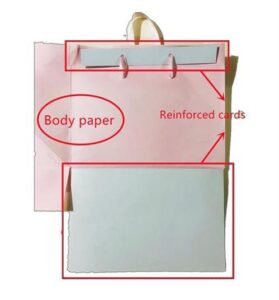
The link between GSM and strength is real but not linear. The table shows how load capacity typically moves as GSM rises for a standard single-wall kraft bag with a glued handle patch.
| GSM (kraft, single wall) | Drop-test behaviour | Comfortable load | Failure mode if overloaded |
|---|---|---|---|
| 90 gsm | Tears at fold under 1 kg | < 0.5 kg | Handle patch pulls through |
| 120 gsm | Holds a 2 kg drop | ~2 kg | Bottom crease splits |
| 150 gsm | Holds a 5 kg drop | ~4 kg | Handle rope cuts in |
| 250 gsm | Holds a 7 kg drop | ~6 kg | Base board delamination |
GSM raises the ceiling, but the failure mode shifts from paper to construction as you go up. Past a point, adding GSM stops helping because the handle or the glue joint fails first.
Handles and Reinforcement Matter as Much as GSM
A 150 gsm bag with a weak glued patch will fail lower than a 120 gsm bag with a reinforced, knotted handle. When you review handle styles, match the handle to the GSM: rope and die-cut handles need more wall strength than a twisted paper handle that spreads load across a wider patch.
Why a 120 gsm SBS Can Out-Hold a 150 gsm Weak Kraft
Dense coated boards resist puncture and folding better than fluffy kraft at the same grammage. “Higher GSM” is not a guarantee of “stronger bag” unless the fibre and construction are equal, so a side-by-side PPS (pre-production sample) beats any spec sheet when strength is on the line.
How GSM Affects Print Quality
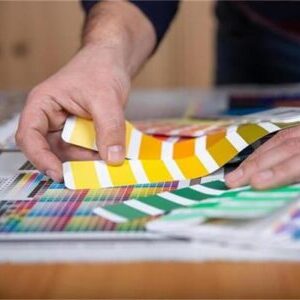
Print quality improves with GSM, but only up to the point where the substrate stops soaking ink. After that, coating and print method take over. The table maps the usual outcome.
| GSM (uncoated kraft) | Ink behaviour | Readable detail | Best print method |
|---|---|---|---|
| 70–90 gsm | Soaks, shows through | Coarse, risk of bleed | Flexo, simple 1–2 colour |
| 100–150 gsm | Balanced absorption | Good for logos, text | Flexo, screen, digital |
| 157–190 gsm | Stable, minimal soak | Crisp, fine lines hold | Most methods |
| 190+ gsm coated | No soak, sits on surface | Sharpest, photoreal | Offset, digital, hot foil |
For fine brand colours and small text, a 120–150 gsm uncoated kraft already prints well. Photoreal imagery or foil needs a coated board at 190 gsm or above, a trade-off in cost and eco weight that our look at printing methods compared breaks down by run size.
Ink Absorption and Show-Through
Low-GSM uncoated paper drinks ink, so dense fills look patchy and reversed-out text can ghost to the back. If your design is ink-heavy, step up to at least 120 gsm or move to a coated stock. Show-through also worsens on porous recycled kraft.
Coated vs Uncoated Substrate
Coating lets a lower-GSM board print like a much heavier one because ink sits on top. If print is your priority and eco weight is a concern, a 190 gsm coated SBS often beats a 220 gsm uncoated kraft for sharpness while staying competitive on cost. Choose the substrate for the look, then set GSM for strength.
How GSM Affects Unit Cost
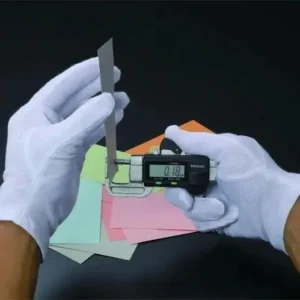
GSM is the largest single driver of paper cost, and paper is most of a bag’s material price. The table shows how unit price and landed cost typically move as GSM climbs, holding size and print constant.
| GSM (kraft, same size) | Relative material cost | Freight effect | Where cost really climbs |
|---|---|---|---|
| 80 gsm | 1.0x (baseline) | Lightest | Minimal |
| 120 gsm | ~1.3x | Slightly heavier | Paper only |
| 157 gsm | ~1.7x | Heavier | Paper + shipping |
| 250 gsm | ~2.4x | Noticeably heavier | Paper + freight + handling |
Doubling GSM more than doubles landed cost, because you pay for the extra paper twice: once in material and again in the heavier carton that fits fewer bags per cubic metre. Our piece on why printed bags cost more separates paper, print, and finish from freight.
Where the Cost Actually Climbs
It is rarely the paper alone. A heavier bag means a heavier master carton, fewer units per carton, and higher per-unit ocean and warehouse handling. The freight multiplier is why a 200 gsm “just to be safe” bag can add 30–40% to landed cost over a 120 gsm bag that would have done the job.
Finding the Cost Floor With MOQ
Higher GSM also raises the minimum viable order, because heavy paper needs a longer run to amortise setup. Check the custom printed paper bags MOQ against your volume before committing to a heavy spec.
Eco Profile: Does a Higher GSM Hurt Sustainability?
A heavier bag uses more fibre and more freight fuel, so on the surface higher GSM looks worse for the planet. But the greener metric is “did the bag survive its job.” A 90 gsm bag that tears and gets binned is worse than a 130 gsm bag a customer reuses ten times. The ISO 18601:2013 framework for packaging and the environment pushes buyers to optimise the whole system, not just minimise material at the point of sale.
Material Use vs Reuse Rate
If a lighter bag fails and is discarded, its lower GSM bought nothing. If a slightly heavier bag is reused as a gift or storage sack, its extra fibre is paid back many times. For most retail brands, the sweet spot is the lightest GSM that survives repeated carry and still looks worth keeping.
FSC and Recycled Content
GSM says nothing about where the fibre came from. Pair your chosen weight with FSC-certified or high-recycled content to make the eco claim real. A 120 gsm FSC kraft bag outperforms a 200 gsm virgin board on footprint while lasting as long for the use case.
How to Choose the Right GSM for Your Product

Use a three-step filter rather than guessing: start from the product, then the use case, then the print.
Match GSM to Product Weight and Shape
Weigh your heaviest typical item, then add 50% for shopper behaviour. A 500 g item wants at least 120 gsm with a reinforced base; a 2 kg item wants 150 gsm plus a base board; anything near 4 kg wants 180 gsm or a rigid box build. Sharp or wet items need a coated or laminated wall regardless of GSM.
Match GSM to the Use Case
- Retail takeaway: 100–128 gsm kraft, twisted handle.
- Gift / premium: 157–190 gsm, rope or reinforced paper handle.
- Bottles, jars, candles: 210 gsm+ with base board and a rigid handle.
- Subscription / shipping: 250–300 gsm coated or laminated, often a mailer-box form.
If you are unsure which use case your SKU fits, our complete guide to custom printed paper bags walks the full decision tree from product to spec.
Three Buyers, Three GSM Lessons
Composite cases drawn from common import situations; figures reflect typical 2025–2026 market ranges.
Marco, Italian cosmetics brand owner, under-specced and the handles tore (March 2025). Marco ordered 10,000 natural kraft bags at 150 gsm for 600 g glass serum bottles, seduced by the lowest quote. In-store, the glued handle patch pulled through the paper on roughly 14% of bags under a two-bottle purchase, and a retailer refused the batch. He rush-reordered 12,000 at 180 gsm with a 200 gsm base board at €0.11 extra per unit, about €1,320 in avoidable cost plus the lost shelf placement. “I bought the lightest bag to save money,” he said. “It cost me the launch slot.”
Priya, US stationery brand founder, over-specced and paid for strength nobody needed (June 2025). Priya’s 80 g notebooks were going into 200 gsm laminated bags “just to be safe.” The bags weighed more than the product, freight rose, and customers called them bulky. Switching the 20,000-unit run to a 120 gsm uncoated kraft with a reinforced base saved $0.18 per unit, about $3,600, and the bags actually photographed better. “The heavy bag was a solution to a problem my product never had,” she noted.
Tom, Oregon specialty coffee roaster, found the sweet spot (November 2025). Tom ships 340 g bags of beans and tested 130, 150, and 180 gsm kraft with a 200 gsm bottom board. The 150 gsm version passed a 1.2 kg drop test (a full bag plus a refill) and cost $0.06 less per unit than 180 gsm. Across 30,000 bags that was $1,800 back in margin with no strength sacrifice. “One number down, zero complaints up,” he said.
Common GSM Mistakes When Specifying Paper Bags
A few errors show up often enough to name them, because each one either wastes money or ships a weak bag.
Specifying by “Feel” Instead of Grams
“I want it like this sample” is not a spec. Two buyers can hand you the same-looking bag and one is 110 gsm, the other 150 gsm. Write the GSM on the purchase order and the PPS, or you have no basis to reject an underweight shipment.
Ignoring the Handle and Bottom Board
As the strength table showed, the handle patch and base board fail before the wall does. A 120 gsm bag with a 200 gsm base and knotted handle can beat a 160 gsm bag with a skimpy patch. Make base-board GSM and handle attachment part of the written spec, not a factory default.
Using One GSM for Every SKU
A brand with a 50 g sticker and a 3 kg gift set should not ship both in 120 gsm bags. Light items waste money at high GSM; heavy items fail at low GSM. Set a small GSM ladder per product line, and our guide to choose a reliable manufacturer explains how to get honest GSM advice instead of an upsell.
A Practical GSM Spec Workflow for Your Next Order
Turn the theory into a repeatable process so every reorder is comparable and every bag actually holds.
Step 1: Weigh Your Product and Add a Margin
Put your heaviest SKU on a scale, multiply by 1.5 for real-world shopper behaviour, and pick the GSM band from the strength table. Do this per product line, not per brand.
Step 2: Pick a Range and Order a PPS
Request a PPS (pre-production sample) at your two candidate GSMs, 120 and 150 for example, and physically load them with your product plus margin. The bag you can drop, drag, and hang from the handle wins. This single step prevents both the Marco and Priya mistakes above.
Step 3: Test Before Bulk and Confirm the Line
Once the PPS passes, lock the GSM, base-board GSM, and handle type in writing, then run quality control before shipping on the bulk to verify the mill did not drift down to save paper. Your manufacturer lead time and supplier payment terms should be set alongside the spec, because a heavier GSM can stretch both the production window and the deposit you need to place. For the freight leg, our explainer on Incoterms / shipping shows how the chosen weight changes your container maths.
If you would rather have a partner spec the GSM with you than gamble on a number, start from our complete guide to custom printed paper bags and shortlist suppliers who show test data instead of a single price.

-
1. What does GSM mean for paper bags?
GSM means grams per square metre, the weight of one square metre of the paper used to make the bag. A 120 gsm bag uses paper that weighs 120 grams per square metre. It is the standard way to specify paper weight on a purchase order, defined by the ISO 536 method so figures are comparable across mills.
-
2. What GSM is typical for retail, gift, and heavy-item bags?
Most retail and apparel bags use 100–120 gsm. Gift and premium bags run 130–170 gsm with a reinforced handle. Bottles, jars, candles, and other heavy items need 150 gsm and up, almost always with a separate base board of 200 gsm or more. Very heavy or box-style bags use 190–300 gsm coated board.
-
3. Does higher GSM always mean a stronger bag?
A higher GSM uses more fibre and more freight fuel, but the greener question is whether the bag survives its job. A light bag that tears and is discarded is worse than a slightly heavier bag a customer reuses. Pair your chosen weight with FSC-certified or recycled fibre so the eco claim holds, and avoid over-speccing strength you will never use.
-
4. How do I test whether my chosen GSM is strong enough?
Order a PPS at your candidate GSM, load it with your heaviest product plus about 50% margin, then drop, drag, and hang it from the handle. If the base creases or the handle patch pulls, step up the GSM or add a base board. Confirm the bulk order with incoming quality control so the mill has not drifted below the agreed grammage.
-
5. Does GSM affect print quality on paper bags?
Yes, up to a point. Low GSM uncoated kraft soaks ink and can look patchy or show through. Around 120 to 150 gsm, uncoated paper prints cleanly for logos and text. For photoreal images or foil, you need a coated board at 190 gsm or above, where the coating, not the GSM, does the work. Match the substrate to the artwork first, then set GSM for strength.
-
6. Does a higher GSM hurt the eco profile of my bags?
A higher GSM uses more fibre and more freight fuel, but the greener question is whether the bag survives its job. A light bag that tears and is discarded is worse than a slightly heavier bag a customer reuses. Pair your chosen weight with FSC certified or recycled fibre so the eco claim holds, and avoid over-speccing strength you will never use.
Conclusion
Choosing the right GSM for custom paper bags is not about picking the biggest number. It is about matching paper weight to what your product weighs, how customers carry it, and how sharp your print needs to be, then stopping there. Start from the GSM range guide, check the strength and print tables, and remember that the handle patch and base board often decide the outcome before the wall GSM does. Under-speccing tears your brand at the register; over-speccing quietly drains margin you could spend on a second print colour or a faster reorder.
Weigh the product, add a margin for shopper behaviour, order a PPS at two candidate weights, and let a physical drop test settle the debate. Begin your next order by locking the GSM, base-board weight, and handle type in writing, then verify them at quality control before the container sails.

ALLEN LEE
Hi, I’m Allen Lee, the owner of Allenboxes.com, I’ve been in the packaging industry for over 20 years and running a factory in China that produce for 10+ years, and the purpose of this article is to share with you the knowledge related to packaging from a Chinese supplier’s perspective.


3 Steps to Save Shipping costs
Step 1: Use foldable boxes instead of two-piece rigid boxes.
Step 2: Customize to a smaller box. And Order early to use economy ocean freight instead of air.
Step 3: Select Door to door service include all taxes and freight.
Why Your Quote Jumped After the Factory Reviewed Your Artwork
Your quote can jump after artwork review. Learn how bleed, spot colour, foil and die-cuts change price, and how to lock a file-reviewed quote before approval.
5 tips about Materials of Paper Boxes
1.Measure thickness of raw material
2.Cut a 10x10cm sheet
3.Measure paper weight
4.Measure paper thickness
5.Check standard weight-thickness tables

12 Common Box Inserts Introduction
1.Sponge (with velvet or paper)2.EVA Foam 3.Pearl cotton (EPE)
4.Paper Cardboard 5.Corrugated Paper 6.Plastic Blister
7.Tissue Paper 8.Raffia Filler9.Bubble Beads
10.Satin Fabric,11.Small Pouches 12.Mini Pillows
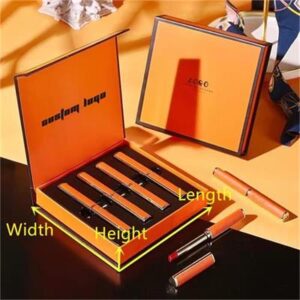
6 steps to customize paper boxes
1. Design Box style, Colors, Logos.
2. Meet the budget.
3. Revisions & Prototyping
4. Final Approval & Refinement
5. Small-Batch Testing
6. Mass Production
How to control color discrepancy of paper boxes
1.Same materials /ink batch
2.Same printing machines & crew
3.Same finishing (lamination/coating)
4.Identical inspection tools + standards
5. Smart color choices (e.g., black + embossed logo)