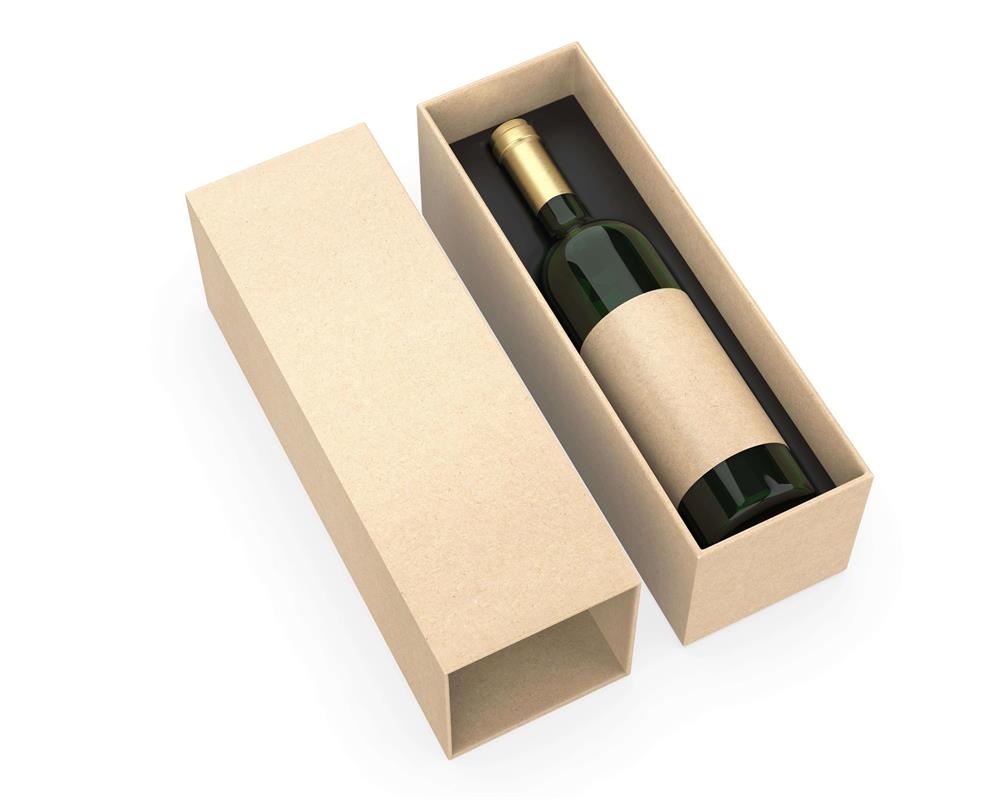
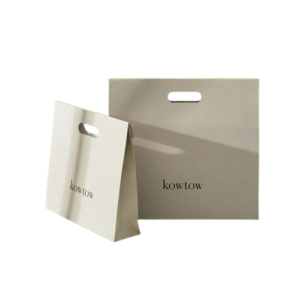
belt bag and box from APP custom packaging material

What Affects Custom Packaging Cost: The 7 Real Drivers

What affects custom packaging cost is never one number — five variables can swing your quote by 20–40%, and buyers who know them stop overpaying.

Two buyers ask for the same-looking box. One quote comes back 40% higher. Neither supplier is cheating.

Packaging price is not a number someone invents. It is the sum of seven drivers, and most buyers only ever see two of them. Here are all seven, ranked by impact — plus the three that get misjudged most often.

We have quoted 1,000+ projects across 80+ countries since 1998. This is the list we actually work from, and the list behind every custom packaging manufacturer quote worth reading.

Every spec below comes out of our own plant in Dongguan — see Allen Paper Products for the full capability list.

packaging cost factors

The Seven Drivers, Ranked By Impact

1. Material — the biggest single swing

Board grade and weight come first. Wrap comes second.

A rigid board at 1,200gsm and one at 800gsm look nearly identical in a photograph. In the hand they are different products. The same is true of wrap: a standard coated art paper and a textured specialty stock sit a meaningful step apart per sheet, and that gap widens at low volume.

The common mistake is comparing rigid against folding carton and stopping there. That is the easy comparison. The real money is in the grade within the category you already chose.

Sustainable grades complicate the picture — in a good way. FSC-certified board and recycled content used to carry a clear premium. Today they are frequently the default, and increasingly the requirement. Which brings us to driver seven.

2. Structure — priced in assembly minutes

Factories do not price structure by how it looks. They price it by how long it takes to build.

A straight tuck carton is cut, folded and glued in a short sequence. A rigid box with a shoulder neck, a hinged lid, a magnet closure and a ribbon pull is a series of stations, each with a pair of hands and a set of minutes attached.

The critical difference from material: labour does not amortise the way board does. Material cost falls per unit as volume rises. Assembly minutes fall far more slowly. So structure is a bigger cost factor at 5,000 pieces than at 500 — the opposite of what most buyers assume.

If your run is small, structure is cheap and material dominates. If your run is large, the ranking reverses.

3. Finishes — they compound, they don’t add

Brands treat finishes as additions. One more foil, one more spot UV, one more emboss. Each one looks like a small line item.

They are not additive. Every extra process adds three things: setup, per-unit processing, and yield loss. That last one is invisible on the quote and shows up in your reject rate. Four finishes on one box means four registration tolerances stacked on each other, and the scrap rate climbs faster than the sum of the parts.

One hero finish reads as deliberate. Four reads as uncertain. The second is also the more expensive box.

4. Quantity — the driver you can always change

Quantity is the only lever you can pull without changing the product, which is exactly why it gets over-pulled.

Yes, unit price falls as volume rises. But the curve flattens. The steepest drop sits between the minimum and the first real price break; beyond that, each additional unit saves less. Buyers chase the bottom of a curve they will never reach, and finance the chase with inventory they did not need.

Ask for the quote at two or three quantities and look at the total, not the unit. Then buy where the curve flattens, not where the unit price is lowest. Unsold boxes are a cost driver too — they just never appear on the quote.

At 100 pcs, quantity is working against you hardest. That is the floor, and it is the right place to validate, not the right place to optimise. A custom packaging manufacturer that quotes you at two or three quantities up front is doing the arithmetic with you rather than at you.

5. Tooling — the driver that behaves like a subscription

Cutting dies, hot-stamp plates, emboss dies, mould tools. Paid once. Reused many times. Or paid again, if you were careless.

Two things inflate tooling cost:

  • Non-standard dimensions. A die is cut to your dieline. A box sized to an exotic footprint needs its own die; one sized to a common footprint may already exist, or will be reusable across your range later.
  • Redesigns between runs. Change the structure by a few millimetres and you buy the die again.

Tooling is the driver where a decision made in the design phase quietly sets your cost for the next three years. Treat the dieline as infrastructure, not as artwork.

6. Freight — you are billed on volume, not weight

This is the driver buyers leave out of the budget entirely, then complain about.

Carriers charge on dimensional weight. A rigid box shipped assembled is mostly air. A heavy premium structure on a long route can cost more to move than to make — and that is before duties, which vary by destination and Incoterm. FOB, CIF and DDP produce genuinely different landed numbers from the same unit price.

Two levers: ship flat where the structure allows, and set the carton size honestly. Reducing box height by a few millimetres can drop you a freight tier across an entire container.

Always compare landed cost. Unit cost alone has ended more packaging budgets than any material choice.

7. Compliance — invisible until it blocks a shipment

FSC chain-of-custody documentation. EU packaging waste rules. Recyclability claims. Retailer-specific material declarations.

The cost is rarely the compliant material itself. The cost is the retrofit — re-sourcing board late in the process, re-printing to remove a laminate that fails a recyclability test, re-papering documentation a fortnight before a launch.

Compliance is cheap when it is a line on the first spec sheet and expensive when it is a phone call in week six. Raise it at quote stage. A custom packaging supplier who asks about your destination market before you ask about price is saving you that phone call.

For the related spec, see custom printed paper bags — same board grades, same tolerances.

Which Driver Moves the Number Most

Driver Impact on unit cost How predictable Worth cutting?
Material Very high High, once specified Sometimes — never on visible surfaces
Structure High, and grows with volume Medium Yes, at high volume especially
Finishes Medium per finish, compounding High Yes — first place to cut
Quantity High at the low end, then flattens High Buy at the flattening point
Tooling One-off, amortised High Yes, via standard dimensions
Freight High on long routes Low — volatile rates Yes, via flat-pack and sizing
Compliance Low if planned, high if retrofitted High No — plan it instead

Read it this way: material and structure set the floor. Finishes and tooling are where you have room to negotiate with yourself. Freight and compliance are where budgets actually break.

For the related spec, see custom paper boxes — same board grades, same tolerances.
For the underlying standard, see FSC chain-of-custody certification.

The Three Drivers Buyers Misjudge

Ranked by how often we watch it happen.

1. Freight. Because it appears on a different invoice, from a different company, three weeks later. It is still part of your packaging cost. Get a landed estimate at quote stage, not after production.

2. Structure. Because buyers evaluate structure visually and factories price it in minutes. A box that looks 10% fancier can take 40% longer to assemble — and that gap never closes at scale.

3. Compliance. Because it feels like paperwork rather than cost. It is not. It is a reprint, a re-source and a delay, all arriving together.

For the related spec, see packaging by industry — same board grades, same tolerances.

What to Ask For Instead of One Number

A single unit price tells you nothing you can act on. Ask for this instead:

  1. An itemised quote — material, structure labour, finishes, tooling and freight separated.
  2. Two or three quantities — so you can see where the curve flattens.
  3. The largest single line item, and why. A good supplier can name it immediately.
  4. A cost comparison on one change — drop one finish, step down one board grade, ship flat. Three questions. Usually one of them halves the gap.

If a supplier will not break the number apart, they are not hiding a margin. They are hiding a driver you were going to pay for anyway.

Any custom packaging factory running its own tooling, printing and assembly can answer all four in a day. One that brokers the work out usually cannot — because it does not know either.

For the related spec, see our packaging factory — same board grades, same tolerances.

For the underlying standard, see ASTM International test standards.

What We Do

  • 24-hour quote with a full cost breakdown — every driver itemised, so you can see which one is actually setting your price.
  • MOQ 100 pcs, so you can validate a spec at real cost before committing to volume.
  • Free customised samples, delivered in 5 days, so the board grade and finish are approved in your hand, not on a screen.
  • 5,000 m² plant, 100 staff, FSC-certified and PPWR-ready — 28 years in production since 1998, for 50+ brands across 80+ countries.

Every quote we issue names the driver setting your price. That is the whole point of an itemised breakdown — you cannot manage a number you cannot see into.

Send us a dieline, or just dimensions and a target quantity. We will tell you which of the seven is driving your number, and which one you should cut first.


For the underlying standard, see the EPA recycling guidance.

What Affects Custom Packaging Wholesale: The Volume Band Logic

Wholesale pricing is banded, not linear. At 500 units you spread setup thin; at 5,000 the per-unit drops 18–30%. Three bands matter: 100–999 (sample-to-small-run), 1,000–4,999 (standard wholesale), and 5,000+ (container economics). What affects custom packaging wholesale most is where you land relative to the next band. If you are at 950 units, ask for the 1,000 price — the jump is often under 4% and resets your whole cost base.

What Affects Custom Packaging Supplier Quotes: Five Lines to Audit

A supplier quote hides five movable lines: material (gsm and board grade), tooling (die and plate fees), finishing (foil, emboss, lamination), freight (billed on volume, not weight), and compliance (FSC, PPWR). What affects custom packaging supplier pricing is how each line is amortized. Ask for a breakdown, not a lump sum. Two quotes for the same box can differ 30% purely on board grade and freight terms. Compare line by line or you compare nothing.

What Affects Custom Packaging Manufacturer Costs: Tooling and Lead Time

At the manufacturer, tooling and lead time set the floor. A new die runs 1–3 days and is reused on reorders; a fresh plate set adds 2–4 days. What affects custom packaging manufacturer economics most is machine changeover — short runs pay it every time. Book in the off-peak window (March–July) to shave 5–10%. Reuse your die across seasons and the second order costs materially less than the first.

What Affects Custom Packaging Bulk Pricing: The Container Cube

In bulk, you are billed on volume, not weight. Rigid boxes with air inside cube out fast — a pallet of nested flat board can cost less to ship than half a pallet of assembled units. What affects custom packaging bulk cost is cube utilization: design to nest, ship flat where possible, and check the container fill rate. Moving from 70% to 88% fill can cut freight per unit by a quarter on the same order.

Conclusion

Your packaging price is not one number — it is seven decisions, and you only negotiated one of them.

So which driver is actually setting your cost: material, structure, or freight?

  • If material leads: keep the grade on visible surfaces, step the board down where nobody touches it, and re-quote.
  • If structure leads: cut assembly steps before you cut appearance — every station is minutes you pay for at every volume.
  • If freight leads: re-examine the flat-pack option and the carton size before you touch the design.

Send us your dimensions, target quantity and artwork. You will get an itemised quote within 24 hours — all seven drivers visible, MOQ 100 pcs, free samples in 5 days.


  • 1. What are the main factors that affect custom packaging cost?

    Seven: material grade and weight, structural complexity, finishing processes, order quantity, tooling, freight, and compliance. Material and structure set the floor, finishes and tooling give room to reduce, and freight and compliance are where budgets most often break.

  • 2. Which packaging cost factor has the biggest impact?

    Material, at low to mid volumes, because board grade and wrap choice swing unit cost more than anything else. As volume rises, structure overtakes it, since assembly labour does not amortise the way board cost does.

  • 3. Why do two quotes for the same box differ so much?

    Usually material grade or freight terms rather than margin. One supplier may be quoting a lighter board, a different wrap, or FOB instead of landed. Ask both to itemise the quote and state the Incoterm before comparing.

  • 4. Does shipping really affect total packaging cost that much?

    On long routes with assembled rigid boxes, yes. Carriers charge on dimensional weight, so a box that is mostly air costs more to move than its weight suggests. Flat-packed structures and honest carton sizing are the two cheapest fixes.

  • 5. Do sustainable or FSC-certified materials increase packaging cost?

    Less than they used to. FSC-certified and recycled boards are now often the default grade rather than a premium upgrade. The real cost risk is compliance added late, which means re-sourcing board or re-printing to remove a non-compliant laminate.

  • 6. How do I find out which driver is inflating my quote?

    Ask for an itemised breakdown and for the largest single line item by name. Then request a re-quote with one change: one finish removed, one board grade stepped down, or flat shipment. The response shows how much room there is.

Conclusion

Packaging cost factors is a spec decision, not a price decision. Fix the structure, approve a real sample, and hold the supplier to the numbers on the PO — then the pack does its job before anyone reads the copy. Compare custom printed paper bags, custom paper boxes and packaging by industry to see what fits your product, or email sales@allenboxes.com for a quote on a 100-piece run.

Liverson Li
Liverson Li

Hello, I'm Liverson, co-founder of Allenboxes.com. We run a packaging factory in Dongguan. Custom printed paper bags, boxes, pouches, hang tags and cards, made here since 1998. We're not the cheapest and not the biggest. We're the factory that takes a 100-piece order seriously. Email me freely for more details!

Leave a Comment

GET A QUOTE NOW

Your inquiry matters!

Our team replies within 8 hours, with your full quote in 24.

Please check inbox/spam later for replies from @allenboxes.com