
Printing on custom packaging
Printing on custom packaging: Cost Guide about Pantone vs CMYK printing. APP’s guide compares color accuracy, cost & hybrid solutions. Color Accuracy Showdown: Pantone Consistency vs CMYK Flexibility. Request more info and free printed samples with MOQ 0!
Printing on white paper


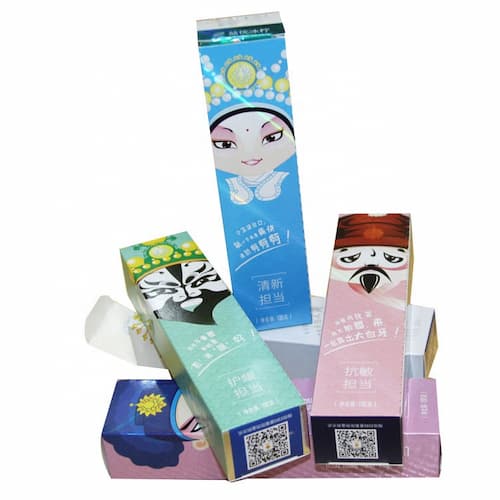
Colors of original paper
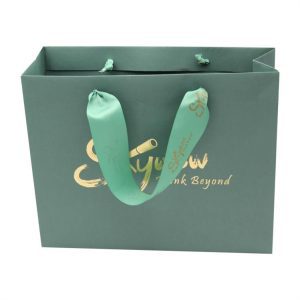
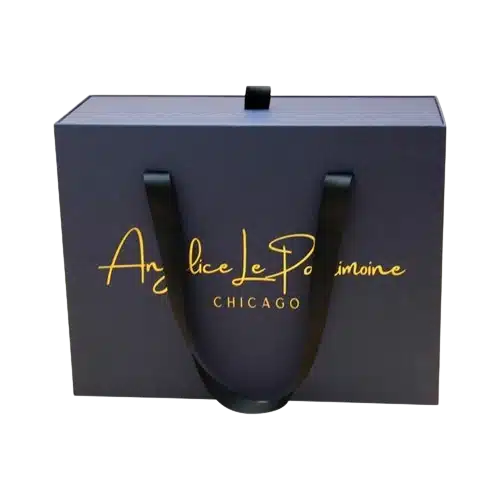
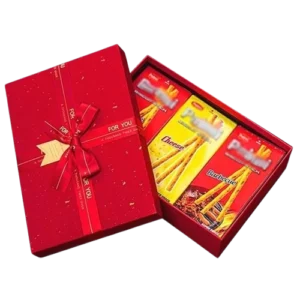
Printing on custom packaging CMYK VS Pantone
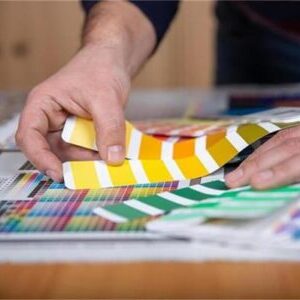
- Pantone uses pre-mixed inks for precise, consistent colors (ideal for logos/branding), while CMYK blends cyan, magenta, yellow, and black to create hues (cost-effective for multi-color designs).
- Color accuracy: Pantone guarantees exact matches across materials; CMYK may vary due to ink mixing and printer calibration.
- Cost and complexity: Pantone requires separate plates/inks, raising costs; CMYK uses standardized process printing for affordability.
- Application: Choose Pantone for critical brand colors, metallic/fluorescent effects, or single-color projects; opt for CMYK for photorealistic prints or budget-sensitive bulk jobs.
- Hybrid solutions: Combine both (e.g., Pantone for key brand elements + CMYK for background art) to balance vibrancy, consistency, and cost.
Physically impossible! But control it with these 5 proven solutions:
- Source identical material/ink batches
- Use consistent printing equipment & team
- Apply uniform finishing (lamination/coating)
- Maintain identical inspection standards
- Choose stable colors (e.g., black + embossed logo)
1. Standardize Color Proofing
- Pantone Matching: Require physical Pantone swatches for all brand colors
- Digital Mockups: Share screen-accurate proofs with suppliers before production
- Batch Alignment: Use master reference samples across all printing runs
2. Optimize Materials & Techniques
- Paper Choice: Select coated stocks for sharper color reproduction
- Print Method: Use offset printing for solid colors; avoid CMYK blends for critical hues
- Ink System: Specify single-pigment inks to minimize metamerism
3. Implement Batch Testing
- Lighting Checks: Verify colors under D65 daylight + store lighting
- Supplier Calibration: Jointly adjust press settings for substrate absorption rates
- ΔE Monitoring: Track color deviation (accept ≤1.5 ΔE)
4. Post-Production Verification
- Spectrophotometer Scans: Measure 3+ random boxes per batch
- QC Light Booth: Check for metamerism (color shifts under different lights)
- Document Variances: Create visual tolerance guides for acceptable ranges
5. Continuous Improvement Loop
- Color Database: Log all batch results with photos/measurements
- Quarterly Reviews: Analyze trends with suppliers to refine processes
- Preventive Adjustments: Modify artwork trapping/overprints based on historical data
Printing on Custom Packaging FAQs
Technical Process & Pre-Press
- Q: What is the standard pre-press and printing process for
custom printjobs?A: The process is: ① File submission & pre-flight check. ② Digital proof generation for approval. ③ CTP (Computer-to-Plate) plate creation for Offset printing. ④ Makeready on press (ink calibration, registration). ⑤ Production run. ⑥ Drying, finishing, and quality control. - Q: Do all
printing on custom packagingjobs require CTP plates? What’s the cost?A: Offset printing requires CTP plates, costing $85-120 per color. Digital printing eliminates plate fees entirely. The choice depends on your quantity, budget, and need for custom color accuracy. - Q: What is a ‘makeready fee’ and why is it charged?A: A makeready fee ($220-380) covers press setup for each job: ink calibration, registration alignment, and the waste sheets (100-300) produced while dialing in color and position. It’s standard for Offset printing.
Color Systems, Matching & Accuracy
- Q: What is the cost difference between CMYK and Pantone for a
custom print?A:MethodSetup CostPer Unit CostCMYK$0~$0.003/cm²Pantone Spot$120/color~$0.007/cm²4C + 1 Pantone$120~$0.009/cm² - Q: How accurate is
CMYK to Pantoneconversion for brand colors?A: Simulated CMYK can achieve ~85% match within ΔE<3.0. For critical brand logos, a dedicated Pantone spot color is required for ΔE<1.0 precision. Never rely on CMYK alone for exact custom color matching. - Q: What are premium
custom coloroptions beyond standard inks?A: Options include Metallic Inks (+40%), Fluorescent Pigments (+65%), and Thermochromic/Photochromic Inks (+$0.08/cm²). These typically have a higher MOQ (5,000+ units). - Q: How can I reduce color variance in my
custom printruns?A: Implement: G7 Grayscale Calibration (for ΔE<1.5), press-side spectrophotometer QC every 500 sheets, and standardized D50 lighting for press approval. This reduces rejects by over 80%.
File Preparation & Proofing
- Q: What are the essential file specifications for
printing on custom packaging?A: We require: Vector-based PDF/X-1a files, 3mm bleed, all fonts outlined, 300 DPI for images, and CMYK or specified Pantone colors. Incorrect files cause delays and extra costs. - Q: What is the difference between a soft proof and a hard proof?A: A soft proof is a digital preview (PDF) for layout check. A hard proof is a physical, press-printed sample on the actual stock, crucial for approving custom color, finish, and feel before the full Offset printing run.
Print Methods: Digital vs. Offset
- Q: When should I choose Digital vs. Offset printing?A: Choose Digital for: MOQ < 500, fast turnaround, variable data, or complex photo designs. Choose Offset for: MOQ > 500, best custom color accuracy/consistency, large solid color areas, and lower per-unit cost at volume.
Common Print Defects & Prevention
- Q: What are common
custom printdefects and their causes?A: Common issues: Misregistration (plates misaligned), Mottling (uneven ink on solids), Scumming/Dot Gain (too much ink/water), Set-off (wet ink transfers), and Color Drift (ink density fluctuates). Proper press checks prevent these.
Material-Specific Printing Challenges
- Q: Why do uncoated/kraft materials show color shifts?A: Porous, brown substrates absorb ink differently. Solutions: A white underbase layer (+$0.05/unit), double-hit printing, or using kraft-optimized Pantone libraries (e.g., 873C).
- Q: How do I ensure color consistency across different packaging materials?A: Use the same ICC color profile, specify identical substrate whiteness (≥92 CIE), and insist on batch-controlled inks. This achieves ΔE<1.5 across materials like boxes, cards, and Custom Bags.
Cost Efficiency & Optimization
- Q: How can I reduce the cost of
printing on custom packaging?A: Use CMYK over spot colors, choose standard sizes to avoid custom die costs, opt for digital printing on low runs, and provide perfect print-ready files to avoid correction fees.
Specialty Applications & Finishing
- Q: Can you print white ink on dark packaging?A: Yes, but it often requires screen printing or a special digital white station. It’s an extra step and cost, as standard CMYK Offset printing cannot lay down opaque white.
Quality Assurance & Approvals
- Q: What should I look for when approving a hard proof?A: Check: Color match under correct lighting, spelling/copy, trim/bleed areas, image resolution, and finishing effects (e.g., foil/UV placement). Your signed approval is the go-ahead for mass production.
Ink, Coating & Drying
- Q: What are the drying times for different inks and coatings?A: Standard offset inks need 4-8 hours to dry. UV inks cure instantly under lamps. Aqueous coatings add 1-2 hours. Laminations require inks to be fully dry. This affects production scheduling.
Sustainability in Printing
- Q: What are the eco-friendly printing options?A: We offer soy/vegetable-based inks, water-based coatings, FSC-ready papers, and digital printing which reduces waste. These are key for sustainable
printing on custom packaging.
Troubleshooting & Repairs
- Q: What happens if there is a printing error during the run?A: Minor issues (slight color drift) are corrected on press. Major errors (misregistration, smearing) will halt the run. The defective portion is scrapped, and the job is restarted, potentially incurring additional material and time costs.
Working with Your Printer
- Q: What information must I provide for an accurate print quote?A: Provide: Quantity, Finished Size, Material Specs, Number of Colors (CMYK/Pantone), Artwork Files, and desired Finishes (lamination, foil, etc.). The more detail, the more accurate the quote for your
custom print.
The same offset and digital presses produce custom stickers and labels on rolls or sheets.
Our presses also produce saddle-stitched booklets and brochures.