
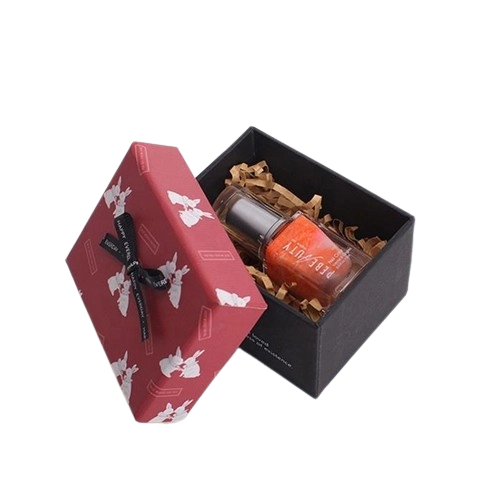
The Monday after Columbus Day, a Chicago bakery owner named Lena opened a purchase order that made her pause. A local property firm wanted 2,400 Thanksgiving gift boxes filled with two pies, a jar of spiced honey and a bag of cookies, all delivered to clients in the first week of November. The order was good news until she checked her usual supplier and found a three week lead time and a box that would not hold a nine inch pie without sliding.
Thanksgiving gift boxes are not just holiday décor. They are carriers, and a carrier that fails to protect a pie in transit turns a generous gift into a mess in a client’s lobby. This guide covers the formats, materials, styling and order minimums that make a Thanksgiving gifting programme work.
Thanksgiving Gift Boxes: Formats for Food and Corporate Gifting
Thanksgiving gift boxes fall into three working formats: pie and bakery carriers, gourmet food boxes for jars and bottles, and corporate gift sets that combine several items. The format follows the heaviest and most fragile item in the box, because that item sets the insert, the board and the structure. A pie carrier built around a nine inch pie will comfortably hold smaller cookies, but a box built for cookies will not protect a pie.
Weight, not volume, drives most Thanksgiving box decisions. A single nine inch pie weighs roughly 1.2 to 1.8kg, so the box and insert must hold that mass without bowing or letting the pie shift. Based on Allen Paper Products production data (2024-2026), bakery carriers that underspec board thickness are the most common source of transit damage in holiday food gifting.
Corporate gifting adds a second set of requirements on top of protection. The box often carries a printed card, a branded ribbon and a message, and it must look considered when it arrives at an office. The packaging becomes part of the client relationship, so appearance and durability matter as much as the tray inside.
Mini Story: A Portland bakery called Grain and Maple shipped 800 Thanksgiving gift boxes with pies in a standard folding carton and no insert. By the time the boxes reached clients across the city, a third of the pies had slid into the side wall and cracked the crust. Switching to a rigid carrier with a die-cut base collar and a snug lid solved the problem for the next season.
Pie Carriers and Cookie Boxes: Protecting Baked Goods
A pie carrier is a rigid box with a die-cut base collar or a raised tray that holds the tin in place, plus enough headroom so a domed crust never touches the lid. Cookie boxes are shallower and can be a folding carton when the cookies are individually wrapped. The right choice depends on the fragility and the weight of the bake. Buyers who order Thanksgiving pie boxes wholesale usually lock one spec for the whole season, which is why the collar depth is worth an extra sample round before the tooling is cut.
Pie carriers usually run 10 to 12 inches square to hold a standard nine inch pie with clearance, and 3 to 4 inches deep so a meringue or lattice top survives. A rigid setup box, where the base and lid are separate pieces, gives the most protection. Cookie boxes commonly run 8 by 8 by 2 inches for a dozen, or a tuck-end carton for a single sleeve.
| Baked Item | Box Type | Typical Size (in) | Insert | Relative Cost | Transit Safety |
|---|---|---|---|---|---|
| 9 inch pie | Rigid carrier | 11x11x4 | Base collar | $$$ | Excellent |
| Cookie dozen | Rigid or folding | 8x8x2 | Paperboard tray | $$ | Good |
| Loaf cake | Rigid carrier | 10x5x4 | Corrugated collar | $$ | Good |
| Cupcakes, 6 | Partitioned carton | 9x6x4 | Die-cut partition | $$ | Good |
| Bars or brownies | Folding carton | 8x8x2 | None, wrapped | $ | Fair |
Ventilation matters for warm bakes. A sealed box traps steam and softens a crisp crust or a glazed top, so many bakery carriers include small vents or a breathable liner. If your product leaves the kitchen warm, choose a box that can breathe or wait for the bake to cool before packing.
Food safety is the other non-negotiable. Any box where the bake touches the board needs a food-safe liner or a certified board, since food-contact materials for packaging are regulated by the US Food and Drug Administration. A grease-resistant liner protects a butter-rich crust from marking the box, and a barrier keeps the paperboard away from direct contact with the food.
Gourmet Food Boxes: Jars, Bottles and Charcuterie
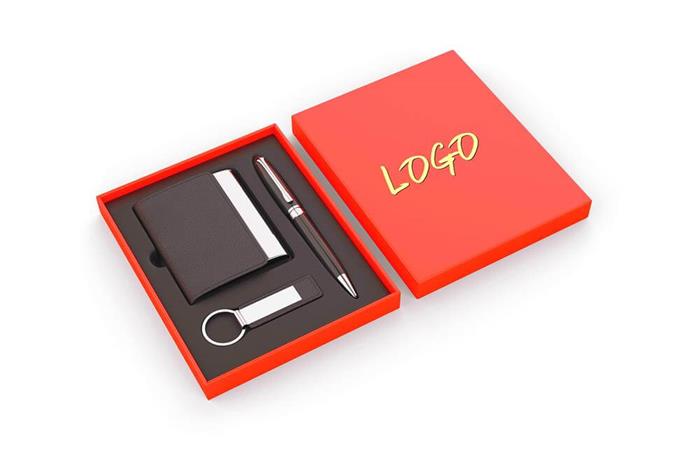
Gourmet food gift boxes hold more than one shape, so they live or die by the insert. Jars need a snug collar, bottles need a tall partition, and a charcuterie set needs a compartment layout that keeps cheese, crackers and cured meat from touching. The insert is the engineering, and it deserves more attention than the outer print.
A partitioned insert, usually die-cut corrugated or molded pulp, keeps jars and bottles apart so they do not clink or crack in transit. A jar of honey at 340g and a bottle of cider at 750ml need different cradle depths, so measure each item at its widest point before you draw the tray. Based on Allen Paper Products production data (2024-2026), mixed gourmet boxes fail more often on insert layout than on any other spec.
Food-safe liner choices matter here too. Jars can leak a little at the lid, and a PE or PP liner or a coated tray catches the drip and protects the box. For direct-contact items such as unwrapped cheese or crackers, spec a certified food-contact board and a grease-resistant finish over the contact area.
Think about assembly time if you are packing hundreds of boxes. A simple two-compartment tray packs faster than a six-cell layout and costs less in labour. If your team assembles gift sets by hand, test the tray during sampling with the real items and time the pack, because a fiddly insert can double the packing labour on a large run.
Corporate Thanksgiving Gift Boxes and Branding
Corporate Thanksgiving gift boxes carry the brand as much as the food, so the outer print, the ribbon and the card are part of the message. A clean logo, a warm colour and a typed card read as thoughtful, while a busy design reads as promotional. Restraint is the premium signal in corporate gifting.
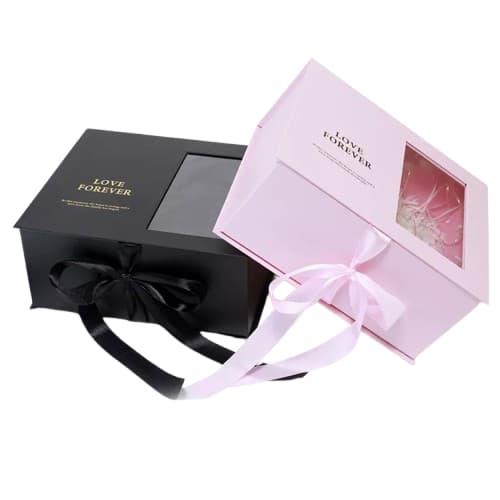
The box usually combines an outer printed sleeve or wrap, a ribbon in a brand or seasonal colour, and an insert card. A rigid lidded box with a satin ribbon gives the most versatile base, since it can be re-closed and moved without tape. A kraft box with a printed belly band is the lower-cost option and still looks considered when the band is well designed.
Personalisation raises the perceived effort. A printed name on the card, a short handwritten note, or a small branded item inside tells the client the gift was prepared for them, not pulled from a stack. Many firms add a charitable note, such as a donation made on the client’s behalf, which pairs naturally with a holiday box.
Corporate orders also bring schedule pressure. A firm typically wants every box to arrive in the same short window, so alignment of production, freight and last-mile delivery matters more than for a retail launch. Build the schedule backward from the delivery week, and keep a buffer for the peak-season congestion that hits every carrier in November.
Kraft, Ribbon and Warm Styling Choices
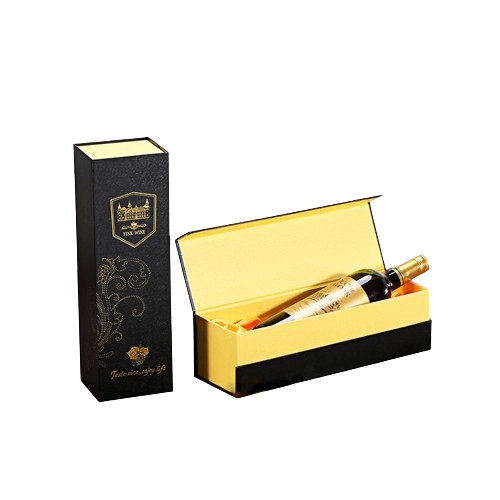
Kraft, ribbon and warm tones define the Thanksgiving aesthetic, and the styling does as much work as the structure. Kraft Thanksgiving packaging also ages better in transit than a coated box, because a scuff on kraft reads as texture rather than as damage. Kraft gives a natural, harvest feel that fits the season, while a deep ribbon and a simple stamp or two add richness without clutter. The goal is warm and considered, not elaborate.
Material choice shapes the print quality. Kraft prints well in one or two bold colours but shows fine detail poorly, so a hand-drawn logo or a simple wordmark reads best. Coated cardstock supports finer print and foil but loses some of the rustic feel, so many brands use a coated sleeve over a kraft body to get both.
Ribbon is the cheapest upgrade in the whole programme. A satin or cotton ribbon in a brand or seasonal colour lifts a plain box instantly, and it photographs well for social. A printed belly band does similar work at a lower cost and packs flat, which matters when you ship hundreds of boxes.
Foil and embossing suit a premium corporate box but cost more and add a pass. A single copper or gold foil wordmark on a deep green or brown box is enough for the season, and it keeps the box from looking busy. Match the finish to where the box is first seen, because an office desk and a social photo reward different qualities.
MOQ for SMBs and Small Bakeries
Minimum order quantities for Thanksgiving gift boxes start from 100 pieces for a digitally printed folding carton and 500 to 1,000 pieces for rigid carriers and boxes with inserts. Small bakeries and businesses usually order 100 to 1,000 pieces for a local programme, while larger firms and retailers order 3,000 to 20,000 for a regional or national push.
| Quantity (pcs) | Folding carton, digital | Rigid pie carrier | Kraft corporate box with band | Rigid box with insert + foil |
|---|---|---|---|---|
| 250 | 1.10 | 2.60 | 2.20 | 3.10 |
| 500 | 0.78 | 2.05 | 1.75 | 2.45 |
| 1,000 | 0.55 | 1.65 | 1.40 | 1.95 |
| 5,000 | 0.36 | 1.25 | 1.05 | 1.45 |
Tier pricing in the table starts at 250 pieces because unit cost below that level moves with artwork and tooling; ask for a quote if your first run is smaller.
Figures are indicative USD per unit for boxes around 8 to 11 inches and shift with board, insert type, print colours and freight. Based on Allen Paper Products production data (2024-2026), a rigid carrier order rising from 500 to 5,000 units cuts the per-unit cost by about 35 percent, though most small bakeries stay below 1,000 units to match their real sell-through.
Digital printing changed the small-batch economics of holiday boxes. Without plates, a 250 unit run with full-colour artwork is realistic, so a bakery can test a concept or serve a single neighbourhood without overcommitting. Offset printing needs plates and only pays off above roughly 3,000 units.
Plan the MOQ around your sell-through, not your ambition. Unsold holiday boxes have no second life once the season passes, and a leftover pallet ties up cash and storage. A modest first run that sells out is a better result than a large run that leaves you with dead stock.
7 Checks Before You Approve a Thanksgiving Gift Box Order
Run these seven checks before you release a deposit on Thanksgiving gift boxes.
- Weight and fragility, confirm the box and insert hold the heaviest and most fragile item without movement.
- Insert fit, test that jars, bottles and pies stay put through a shake, a tilt and a short carry.
- Food-contact status, obtain a written board or liner declaration for anything that touches the bake.
- Ventilation, check the box breathes if the product is packed warm, or confirm the bake is fully cooled.
- Colour and finish proof, approve the print and any foil on the actual board, not a screen mockup.
- Ribbon and card plan, confirm the ribbon, belly band and insert card are quoted and scheduled.
- Delivery window, build production and freight days back from the client delivery week with buffer.
Points one and three cause the most expensive failures, because a damaged pie or a missing food-contact statement cannot be fixed after the boxes are packed. Both are cheap to correct at the sample stage.
A Buyer’s RFQ Checklist for Holiday Boxes
Send these together and a usable quote for Thanksgiving gift boxes comes back in one round.
- Contents list with the dimensions and weight of each item
- Finished box dimensions as length by width by height, in inches or millimetres
- Structure: rigid carrier, folding carton, or lidded gift box
- Insert type: base collar, partitioned tray, molded pulp or none
- Material and food-contact requirement for each contact surface
- Print method, colour count, artwork size and Pantone references
- Ribbon or belly band, insert card, quantity tiers, delivery date and Incoterm
RFQ line: Please quote 1,000 pcs Thanksgiving gift boxes, 11x11x4 inch rigid pie carriers with die-cut base collar, 350gsm food-safe lined board, warm kraft wrap with 1-colour logo and a satin ribbon, plus 1,000 printed insert cards, FOB Ningbo, delivery by 2026-10-20. Please include a food-contact declaration and a pre-production sample.
That line separates suppliers who understand food gifting from suppliers who are simply selling a printed box with no thought for the pie inside.
Planning a Thanksgiving gifting programme? Send us your contents list and delivery week and we will map a carrier and a production window that lands on time.
Lead Time for the Thanksgiving Window
Thanksgiving has one of the tightest holiday calendars in food gifting, so lead time, not price, usually decides the programme. Sampling runs 7 to 12 days, bulk production runs 20 to 35 days, and ocean freight adds 25 to 40 days. Work backward from your delivery week and keep a real buffer.
According to holiday packaging quotation data from multiple Chinese factories (updated 2026), the safe order cut-off for a Thanksgiving food box is about the last week of July for sea freight and the last week of August for air. Bakery carriers with custom inserts take longer, because the tray must be tooled and tested with the real product before bulk.
Lock the contents list early. A late change to a jar size or a bottle shape forces a new insert and a new sample, which can push a programme past the delivery window. Freeze the contents, then build the box around them, and the schedule stays predictable.
Not sure whether you need a rigid carrier or a folding carton? Share your contents and quantity and we will recommend a box and an insert in one reply.
Storage, Packing and Delivery
Holiday food boxes are often packed close to the delivery date, so storage and packing logistics deserve a plan. Store flat cartons in a dry place, keep rigid carriers from stacking too high, and protect corners that take the first hit in a van. A dented box undercuts the gift before it is opened.
Packing speed is a hidden cost. If your team assembles hundreds of sets, time the build with the real items during sampling. A tray that adds ten seconds per box costs real money across 1,000 units, and a simpler layout often saves more than a cheaper board.
Plan the last mile, not just the factory ship. Corporate gifts often go to individual addresses, which means many small deliveries rather than one pallet. Build the packing, labelling and dispatch days into the schedule so the boxes leave with room to spare before the holiday week. If your team hands the boxes over in person, a custom paper bag carries the set without a second carton.
Ready to lock your Thanksgiving run? Send your artwork and volume and we will return a costed timeline with a pre-production sample built to spec.
Why the Insert Decides Whether the Gift Survives
The insert, not the outer box, decides whether a Thanksgiving gift arrives intact, because it holds every item against movement during the rough last mile. A beautiful box with a loose insert looks calm on the shelf and fails in the delivery van. Design the insert around the heaviest item first, then fit the lighter items around it.
Different items need different cradle depths. A pie needs a shallow collar that grips the tin edge, a jar needs a deeper well that holds the base, and a bottle needs a tall partition with a shoulder stop so it cannot tip. A single flat tray rarely works for a mixed set, which is why a compartment or two-piece insert is worth the extra tooling.
Material choice affects the insert too. Die-cut corrugated is cheap, strong and recyclable, and it suits most food tins. If you want to make a sourcing claim on the box, FSC certification is the label buyers recognise. Molded pulp gives a premium, natural look and cushions well but costs more and needs a longer tooling lead time. EVA foam is best reserved for non-food items, since it complicates any recyclability claim.
Test the insert with the real contents, not a stand-in. Weight distribution changes when a jar is full, and a full jar leans differently than an empty one. Load the sample, shake it, tip it thirty degrees and carry it around the room, then inspect for movement and for any scuff where the box meets the product. For a formal record, ISTA transit testing protocols give you a repeatable drop, vibration and compression sequence to test against.
Mini Story: A Vermont hamper company called Cedar Hollow built a handsome rigid box for a Thanksgiving set of maple syrup, cheese and crackers, but tested the insert with empty jars. The full jars shifted on the first delivery run and cracked two glass bottles. Redesigning the well to the filled base diameter fixed the problem, and the lesson was to always test with real, full contents.
Personalisation, Cards and Charitable Gifting
Personalisation is what turns a Thanksgiving gift box from a generic hamper into a relationship gesture, and it costs little when planned early. A printed name, a short message card or a small branded item tells the recipient the gift was prepared for them. In corporate gifting, that perceived effort often matters more than the value of the contents.
Plan the card as part of the box, not as an afterthought. An insert card that matches the box colour and carries a typed or handwritten note reads as considered, while a loose flyer reads as promotional. Many firms add a line about a donation made on the client’s behalf, which pairs naturally with a holiday food gift and gives the box a reason beyond the food.
Print the personalisation in a way that scales. If every box needs the same name, offset or digital printing of the card is simple. If each box carries a different name, digital variable printing keeps it affordable at 250 to 1,000 units. Decide the personalisation model before you quote, because it changes the printing method and the schedule.
Keep the charitable message honest and specific. A vague claim of giving back invites doubt, while a named organisation and a clear amount read as genuine. This is a marketing decision as much as a packaging one, and it works best when the packaging and the message reinforce each other rather than compete.

-
1. What is the minimum order quantity for Thanksgiving gift boxes?
Minimum order quantity starts from 100 pieces for a digitally printed folding carton and 500 to 1,000 units for rigid carriers and boxes with inserts. Small bakeries usually order 100 to 1,000 pieces for a local programme, while larger firms and retailers order 3,000 to 20,000. Digital printing removes plate costs so small runs stay realistic.
-
2. Can I order 250 Thanksgiving gift boxes for my bakery?
Yes. Digital printing makes a 250 unit run practical, with no plate fee and full-colour artwork. You pay more per unit than a 5,000 unit tier, typically 35 to 50 percent above it, but you can serve a single neighbourhood or test a design without committing to a large season. Confirm the insert works with your real pie or cookie size first.
-
3. How do I keep a pie from sliding in a Thanksgiving gift box?
Use a rigid carrier with a die-cut base collar or a raised tray that holds the pie tin in place, plus enough headroom so a domed crust never touches the lid. Measure the tin at its widest point and build a 3 to 5mm clearance around it. A snug collar stops the pie shifting, which is the main cause of cracked crusts in transit.
-
4. Are Thanksgiving gift boxes food safe for baked goods?
Only with the right specification. Any box where the bake touches the board needs a food-safe liner or certified board, and a grease-resistant finish protects a butter-rich crust. Request a written food-contact declaration naming the board grade and coatings, and confirm the rules for your destination market before you approve bulk production.
-
5. What materials work best for Thanksgiving gift boxes?
Kraft gives a natural harvest feel and prints well in one or two bold colours, while coated cardstock supports finer print and foil for a premium corporate box. For food contact, add a food-safe liner or a grease-resistant tray. Many brands use a coated sleeve over a kraft body to combine a clean logo with the warm seasonal look.
-
6. How long does it take to produce Thanksgiving gift boxes?
Sampling runs 7 to 12 days, bulk production 20 to 35 days, and ocean freight adds 25 to 40 days by destination. The safe cut-off is about the last week of July for sea freight and the last week of August for air. Boxes with custom inserts take longer, so tool and test the tray early.
Conclusion
Thanksgiving gift boxes rarely fail on price; they fail on the insert, the board and the delivery week. The useful question is not what a box costs, but what this order has to survive: a courier van, an office lobby, or a client’s kitchen counter. A rigid pie carrier with a die-cut collar, a partitioned gourmet tray, or a kraft corporate box with a printed band all work; your contents list decides which. Send us your contents, quantity and delivery week, and we will map the carrier, the insert and the production window that lands before the holiday.

Liverson Li
Hello, I'm Liverson, co-founder of Allenboxes.com. We run a packaging factory in Dongguan. Custom printed paper bags, boxes, pouches, hang tags and cards, made here since 1998. We're not the cheapest and not the biggest. We're the factory that takes a 100-piece order seriously. Email me freely for more details!
Sustainable Packaging Materials in 2026: A Buyer’s Guide to Kraft, Molded Pulp, Bioplastics, Mycelium and Seaweed
Compare 6 sustainable packaging materials for 2026: kraft, molded pulp, PLA, PHA, glassine, mycelium and seaweed. Costs, barriers, PPWR and EPR rules

Read Packaging Supplier Quotation Documents: 5 Numbers That Decide Cost
Meta Title: Read Packaging Supplier Quotation: 5 Hidden Costs 2026 Meta Description: Read packaging supplier quotation lines like a buyer:
Custom Paper Bag Printing Methods: Offset, Flexo, Screen, Hot Stamping
Compare custom paper bag printing methods, offset, flexo, screen, and hot stamping, on cost, MOQ, color, and lead time, plus how to choose the right one.
How to Choose a Reliable Paper Bag Manufacturer in China
Learn to choose a reliable paper bag manufacturer in China: verify certifications, run factory audits, screen red flags, and build the right vetting scorecard.
FSC Certified Paper Bags: What B2B Buyers Need to Know
FSC certified paper bags: FSC 100% vs Mix vs Recycled, how to verify a supplier’s FSC certificate, logo rules, and the lamination vs recyclability trade-off.
Paper Bag Quality Control: What Inspections Happen Before Shipping
Primary Keyword: paper bag quality control Secondary Keywords: paper bag qc inspection · paper bag quality check · bag quality