
What Is the MOQ for Custom Printed Paper Bags?
A Buyer’s Complete Guide
You ask ten factories the same question and you get ten different numbers — 50 from one, 100 from another, 1,000 here, and a casual “5,000 minimum” there. So what is the MOQ for custom printed paper bags? The honest answer is that there is no single number, because the minimum order quantity depends on the print method, the material, the handle, and who is making the bag. For most B2B buyers, the real custom paper bags MOQ lands somewhere between 100 and 5,000 units. Digital printing can push that floor down to as few as 50; conventional offset lines for large retail or food service programs start closer to 25,000. This guide gives you the actual ranges, the five factors that move the number, the unit-price curve as volume rises, and a negotiation script you can paste into an email.
Key Takeaways
- The realistic MOQ for custom printed paper bags spans roughly 50 to 50,000 units; most independent brands sit in the 100–5,000 band.
- Digital printing is the only route that reliably delivers a 50+ minimum; offset and flexo lines need 300+ or 25,000+ to absorb setup.
- Setup costs — plates, die-cut knives, make-ready waste, QC — typically run $300–$600 per SKU, which is why small runs cost far more per bag.
- Going from 500 to 1,000 units often cuts unit price 30–40%; beyond 5,000 the savings flatten into diminishing returns.
- “No minimum” usually means stock bags with digital labels or on-demand printing at a 30–80% unit-price premium — not free flexibility.

What Does MOQ Mean (and Why Suppliers Insist on It)?
Before we get to ranges, it helps to understand what you are actually being charged for when a supplier names a minimum.
MOQ Definition
MOQ (Minimum Order Quantity) is the smallest number of units a factory will produce in a single production run. For custom printed paper bags, it is the lowest quantity at which the supplier will agree to set up the press, cut the material, and run your specific artwork. Below that number, the order is too small to cover the fixed costs of starting a job, so the factory either refuses it or charges a penalty that makes it uneconomic.
The Fixed-Cost Breakdown — Plates, Dies, Make-Ready, QC
Every custom bag order carries costs that do not change whether you print 100 bags or 10,000. These include:
- Printing plates or screens — for offset and screen printing, a physical plate or mesh must be prepared for each color.
- Die-cut knives — a custom bag shape needs a steel rule die cut to your dimensions.
- Make-ready waste — the press operator runs and discards sheets until color and registration are correct.
- QC and sampling — the factory inspects, measures, and approves a physical proof.
Budget $300–$600 per SKU in setup — an industry-standard figure covering plates, dies, make-ready waste, and QC. That sunk cost is what makes small runs cost far more per bag.
Why Printing 100 and Printing 10,000 Share the Same Start-Up Cost
Think of the press like a taxi with a fixed flag-fall. That flag-fall is identical whether you ride one block or ten miles. If the setup costs $400 and you order 100 bags, that is $4 of setup baked into every bag. Order 10,000 and the same $400 becomes four cents per bag. This math, not greed, is why suppliers draw a line in the sand on minimums.
Ready to see what your specific specs would cost? Request a quote and we’ll return tiered pricing →
The Real Range of MOQ for Custom Printed Paper Bags
Here is the part you came for: the actual numbers, organized so you can find your situation fast.
Quick Reference — MOQ by Print Method
| Print method | Typical MOQ floor | Best for | Setup fee |
|---|---|---|---|
| Digital (toner/inkjet) | 0+ | Prototypes, small batches, variable data | Low / none |
| Screen printing | 100–500 | 1–2 spot colors, handles, simple logos | Medium |
| Offset (litho) | 500+ | Full-color, coated card, high volume | High (100–200 est.) |
| Flexo / gravure (large food & retail) | 25,000–50,000 | Supermarket, QSR, national programs | Very high |
All figures are estimates — actual MOQ depends on specs; request a quote.
Quick Reference — MOQ by Supplier Type
| Supplier type | Typical MOQ | Unit price | Lead time |
|---|---|---|---|
| Digital print-on-demand platform | 1–50 | Highest (30–80% premium est.) | 3–7 days |
| Small-batch converter | 100–500 | High | 2–3 weeks |
| China factory (offset/flexo) | 500–50,000 | Lowest at volume | 4–6 weeks + shipping |
| Local converter (US/EU/AU) | 100–3,000 | Mid-to-high | 1–2 weeks |
| Marketplace / trading platform | 50–1,000 | Mid | 2–5 weeks |
Estimates only; actual figures depend on specs — request a quote.
The Bottom Line on Ranges
Most independent brands and growing retailers land between 100 and 5,000 units. Orders under 100 are realistic only through digital printing or stock-label programs. Orders above 25,000 are almost always foodservice, grocery, or national retail programs where the supplier amortizes setup across a year of repeat deliveries. If a factory quotes you 50,000 and you need 2,000, you are simply talking to the wrong tier of supplier — not a difficult negotiator.
What Drives the MOQ Up or Down?
Five variables explain almost all of the 1,000× spread between a 50-unit digital run and a 50,000-unit flexo program.
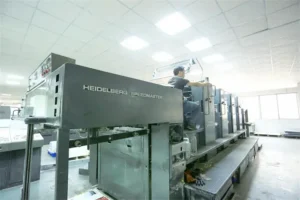
Print Method and Color Count
The number of colors is the first lever. Grasping how print method affects MOQ is the fastest way to set expectations: a one- or two-color screen print needs a single screen per color and minimal setup, so suppliers tolerate low volumes. Full-color CMYK artwork demands offset or digital. Offset requires plates for each separation (higher setup, higher minimum); digital sidesteps plates entirely (low minimum, higher per-bag cost). If your design covers more than ~75% of the bag surface, the supplier may trigger a higher MOQ because ink and drying time change the economics of the run.
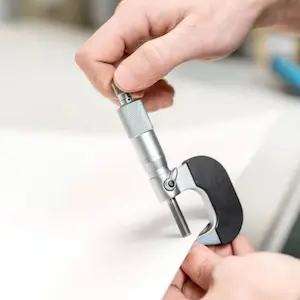
Material and Basis Weight
Kraft paper, white card, and coated (art) paper each run on different machines and come in different roll or sheet weights. Heavier board (e.g., 250–350 gsm) has a higher minimum production weight per job, which can lift the MOQ. Lighter kraft (90–120 gsm) is easier to run in small batches. The trade-offs between these stocks — printability, price, and sustainability — are detailed in our paper bag materials guide (kraft vs white card vs coated).
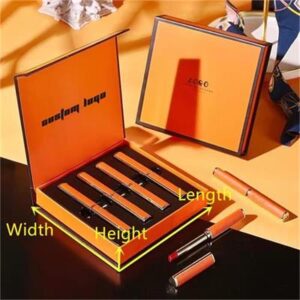
Size and Whether You Need a Custom Die
Stock sizes (the common SOS and square-bottom dimensions) use shared cutting forms, so the factory absorbs almost no extra tooling risk. A bespoke shape — an odd-width wine carrier, a die-cut window, a triangular base — needs a custom steel-rule die. That die is a fixed cost and a storage commitment, so custom shapes nearly always carry a higher MOQ or a die charge. Choosing custom paper bag size, handle, and finish options is the fastest way to pull your minimum down.
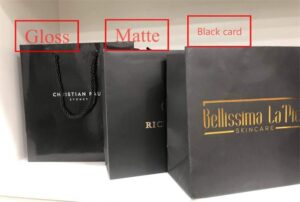
Surface Finishing
Lamination (matte or gloss), hot-foil stamping, embossing, and spot UV each require an extra pass and often an extra setup. A plain printed bag might run at 100 units; add foil and a 300+ minimum is common because the foiling station must be configured and tested. Finishes are where beautiful bags quietly acquire higher minimums. Before you commit, compare the paper bag surface finishing options against the setup each one adds.
Handle Type
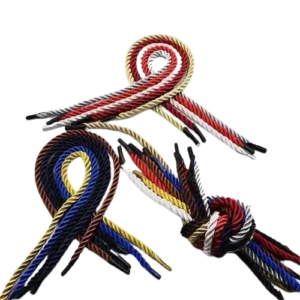
Handles are deceptively influential. Punched handles (a hole cut into the bag) need no assembly. Twisted or flat paper rope, cotton, or ribbon handles require a separate attaching operation — often manual — which adds labor and a QC step. A handled gift bag therefore carries a higher MOQ than a handled-less SOS bag of the same print. If handles are killing your minimum, ask about punched or reinforced-patch handles as a lower MOQ alternative.
MOQ by Bag Type & Print Method
Not all bags are created equal in the supplier’s eyes. Here is how the common formats break down.
Plain / Unprinted vs. One-Color vs. Full-Color
| Bag finish | Typical MOQ | Notes |
|---|---|---|
| Plain / unprinted stock | 1–100 | Often sold by the case; lowest barrier |
| 1–2 color screen print | 100–999 | Logo-only branding, fast |
| Full-color digital | 10+ | Photo artwork, low minimum, higher unit cost |
| Full-color offset | 100–5,000 | Best unit price at volume |
Estimates — actual MOQ depends on specs; request a quote.
SOS, Square-Bottom, and Gift Handle Bags
| Bag type | Typical MOQ | Why |
|---|---|---|
| SOS (self-opening square) | 100–1,000 | High-speed machine-made, common sizes |
| Square-bottom (no handle) | 100–2,000 | Standard folds, easy to batch |
| Handled gift / retail bag | 300–5,000 | Handle attach + finish adds steps |
Estimates only; actual figures depend on specs — request a quote.
Digital vs. Screen vs. Offset — Four Dimensions
All values estimated; actual pricing depends on specs — request a quote.
Cost per Bag by Order Quantity
This is the curve every buyer should internalize before negotiating.
Example Unit-Price Table
The table below shows a representative full-color handled kraft bag. Treat it as illustrative only — your material, size, handle, and finish will move these numbers.
| Quantity | Est. unit price | Est. total | vs. 500-unit price |
|---|---|---|---|
| 500 | 0.65 | $325 | — |
| 1,000 | $0.59 | $540 | −10% |
| 3,000 | $0.52 | $1,560 | −20% |
| 5,000 | $0.48 | $2,400 | −26% |
| 10,000 | $0.45 | $4,500 | −30% |
Illustrative estimates only. Actual figures depend on your specs — request a quote.
Why 500 → 1,000 Often Cuts Price 30–40%, Then Flattens
Setup costs do the heaviest lifting in that first doubling of volume. At 500 units, that $400–$600 setup is a big slice of every bag. At 1,000, it is halved, which is why you routinely see a 30–40% drop. Past 10,000 units, any further savings come from negotiating paper and freight — not from setup. The practical lesson: if you can clear the 1,000-unit mark, you capture most of the available discount; chasing 50,000 for an extra few cents per bag only pays off if you can actually sell or store them.
The exact breakpoints shift by supplier, but the shape of the curve does not. Want to know where your curve bends? Get tiered pricing at 500 / 1,000 / 5,000 →
“No Minimum” & Low-MOQ Suppliers — The Truth
The phrase “no minimum” is the most misunderstood promise in packaging.
Is There Really a No-Minimum Option?
Sometimes — but it almost always means one of two things. Either you are buying stock, unprinted bags and applying a digital label or sticker (so the bag has no minimum, but your branding is a separate on-demand step), or you are using a digital print-on-demand platform that absorbs setup via software, not machinery. Both are legitimate. Neither is free: the trade-off is a 30–80% higher unit price (estimated) versus a conventional offset run. “No minimum” is really “no setup fee, higher per-bag cost.”
Low-MOQ Supplier Types
- Digital print platforms — 1–50 unit floors, ideal for mock-ups and pre-launch.
- Small-batch converters — 100–500 floors, more material choices than pure POD.
- Flexible Taiwan / China lines — some factories now run “short-run” digital or hybrid presses alongside offset, offering 100–500 floors with Asian unit economics.
For buyers searching “custom paper bags no minimum” or “low MOQ paper bag supplier,” these three categories are where you will actually find a fit.
The Hidden Costs of Low MOQ
Low minimums are not a free lunch. Watch for:
- Repeat setup fees — ordering 200 now and 200 later may mean paying setup twice.
- Color drift — small digital batches from different runs can shift slightly versus one calibrated offset lot.
- Per-order management fees — some platforms add a handling charge that erodes the per-bag saving.
- Freight inefficiency — several small shipments cost more to ship than one consolidated load.
Low MOQ solves a cash-flow and inventory problem. It does not make the bag cheaper in absolute terms.
China Factory vs. Local Supplier — Which MOQ Is Right for You?
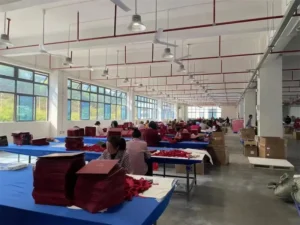
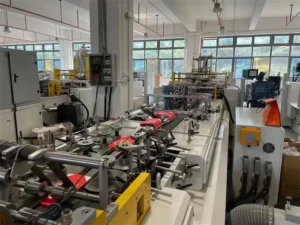
The classic buyer dilemma, settled with numbers rather than nationalism.
Three-Way Comparison
| Factor | China factory | Local (US/EU/AU) converter | Trading platform |
|---|---|---|---|
| Unit price | Lowest at volume | Mid-to-high | Mid |
| Lead time | 4–6 wks + freight | 1–3 weeks | 2–5 weeks |
| MOQ | 100–500 | 100–3,000 | 50–1,000 |
| Flexibility | Lower (long runs) | Higher (small runs) | High (POD) |
| Quality ceiling | Very high (with vetting) | High, easier to audit | Variable |
Estimates — actual figures depend on specs; request a quote. Full breakdown in our China vs. local paper bag supplier comparison.
The Break-Even Point: ~500–750 Units
Below roughly 500–750 units, local or digital suppliers usually win on total landed cost once you add ocean freight, tariffs, and the carrying cost of capital tied up in a 5,000-unit container. Above that band, Chinese factories pull decisively ahead on unit price. The exact crossover depends on your bag’s weight and finish, but 500–750 is the zone most buyers should test.
The Two-Stage Strategy
The smartest path is not either/or. Stage one: prove the design and the market with a 100–500 unit local or digital run. Stage two: once sell-through is confirmed, move the repeat volume to a China factory for the low unit price. This captures validation speed without stranding cash in unproven inventory.
How to Lower Your MOQ (7 Tactics That Actually Work)
If a supplier’s minimum sits above your comfort zone, these are the levers that genuinely move it — not wishful thinking.
- Pay a higher unit price for a lower floor. A supplier quoting a 1,000-unit minimum at $0.78 may accept 300 units at ~$1.10 — you trade per-bag margin for the flexibility to test demand risk-free.
- Switch to digital printing. Digital removes plates and dies from the equation, dropping the floor to 50+ for full color. A startup can order 100 photo-quality bags instead of committing to a 5,000-unit offset run.
- Use stock sizes and standard materials. Avoid custom dies and exotic board; shared tooling is what lets converters say yes to small runs. A standard SOS shape often clears a 100-unit minimum that a bespoke shape cannot.
- Gang-run your order. Some printers combine several small jobs on one press sheet, spreading setup across buyers to lower each one’s minimum. Ask whether your spec can ride a shared sheet to reach a 50–100 floor.
- Negotiate an annual PO with split deliveries. Commit to 5,000 units for the year but take them in five 1,000-unit shipments. You get the volume price with startup-sized inventory and no warehouse strain.
- Request make-and-hold. The factory produces your full minimum but stores it and releases against your call-offs. You get volume pricing without warehousing thousands of bags at once.
- Pre-pay the die or plate fee. Offering to own the tooling outright often unlocks a lower MOQ, because the supplier’s setup risk disappears. One $200 die payment can open a 200-unit instead of a 1,000-unit run.
Any one of these can bridge a 2×–5× gap between your target and the supplier’s stated minimum.
Your MOQ Negotiation Script
You do not need charisma. You need a structured ask.
Request Tiered Quotations
Send this and most serious suppliers will respond with exactly the data you need:
“We’re evaluating a [kraft / white card] handled bag, [size], [1-color / full-color] print, [matte lam / no finish]. Please quote the same spec at 500 / 1,000 / 5,000 units, including setup, tooling, and landed cost. We’re deciding order size now and may scale after the first run.”
Asking for three quantities forces the supplier to reveal the price curve instead of quoting only their preferred (largest) minimum.
What Not to Do
Do not claim you will “definitely reorder 50,000 next quarter” if you will not. Suppliers who have heard it a thousand times will either discount it or, worse, quote you a volume price they later rescind. Honesty about your actual stage earns better cooperation than a fabricated pipeline. Also avoid demanding “no MOQ” from an offset printer — it signals you have not read this guide, and weakens every other point you make.
Choose the Right MOQ for Your Business Stage
The correct minimum is the one that fits where you are, not the lowest number on the table.
Startup / Trial (100–500, Digital First)
If you are pre-launch or testing a design, prioritize speed and learning over unit cost. Use digital printing at 100–500 units, put the bag in real customers’ hands to validate it, and avoid tying up cash in unproven inventory. At this stage material choice matters more than volume.
Growth Brand (500–3,000)
You now have proof of demand, and this is the sweet spot where local converters and flexible Asian lines compete hardest for your order. Target the 1,000-unit price bend and use tactic #5 (annual PO, split delivery) to keep inventory lean. Most growing brands balance MOQ and cash flow comfortably inside this band.
Scale / Chain (Annual Frame + 3–6 Month Stock)
At supermarket or multi-location retail volume the MOQ conversation flips — you negotiate whether the factory can supply enough, not whether it will accept your order. Annual frames, make-and-hold, and 25,000+ flexo programs become your tools. Plan for 3–6 months of stock so production lead time never breaks a promotion.
Mini Story — The Startup Stuck at 5,000. Maya launched a coffee brand in early 2025 with a budget of just $4,000. The first China factory she contacted quoted a 5,000-bag minimum at $0.41 each — theoretically cheap, but $2,050 upfront plus a shipping container she had nowhere to store. A fellow founder pointed her to a local digital converter with a 250-unit floor at $1.10 per bag; she ordered 250, handed them out at three markets, and sold through in six weeks, only then moving 3,000 units to an Asian line at $0.49. She now tells every founder she meets: the lowest MOQ is the one that fits your stage, not the factory’s favorite number.

-
1. Can MOQ be negotiated?
Yes. Most suppliers will flex if you give them a reason. Pay a higher unit price, pre-pay the tooling, gang-run your job with others, or commit to an annual PO with split deliveries, and a stated 1,000-unit floor can often drop to 300. Offset houses rarely go below 300, while digital printers frequently accept 50.
-
2. What is a good MOQ for a first order?
For a first order, 100 to 500 units through digital printing or a small-batch converter is the safe zone. It lets you validate the design, durability, and customer reaction without tying up cash in a warehouse. Once the bag proves out, scale to 1,000–3,000 units to capture the steepest part of the price curve.
-
3. Do eco-materials change the MOQ?
Usually not by much. FSC kraft and recycled board run on the same machines as standard paper, so the minimum stays similar. What actually pushes the MOQ up are finishing upgrades like lamination, foil, or embossing, which each add a setup pass. Choose eco stock freely; watch the finish instead.
-
4. Is MOQ per design or per order?
It is normally per design or SKU, because each artwork needs its own plates, screens, or digital setup. Two designs in one 500 unit order usually means 500 of each, not 250 plus 250. Unless your printer offers gang-running on a shared sheet. Always confirm the per SKU minimum before you budget.
-
5. How long does production take?
Digital print-on-demand runs 3 to 10 days; small batch converters take 2 to 4 weeks; China factories need 4 to 8 weeks plus freight. Add 1 to 2 weeks if custom dies or special finishing are involved. Build the timeline into your launch plan so a low MOQ does not become a late MOQ.
Conclusion
There is no single answer to “what is the MOQ for custom printed paper bags” — only the answer that fits your print method, your material, your handle, and your business stage. Most buyers land between 100 and 5,000 units; digital printing opens the door at 50, while national retail and foodservice programs start at 25,000. The number is not arbitrary. It is the factory recovering a $300–$600 setup that printing 100 bags and 10,000 bags share equally. Use the price curve to your advantage — clearing 1,000 units captures most of the discount. Land your first order under 500 to de-risk, then cross the 1,000-unit mark to capture most of the available discount — there is no magic number, only the one that fits your stage.
Your next move is simple. Pull your specs together — size, material, print colors, handle, finish — and request tiered pricing at 500, 1,000, and 5,000. That single email will tell you more than ten conflicting quotes ever will. Request your MOQ pricing now → and turn a confusing range into a number you can actually plan around.
Mini Story — The Batch-Order Bite. Daniel runs a regional soap company and needed branded bags for a trade show in three weeks. A platform advertising “custom paper bags no minimum” quoted 80 units at $2.10 each — tempting for a single show — so he ordered, then re-ordered 80 the next month for a second event and paid setup-equivalent fees twice, pushing his true cost across both batches to nearly $1.95 per bag. A local converter quoting 300 at $0.95 would have been cheaper overall and arrived on time. Daniel’s lesson: “no minimum” beat his planning, then his budget — until the second order proved otherwise.

ALLEN LEE
Hi, I’m Allen Lee, the owner of Allenboxes.com, I’ve been in the packaging industry for over 20 years and running a factory in China that produce for 10+ years, and the purpose of this article is to share with you the knowledge related to packaging from a Chinese supplier’s perspective.

3 Steps to Save Shipping costs
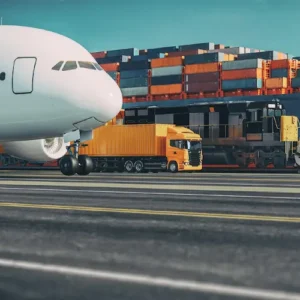
Step 1: Use foldable boxes instead of two-piece rigid boxes.
Step 2: Customize to a smaller box. And Order early to use economy ocean freight instead of air.
Step 3: Select Door to door service include all taxes and freight.
Why Your Quote Jumped After the Factory Reviewed Your Artwork
Your quote can jump after artwork review. Learn how bleed, spot colour, foil and die-cuts change price, and how to lock a file-reviewed quote before approval.
5 tips about Materials of Paper Boxes
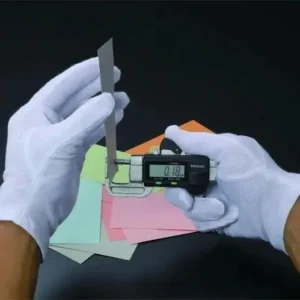
1.Measure thickness of raw material
2.Cut a 10x10cm sheet
3.Measure paper weight
4.Measure paper thickness
5.Check standard weight-thickness tables
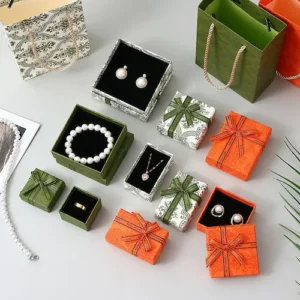
12 Common Box Inserts Introduction
1.Sponge (with velvet or paper)2.EVA Foam 3.Pearl cotton (EPE)
4.Paper Cardboard 5.Corrugated Paper 6.Plastic Blister
7.Tissue Paper 8.Raffia Filler9.Bubble Beads
10.Satin Fabric,11.Small Pouches 12.Mini Pillows
6 steps to customize paper boxes
1. Design Box style, Colors, Logos.
2. Meet the budget.
3. Revisions & Prototyping
4. Final Approval & Refinement
5. Small-Batch Testing
6. Mass Production
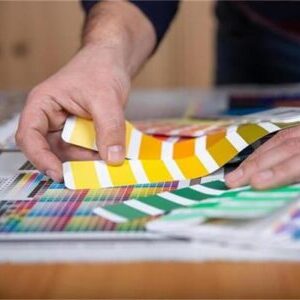
How to control color discrepancy of paper boxes
1.Same materials /ink batch
2.Same printing machines & crew
3.Same finishing (lamination/coating)
4.Identical inspection tools + standards
5. Smart color choices (e.g., black + embossed logo)