
Paper Bag Handle Types Explained: Twisted, Flat, Rope, Ribbon, Die-Cut

Every custom paper bag lives or dies at the handle. Get it wrong and the bag that looked perfect on the quotation tears in your customer’s hand on the walk to the car. This guide walks through paper bag handle types explained: twisted, flat, rope, ribbon, and die-cut, so you can match the handle to your product weight, your brand look, and your budget before you commit to a 10,000-unit order. Most buyers pick a handle by what they have seen in a shop window, then discover the cost or the breakage rate the hard way. The five types below cover almost every retail, gift, and promotional bag you will ever source.
Key Takeaways
- The handle is the part of a paper bag most likely to fail, and the part customers touch first.
- Twisted and flat paper handles are the cheap workhorses; rope and ribbon are the premium upgrades; die-cut is the lowest-cost option for light goods.
- Handle choice drives cost more than most buyers expect, sometimes adding a third of the unit price.
- The right handle depends on product weight, how the bag is carried, and the brand impression you want to leave.
- Always pull-test the handle on a PPS (pre-production sample) before bulk production, because a handle spec on paper is not a handle that holds.
Why the Handle Decides More Than You Think
A shopper judges a bag in the first second by how it feels in their hand. The paper, the print, and the logo matter, but the handle is what they grip, what they test by lifting the bag off the counter, and what they blame when it gives way. That single component quietly controls three things: how much weight the bag safely carries and how much the bag costs per unit.
What the Handle Does to Bag Cost and Perception
Handle cost ranges from almost nothing (a die-cut slot punched into the bag itself) to a meaningful slice of the unit price (cotton rope or stitched ribbon). On a tight-margin promotional bag, the handle can be 20 to 35 percent of the total cost. Our complete guide to custom printed paper bags treats handle selection as one of three decisions, alongside paper weight and print, that shape the final bag.
The Failure Point Most Spec Sheets Miss
Bag walls rarely fail first. The handle patch, where the handle glues or knots into the paper, is the weak link. That is why this article pairs each handle type with the wall strength and attachment it needs, and links handle choice back to the right GSM for your bags rather than treating them as separate.
The Five Main Paper Bag Handle Types at a Glance
Before the detail, here is the whole field on one page.
If you only remember one line from this table, make it this: the cheapest fitted handle and the cheapest overall handle are not the same.
| Handle type | Strength | Relative cost | Look & feel | Best use |
|---|---|---|---|---|
| Twisted paper handle | Medium (good for 2 to 5 kg) | Low | Natural, tactile, recyclable | Retail, apparel, groceries, mid-weight gifts |
| Flat paper handle | Medium-low (best under 2 kg) | Lowest of the fitted types | Clean, slim, easy to stack | Light retail, promo, folded flat shipment |
| Rope handle (paper or cotton) | High (3 to 8 kg) | Medium to high | Soft, substantial, premium | Premium retail, bottles, gift sets |
| Ribbon handle | Low-medium (decorative) | Medium to high | Luxe, delicate, brand-led | Luxury gifts, cosmetics, events |
| Die-cut handle | Low (under 1.5 kg, one-handed) | Lowest overall | Minimal, no extra parts | Light takeaway, food, promo inserts |
Twisted Paper Handle
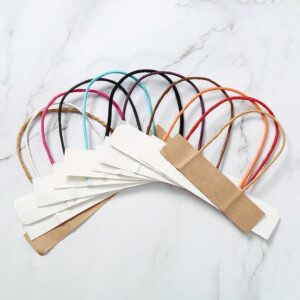
The twisted paper handle is the default for a reason. Two strips of kraft or white paper are twisted into a cord, then fixed to the bag with a rectangular paper patch on each side. It reads natural, it recycles with the bag, and it carries a surprising amount of weight for the price.
How a Twisted Paper Handle Is Made and Attached
The factory die-cuts two paper ribbons, twists them under tension into a rope-like cord, then glues a patch over each end inside the bag wall. The patch spreads the load across a wide area, which is why a twisted handle outperforms its slim look. The main quality variable is patch glue coverage and the wall GSM behind it.
Best Use and Limitations of the Twisted Paper Handle
Use a twisted paper handle for apparel, books, cosmetics, and groceries up to about 4 to 5 kg with the right wall. It is the safe, sustainable choice for most retail brands. Its limit is very heavy or sharp-edged items, where a cord can cut into the patch, and luxury positioning, where it can read too casual.
Flat Paper Handle

The flat paper handle looks like a slim paper ribbon glued flat against the bag.
When a Flat Paper Handle Beats Twisted
A flat paper handle wins on two fronts: it is marginally cheaper than twisted, and it stacks tighter in transit, so freight per unit drops slightly. It suits light goods under about 2 kg, such as stationery, single cosmetics, and folded apparel. The trade-off is comfort and strength. A flat strap cuts into the hand faster than a twisted cord and holds less weight, so it is a poor fit for anything a customer carries for more than a few minutes or more than a short distance.
Where Flat Handles Fall Short
Because the flat handle concentrates load on a narrow glued line, it pulls through thin paper sooner than a twisted patch. Brands that start with flat handles for cost often switch to twisted once they see returns from torn patches on slightly heavier items. That switch is usually a small per-unit saving in reverse (a few cents more) paid back by fewer failures.
Rope Handle Paper Bags

Rope handles are the comfort and strength upgrade. They come in two materials: twisted paper rope (matching the bag’s recyclability) and cotton or polypropylene rope (softer, stronger, but not always curbside recyclable). Rope handle paper bags are the standard for premium retail and anything heavy enough to hurt a paper strap.
Cotton Rope vs Paper Rope
Paper rope keeps the bag mono-material and easy to recycle, and it is cheaper than cotton. Cotton rope feels softer and carries more, but it raises cost and complicates the eco story unless you specify organic or recycled cotton.
Why Rope Handles Cost More but Carry More
A rope handle distributes weight through a thick cord and a large patch, so it comfortably carries bottles, candle jars, and gift sets in the 3 to 8 kg range. The cost is real: rope is several times the price of a twisted handle, and attachment is often partly manual. If your product is heavy or your brand is premium, the rope handle is where the money goes. See our breakdown of why printed bags cost more for how handle and finish stack onto base paper cost.
Ribbon Handle Paper Bags
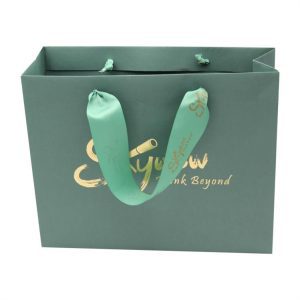
Ribbon handles are the luxury signal. A satin, grosgrain, or paper ribbon is threaded through punched holes or fixed to a patch, turning the bag into a gift object. Ribbon handle paper bags are about perception first and function second.
When a Ribbon Handle Justifies the Cost
Choose ribbon when the bag itself is the gift: cosmetics holiday sets, jewellery, wedding or event favours, and high-end apparel. The catch is strength. Ribbon is decorative; it should not carry heavy or sharp items, and it often needs a reinforced patch or a board base to avoid stretching the punched holes. A ribbon handle also slows packing, because it is usually applied by hand.
Ribbon and the Eco Question
Synthetic satin ribbon is not recyclable with the paper, which can undercut a sustainability claim. Paper or cotton ribbon keeps the bag closer to mono-material. If your brand leads with green values, specify a paper or recycled-content ribbon, or accept that it is a removable luxury trim. The FSC certification scheme is the reference most buyers trust for responsible fibre, and it covers handle stock as well as bag paper. The ISO 18601 framework for packaging and the environment takes the wider view: optimise the whole bag system, handle included, rather than minimise any single part.
Die-Cut Handle Paper Bags
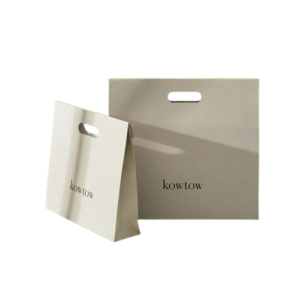
The die-cut handle is not a separate part at all. The factory cuts a hand slot straight into the bag wall, usually reinforced with a folded or laminated rim. Die-cut handle paper bags are the lowest-cost option and the lightest to ship, because there is no handle material and no patch.
Strength Limits of the Die-Cut Handle
A die-cut slot concentrates all the load on the paper around the hole. It is fine for light takeaway, food, and promo inserts under about 1 to 1.5 kg carried one-handed. Push it past that and the slot tears, especially if the bag gets yanked or caught on a finger. Die-cut also limits branding, because the handle area is a hole, not a place for a printed logo. For anything a customer values, it usually is not enough.
Die-Cut and the Right GSM
Because the slot is the weak point, die-cut bags need a heavier or coated wall than a patched handle would, which can erase the material saving. Our guide to the right GSM for your bags explains the wall weights that keep a die-cut slot from tearing. In short, the cheapest handle can force you into a pricier paper.
How Handles Are Attached
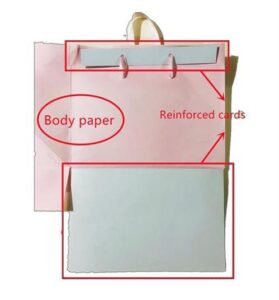
Attachment method is where handle quality is won or lost. The pattern is clear: the cheaper, lighter handles are the most automated, while rope and ribbon lean on manual labour, which is a big part of why they cost more and why they extend your manufacturer lead time.
| Handle type | Attachment method | Patch requirement | Automation level |
|---|---|---|---|
| Twisted paper | Glued paper patch, both walls | Wide rectangular patch | High (automated) |
| Flat paper | Glued flat patch or direct glue | Narrow patch | High |
| Rope (paper/cotton) | Knotted or glued into patch, often with metal eyelet | Large patch, sometimes eyelet | Medium (partly manual) |
| Ribbon | Threaded through punched holes or patched | Patch or reinforced holes | Low (often hand) |
| Die-cut | Cut slot in wall, rim reinforced | None (wall must be strong) | High |
GSM and Handle Compatibility
The handle and the wall paper are a system. The table shows the minimum and recommended wall GSM for each handle type. Notice that die-cut, the cheapest handle, demands one of the heaviest walls. This is the trap that surprises first-time buyers: saving on the handle can push you into more expensive paper. The deeper read on this trade-off lives in our how to choose GSM guide.
| Handle type | Min wall GSM | Recommended GSM | Notes |
|---|---|---|---|
| Die-cut | 120 gsm | 150 to 190 gsm (or coated) | Slot needs a rigid wall to avoid tearing |
| Flat paper | 90 gsm | 100 to 120 gsm | Narrow patch limits load |
| Twisted paper | 100 gsm | 110 to 140 gsm | Patch spreads load well |
| Rope | 120 gsm | 140 to 190 gsm | Heavy loads need a stiff wall |
| Ribbon | 120 gsm | 150 gsm + base board | Patch holes stretch under weight |
Handle Cost by Type
Costs below are indicative added cost per bag versus a basic die-cut, based on typical 2025 to 2026 import ranges for mid-volume orders. Two things stand out. First, moving from die-cut to twisted often costs less than a cent or two per bag at volume, which is a cheap upgrade in perceived quality. Second, rope and ribbon can add 10 to 30 cents per bag, enough to reshape your margin on a promotional run. The custom printed paper bags MOQ page shows how handle complexity also raises the minimum viable order, because manual steps need a longer run to amortise.
| Handle type | Added cost per bag (vs die-cut) | Tooling | MOQ sensitivity |
|---|---|---|---|
| Die-cut | $0 (baseline) | Cutting die only | Low |
| Flat paper | +$0.01 to $0.02 | Patch glue jig | Low |
| Twisted paper | +$0.015 to $0.03 | Twister head | Low |
| Paper rope | +$0.05 to $0.10 | Knotting unit | Medium |
| Cotton rope | +$0.12 to $0.25 | Manual fit | Medium-high |
| Ribbon | +$0.10 to $0.30 | Hand apply | High |
A Decision Matrix: Match the Handle to the Product
Use this matrix as a first-pass filter. If your line spans light and heavy SKUs, do not force one handle across all of them. A small handle ladder, twisted for most and rope for heavy or premium, usually beats a single compromise choice.
| Product or use case | Recommended handle | Why |
|---|---|---|
| Apparel, books, light retail | Twisted paper | Strong enough, cheap, recyclable |
| Stationery, single cosmetics, promo | Flat paper | Light load, lowest cost, ships flat |
| Groceries, takeaway under 1.5 kg | Die-cut | Cheapest, one-handed carry |
| Bottles, jars, candles, gift sets | Rope (paper or cotton) | Comfort and strength for heavy loads |
| Luxury cosmetics, jewellery, events | Ribbon | Brand signal, keeps the bag |
Three Buyers, Three Handle Lessons
Composite cases drawn from common import situations; figures reflect typical 2025 to 2026 market ranges and are illustrative.
Hannah, UK homeware brand owner, twisted handles failed on heavy ceramic mugs (February 2025). Hannah specified twisted paper handles on 8,000 kraft bags at 110 gsm for 1.4 kg stoneware mugs. In the warehouse, roughly 9 percent of handles pulled the patch through the wall when staff carried two bags per hand, and a fulfilment partner flagged the line. She re-ordered 9,000 at 140 gsm with a 50 percent larger patch at about £0.04 extra per unit, roughly £360, plus the lost first-week sales. “The handle looked fine on the sample with one mug,” she said. “It was the second mug that broke it.”
Diego, Spanish perfume brand founder, chose ribbon and lifted the whole range (September 2025). Diego moved his 50 ml fragrance gift set from twisted handles to satin ribbon on 190 gsm coated board with a reinforced base. The bag cost rose about €0.22 per unit, roughly €5,500 across 25,000 units, but retail sell-through rose and the bag started showing up in customers’ social posts. He kept the ribbon only on the gift edition and ran twisted handles on the everyday bottle to protect margin. “The ribbon paid for itself in photos,” he noted. “People photographed the bag before the perfume.”
Mei, Singapore lifestyle retailer, saved by switching flat to twisted (May 2025). Mei’s folded tea-towel line shipped in flat-handle bags at 100 gsm. Returns from torn handles ran about 6 percent. Switching 40,000 units to twisted paper handles at 120 gsm added about $0.018 per bag, roughly $720 total, and dropped handle failures below 0.5 percent. The slightly heavier wall also improved the shelf feel. “Flat was cheap until it wasn’t,” she said. “Twisted cost me almost nothing and ended the complaints.”
Common Handle Mistakes When Specifying Paper Bags
Picking the Handle Before the Product Weight
The most common mistake is choosing a handle by looks, then forcing the product into it. Start from the heaviest item the bag must carry, add margin for shopper behaviour, and let that set the handle. A PPS (pre-production sample) loaded with the real product settles the argument faster than any catalogue photo.
Ignoring the Patch and Wall Behind the Handle
As the GSM table showed, the patch and wall decide the outcome before the handle cord does. Write the patch size and wall GSM into the spec, and confirm them at quality control before shipping, because a factory can quietly shrink the patch to save glue.
Forcing One Handle Across Every SKU
A brand with a 40 g soap and a 3 kg gift hamper should not ship both in twisted handles. Light items waste money on heavy handles; heavy items fail on light ones. Set a small handle ladder per product line, and our guide to how to choose a reliable manufacturer explains how to get honest handle advice instead of an upsell.
How to Specify Handles on Your Next Order
Turn the theory into a repeatable spec so every reorder is comparable and every bag actually holds. Start from product weight, pick the handle from the decision matrix, then order a sample at the matched GSM and patch size. The printing methods compared guide matters here too, because foil or heavy ink near the handle patch can weaken the glue line if the factory does not adjust cure time.
Before you sign, confirm the supplier payment terms and the Incoterms / shipping for your handle choice, because rope and ribbon add packing time and carton volume that shift your deposit and freight maths. If you would rather have a partner spec the handle with you than gamble on a guess, begin from our complete guide to custom printed paper bags.

-
1. Which paper bag handle is the strongest?
Rope handles are the strongest, carrying roughly 3 to 8 kg depending on rope material and wall GSM, because the cord spreads load through a large patch. Twisted paper handles come next at about 2 to 5 kg. Flat paper handles suit loads under 2 kg, die-cut slots are safe under about 1.5 kg, and ribbon is decorative rather than load-bearing. Strength always depends on the wall paper and patch behind the handle, not the cord alone.
-
2. Twisted vs flat paper handle: which should I choose?
Choose a twisted paper handle for most retail and mid-weight goods up to about 4 to 5 kg, because the twisted cord spreads load across a wide patch and feels better in the hand. Choose a flat paper handle for light items under 2 kg where the lowest cost and the flattest carton matter more than comfort. If your returns show torn patches, move from flat to twisted before you upgrade the paper weight. -
3. Rope vs die-cut handle: which is better for my product?
Rope handles suit heavy or premium products such as bottles, candles, and gift sets, and they survive long carry distances, but they cost several times more than a die-cut slot. Die-cut handles are the cheapest option and ship lightest, yet they only suit goods under about 1.5 kg carried briefly, because the slot concentrates load on the wall paper. Pick die-cut for cheap light takeaway and rope for anything you want customers to keep carrying.
-
4. Are ribbon handles worth it for luxury packaging?
Ribbon handles are worth it when the bag is part of the gift, such as cosmetics sets, jewellery, or event favours, because they signal premium positioning and customers tend to keep the bag. They are decorative rather than strong, so pair them with a reinforced base and keep the load light. If sustainability is a brand value, specify paper or recycled ribbon, since synthetic satin is not recyclable with the paper.
-
5. Does the handle affect what GSM paper I need?
Yes. Die-cut slots need a heavier or coated wall, often 150 to 190 gsm, to stop the slot tearing, while twisted and flat handles work on lighter paper because the patch spreads the load. Rope needs a stiff 140 to 190 gsm wall for heavy items, and ribbon needs reinforcement around the punched holes. The handle and the GSM are a system, so set them together rather than separately. Our GSM guide covers the exact weight bands.
-
6. How much more does a rope or ribbon handle cost versus paper?
Indicative 2025 to 2026 import ranges put twisted or flat paper handles at roughly 1 to 3 cents above a die-cut slot per bag, paper rope at 5 to 10 cents above, cotton rope at 12 to 25 cents, and ribbon at 10 to 30 cents. Rope and ribbon also add packing time and carton volume, which can raise lead time and freight. The exact figure moves with order volume and whether the handle is applied by machine or by hand.
-
7. Can I mix handle types in one order?
You can, and for brands with a light and a heavy line it is often the right call. Run twisted handles on everyday items and rope or ribbon on gift or premium SKUs, then set a small handle ladder in your spec. Mixing does raise setup complexity, so confirm the custom printed paper bags MOQ and lead time with the factory before splitting the run, because manual handles need a longer production window.
Conclusion
Paper bag handle types explained comes down to one idea: the handle is where cost, strength, and brand impression meet. Twisted and flat paper handles cover most retail needs at low cost and stay recyclable. Rope handles earn their price on heavy and premium loads. Ribbon handles are a luxury signal best kept for gift products. Die-cut is the cheapest handle but quietly pushes you into heavier paper. Match the handle to your product weight first, set the wall GSM and patch size with it, and prove the combination on a pre-production sample before you commit the run.
The cheapest handle is not always the cheapest bag, and the prettiest handle is not always the right one. Weigh the product, pick from the decision matrix, and let a pull-test decide. Start your next order from our complete guide to custom printed paper bags, shortlist suppliers who show handle test data, and confirm the spec at quality control before the container sails.

ALLEN LEE
Hi, I’m Allen Lee, the owner of Allenboxes.com, I’ve been in the packaging industry for over 20 years and running a factory in China that produce for 10+ years, and the purpose of this article is to share with you the knowledge related to packaging from a Chinese supplier’s perspective.


3 Steps to Save Shipping costs
Step 1: Use foldable boxes instead of two-piece rigid boxes.
Step 2: Customize to a smaller box. And Order early to use economy ocean freight instead of air.
Step 3: Select Door to door service include all taxes and freight.
Why Your Quote Jumped After the Factory Reviewed Your Artwork
Your quote can jump after artwork review. Learn how bleed, spot colour, foil and die-cuts change price, and how to lock a file-reviewed quote before approval.
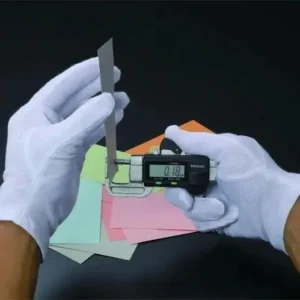
5 tips about Materials of Paper Boxes
1.Measure thickness of raw material
2.Cut a 10x10cm sheet
3.Measure paper weight
4.Measure paper thickness
5.Check standard weight-thickness tables
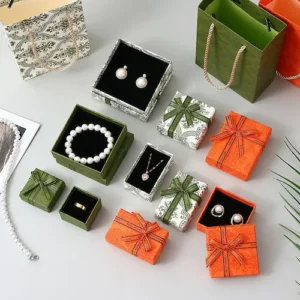
12 Common Box Inserts Introduction
1.Sponge (with velvet or paper)2.EVA Foam 3.Pearl cotton (EPE)
4.Paper Cardboard 5.Corrugated Paper 6.Plastic Blister
7.Tissue Paper 8.Raffia Filler9.Bubble Beads
10.Satin Fabric,11.Small Pouches 12.Mini Pillows
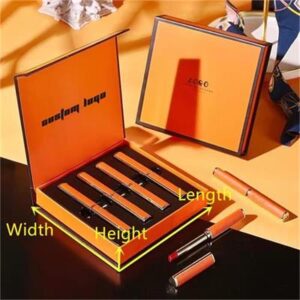
6 steps to customize paper boxes
1. Design Box style, Colors, Logos.
2. Meet the budget.
3. Revisions & Prototyping
4. Final Approval & Refinement
5. Small-Batch Testing
6. Mass Production

How to control color discrepancy of paper boxes
1.Same materials /ink batch
2.Same printing machines & crew
3.Same finishing (lamination/coating)
4.Identical inspection tools + standards
5. Smart color choices (e.g., black + embossed logo)