
Factory Price vs Trading Company: Which Really Costs Less?
Key Takeaways
- Factory price vs trading company rarely turns on unit cost: ex-factory quotes cover only 75–80% of landed cost, so the remaining 20% decides the winner.
- Trading company markup on custom packaging sits at 10–30% over FOB, stretching to 15–35% for managed projects and 35–60% on open marketplace listings.
- Seven hidden fees, plates, tooling, samples, inspection, repacking, currency spread, and forwarder margin, routinely add 8–20% to a quote that looked complete.
- On 10,000 boxes the factory lands at 1.18 per unit against 1.21 from a trader, until you price your own 40 coordination hours at a realistic rate.
- Go direct above 5,000 units per SKU with a China-side QA contact; use a trading company for mixed SKUs, tight deadlines, or certification-heavy launches.
Factory Price vs Trading Company: The Short Answer
The simple answer to “are factory prices always lower than trading company prices” is no, and the gap is rarely where you expect it. A factory’s per-unit price is usually lower. But your delivered cost includes tooling, prepress, inspection, freight, duties, and the cost of your own time. Load those onto a bare factory quote and the trading company’s “expensive” number often wins.
Industry data backs this up. One 2025–2026 cross-border packaging study found that ex-factory cost accounts for only 75–80% of total landed cost; the remaining 20% is made up of fees most buyers never itemize up front. Another importer guide shows a 1.18 per unit against 7,468 after freight, duties, and handling, a 49% jump nobody budgeted for.
Key points
- A lower unit price is not the same as a lower delivered cost.
- Factory quotes usually exclude freight, duties, tooling, and inspection.
- Trading companies bundle services that cost you time and risk if you go direct.
- The smart comparison is landed cost per good unit, not headline price.
What "Factory Direct" Really Means for Packaging
“Going direct” sounds like a clean win: you skip the middleman and pay the production-floor rate. In practice, direct means you inherit the middleman’s jobs. You vet the plant, negotiate the spec, manage the sample round, arrange the forwarder, and chase the inspection yourself.
Real factories are easy to spot. They run one product category in volume, sit in an industrial zone, and will show you the production line on video without hesitation. A “factory” that resists a line tour, carries five unrelated product lines, or quotes from an office address is usually a trading company in disguise. Ask for the business license; a manufacturing license lists production in its scope, while a trading license does not.
For a deeper look at how direct and intermediary quotes differ on paper bags, see our guide to custom printed paper bags and MOQ.
How Trading Companies Actually Earn Their Margin
A trading company does not make boxes. It buys them from a factory and resells them to you, earning the difference plus a service fee. The services are real: supplier discovery, translation, export documentation, consolidated logistics, and assuming the commercial risk of the shipment.
That is why the question of direct vs intermediary pricing is not “who is honest.” It is “which bundle of services do you want to pay for, and which can you do yourself?” A novice buyer with no China team gets genuine value from a trading company. A buyer with a local QA partner and three vetted factories may be paying pure arbitrage.
Trading Company Markup: The Fair Range
So what is a reasonable markup? Across sourcing guides, packaging trading companies typically add 10–30% on top of the factory FOB price. For complex custom packaging with heavy project management, that can stretch to 15–35%. Listings on open marketplaces can run 35–60% above factory cost because you are also paying for the platform’s traffic and the seller’s ignorance-premium. Any honest factory price vs trading company comparison starts by naming that margin out loud.
Key points
- Fair packaging markup: roughly 10–30% over FOB.
- Complex, managed projects can justify 15–35%.
- Marketplace listings often carry 35–60% markup, verify the source.
- Always ask: is this a factory-direct quote or a resale with a fee?
A 10–30% markup is not theft when it covers consolidation, QC, and documentation. It becomes a problem only when the same services are absent and you pay twice, once in margin, once in your own labor.
The Hidden Fees Suppliers Hide
This is where budgets break. In short, the hidden fees suppliers omit are rarely itemized up front, and they show up after you have paid the deposit. Based on importer guides, the usual suspects add 8–20% to your expected total. None of these is large alone. Together they are the difference between a profitable order and a loss. A 1.18 per unit against 1.72 after freight, insurance, and fees, a 43% increase the quote never mentioned.
| Fee | Typical range | When it appears |
|---|---|---|
| Printing plates | $50–200 per color | Before mass production |
| Tooling / molds | $300–1,500 per set | New custom shape |
| Sample rounds | $50–300 | Pre-production |
| Inspection (third-party) | $200–500 per lot | Pre-shipment |
| Repacking / palletizing | $50–300 per shipment | At the port |
| Currency spread | 1–3% of invoice | At wire time |
| Forwarder margin | 5–15% over base freight | On the booking |
True Cost Showdown: Factory Price vs Trading Company
Put the two models side by side on the same spec, and the picture clears. Assume 10,000 custom boxes, identical board grade and print. The factory wins by three cents a unit, until you price your 40 hours. At a 1.18 per unit against 0.20 a unit, and the trading company pulls ahead. That is the whole argument in one table.
| Cost component | Factory direct | Trading company |
|---|---|---|
| Unit price (FOB) | $0.80 | $1.04 |
| Tooling & plates | $900 (you pay) | $900 (bundled) |
| Inspection | $400 (you arrange) | $0 (included) |
| Forwarder & docs | $350 (you arrange) | $0 (included) |
| Your labor | 40 hours | 6 hours |
| Landed cost / unit | ~$1.18 | ~$1.21 |
Your Custom Packaging Cost Breakdown
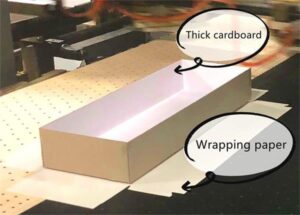

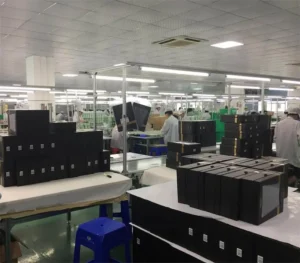
A clean cost breakdown separates the price you see from the price you pay. Build yours from these layers:
- Materials, board grade, weight, lamination, ink coverage.
- Conversion, die-cutting, gluing, handle attachment.
- Tooling, dies and plates, usually one-time.
- Prepress, file checks, color correction, mockups.
- Quality control, in-line and pre-shipment inspection.
- Logistics, freight, insurance, port handling.
- Landed extras, duties, broker, bond, inland trucking.
- Risk buffer, scrap, defects, revisions.
When a supplier refuses to itemize, treat the missing line as a question, not a discount. Either the cost is buried elsewhere or it lands on your final invoice. For the full material-to-door model, read why custom paper bags cost what they do.
When Buying Direct Wins
Buying direct pays off in clear situations:
- Large, repeatable volumes, you clear MOQs comfortably and spread tooling across runs.
- You have a China-side partner, a QA contact or agent handles inspection and logistics.
- Simple specs, standard shapes, one print color, no certification maze.
- Long lead time, you can absorb the 3–6 month relationship-building phase.
In these cases the 10–30% margin you keep is real money. One accessories brand that moved from a wholesale chain to a direct Yiwu factory recovered six figures a year on a single SKU.
When a Trading Company Is the Smarter Buy
Flip the conditions and the trading company wins:
- Small or mixed orders, you need several SKUs consolidated to hit MOQ.
- Tight deadline, no time to vet and sample three plants.
- Strict compliance, you need FSC or ISO documentation handled for you.
- No local team, every email is a time-zone gamble.
A European coffee roaster we spoke with needed 3,000 bags, 2,000 boxes, and 5,000 inserts from three factories. Going direct meant three deposits, three inspections, three forwarders. The trading company quoted 24% above the blended factory price but delivered one shipment, one certificate pack, and zero missed launches. The “expensive” quote was the cheap one.
Minimum Order Quantities and the Scale Trap
Packaging MOQs bite hardest at the low end. Custom boxes and bags typically start at 500–1,000 units at a real factory. Below that, factories either refuse or load a small-run penalty that erases the price gap.
Trading companies smooth this by pooling your order with others. You pay margin, but you avoid a 5,000-unit commitment on a product you have not market-tested. If you are pre-launch, that flexibility is worth more than the unit saving. See our guide to low MOQ packaging suppliers for small business before you sign a MOQ you cannot sell through.
Quality, Certifications, and Risk
Defects cost more than margin. A 2% defect rate on a direct order is your problem to find, sort, and return. A trading company that bundled inspection carries some of that risk contractually.
Certifications matter for Western retailers. FSC-certified board, documented through FSC chain-of-custody certification, and quality systems audited against the ISO 9001 quality management standard, require paperwork trails most small factories dislike maintaining. A trading company that already holds these relationships saves you weeks. For independent verification, SGS third-party inspection is the buyer’s safety net, and a line item you should expect to pay for either way.
Lead Time, Communication, and Project Management
Direct factory relationships take 3–6 months to build before your first run. Samples alone can eat 30–60 hours of coordination across time zones and languages. A trading company compresses that to a few emails.
The cost is not just hours. Miscommunication on a dieline or a Pantone mismatch surfaces at the port, not the proof stage. If you lack a bilingual spec sheet and a QA checkpoint, the “savings” of going direct can become an air-freight emergency. Supplier verification through platforms like Alibaba.com helps, but verification is not management.
How to Read a Packaging Quote Like a Pro
Turn every quote into a line-item table before you compare. Require these fields:
- Material grade and exact weight
- Print method, colors, and finish
- Tooling and plate fees (one-time?)
- Sampling cost and credit terms
- Incoterm (EXW, FOB, CIF, DDP)
- Validity window (usually 15–30 days)
- Payment terms (deposit %, net days)
- Overs/unders tolerance clause
Incoterms decide who pays for what, and the ICC Incoterms rules define EXW, FOB, CIF, and DDP precisely enough to settle most disputes before they start. Mismatched specs are the most common error. A 300gsm board quote will always beat a 250gsm one for reasons that have nothing to do with supplier efficiency. Any china packaging factory price comparison collapses the moment the specs drift, so demand identical dimensions, material, print, finish, and quantity, then compare landed cost.
Red Flags in Every Quote
Watch for these regardless of source:
- No itemized breakdown, a single lump sum hides margin and fees.
- Refuses video line tour, likely not a factory.
- “Free” inspection with no method described, QC is not free.
- Vague Incoterms, EXW shifts all risk to you.
- No quote validity date, price can move before deposit.
- MOQ far below industry norm, possible resale or quality risk.
Any one of these means you should ask harder questions before wiring money.
A Practical Decision Framework
Use this four-question test to choose your model:
- Volume, Above 5,000 units per SKU and repeatable? Lean factory.
- Team, Do you have QA or an agent in China? If no, lean trading company.
- Complexity, Multiple SKUs, certifications, custom shapes? Lean trading company.
- Time, Under 8 weeks to launch? Lean trading company.
Key points
- Above MOQ + local support = factory direct wins.
- Small, complex, or urgent = trading company wins.
- Always decide on landed cost, not unit price.
- Re-evaluate every 12 months as your volume grows.
Run the factory price vs trading company test again every twelve months, because volume, staffing, and freight rates all move. For a side-by-side model built for packaging specifically, compare factory vs trading company packaging before you commit.
Two Buyers, Two Very Different Outcomes
Buyer A, the skincare brand. Maya launched a 5,000-unit serum with custom paper boxes. She took the lowest factory quote, skipped inspection to save 1.18 per unit against 2,100. Her “cheapest” unit price ended 19% above the trading company’s bundled quote that included QC.
Buyer B, the gift retailer. Tom needed 800 boxes for a seasonal drop, below any factory MOQ. A trading company pooled his run with others, charged 28% margin, and delivered in 19 days with FSC papers attached. Going direct would have forced a 5,000-unit buy he could not sell. The higher unit price was the only viable path.
Both buyers made the right call for their situation. Neither chose on headline price alone.

-
1. Are factory prices always lower than trading company prices?
No. A factory's unit price is often lower, but a trading company can win on total landed cost once you add tooling, quality control, consolidation, and the hidden fees packaging supplier quotes omit. The cheapest headline quote is rarely the cheapest delivered order, so rebuild every offer as a landed-cost figure before you choose.
-
2. What is a typical trading company markup on packaging?
Most trading companies add a 10–30% margin on top of the factory FOB price, though complex custom packaging with heavy project management can reach 15–35%, and open marketplace listings often run 35–60% above factory cost. Always ask whether the quote is factory-direct or a resale that already includes a service fee. -
3. What hidden fees should I watch for with packaging suppliers?
Watch for plate and tooling charges, freight forwarder margins, inspection fees, repacking costs, and currency conversion spreads. These hidden fees packaging supplier quotes omit can add 8–20% to your expected total, and they usually surface after the deposit has cleared. Ask for a line-item breakdown before you wire anything.
-
4. How do I calculate the true landed cost of custom packaging?
Add unit price, tooling, plates, freight, duties, inspection, and a defect buffer, then divide by the number of good units you actually receive. That single figure is your custom packaging landed cost, and it is the only number worth comparing across a factory quote and a trading company quote. -
5. When should I use a trading company instead of a factory?
Choose a trading company when you need several suppliers consolidated into one shipment, strict certifications such as FSC or ISO handled for you, hands-off quality control, or volumes below a real factory MOQ. They cost more per unit but cut your time, risk, and coordination overhead sharply.
Conclusion
Direct vs intermediary pricing is the wrong question if you stop at the unit number. The right question is: what does this order cost delivered, inspected, certified, and in your warehouse? Build the landed-cost table, price your own hours, and let the model choose itself. The cheapest quote is only cheap until the invoice proves otherwise.

ALLEN LEE
Hi, I’m Allen Lee, the owner of Allenboxes.com, I’ve been in the packaging industry for over 20 years and running a factory in China that produce for 10+ years, and the purpose of this article is to share with you the knowledge related to packaging from a Chinese supplier’s perspective.


3 Steps to Save Shipping costs
Step 1: Use foldable boxes instead of two-piece rigid boxes.
Step 2: Customize to a smaller box. And Order early to use economy ocean freight instead of air.
Step 3: Select Door to door service include all taxes and freight.
Why Your Quote Jumped After the Factory Reviewed Your Artwork
Your quote can jump after artwork review. Learn how bleed, spot colour, foil and die-cuts change price, and how to lock a file-reviewed quote before approval.
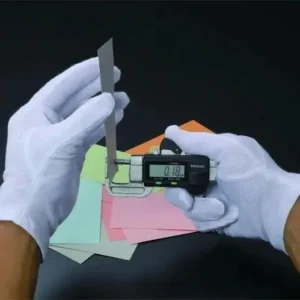
5 tips about Materials of Paper Boxes
1.Measure thickness of raw material
2.Cut a 10x10cm sheet
3.Measure paper weight
4.Measure paper thickness
5.Check standard weight-thickness tables

12 Common Box Inserts Introduction
1.Sponge (with velvet or paper)2.EVA Foam 3.Pearl cotton (EPE)
4.Paper Cardboard 5.Corrugated Paper 6.Plastic Blister
7.Tissue Paper 8.Raffia Filler9.Bubble Beads
10.Satin Fabric,11.Small Pouches 12.Mini Pillows
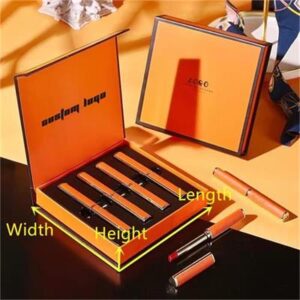
6 steps to customize paper boxes
1. Design Box style, Colors, Logos.
2. Meet the budget.
3. Revisions & Prototyping
4. Final Approval & Refinement
5. Small-Batch Testing
6. Mass Production
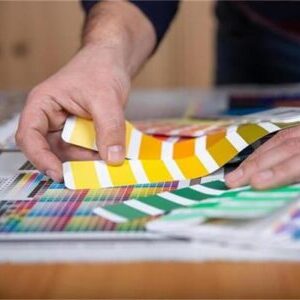
How to control color discrepancy of paper boxes
1.Same materials /ink batch
2.Same printing machines & crew
3.Same finishing (lamination/coating)
4.Identical inspection tools + standards
5. Smart color choices (e.g., black + embossed logo)