
FOB CIF DDP for Paper Bags:
Which Quote Should You Choose?
When a Chinese factory quotes your custom printed paper bags, the three letters after the price decide more than the unit cost. FOB CIF DDP for paper bags is not a formatting detail on the proforma invoice — it tells you who books the ship, who clears customs, and who eats the loss if a carton goes overboard. The same bag can look 20% cheaper under one term and quietly cost more once the destination bills arrive. This guide explains what each Incoterms 2020 rule means for paper bag imports, where the hidden charges appear, and how to pick the quote that actually protects your margin.
Key Takeaways
- The Incoterm sits inside the price, not beside it. A $0.40 FOB bag and a $0.52 DDP bag are not the same product offer.
- Risk and cost transfer at different points. Under FOB and CIF, risk passes to you the moment the bags are on board at the load port — even though the seller may still be paying the freight.
- CIF covers freight and insurance to the destination port only. Destination terminal handling, import duty, and last-mile trucking are still on you.
- DDP is the buyer-friendly extreme: the seller clears customs and pays duty, delivering to your door. You trade a higher unit price for near-zero logistics work.
- Match the term to your freight muscle, not the supplier’s preferred quote. First-timers usually win with DDP or DAP; experienced importers with a forwarder usually save with FOB.
What Do FOB, CIF, and DDP Actually Mean?
Incoterms are the International Chamber of Commerce’s standard trade terms. They draw a line and say “up to here the seller pays and carries the risk; from here it is the buyer.” The Incoterms 2020 rules from the International Chamber of Commerce are the authoritative source; the terms below are what you will meet on almost every paper bag quote out of China.
FOB (Free On Board)
FOB means the seller clears the goods for export and loads them on board the vessel at the named port of shipment (usually Shenzhen, Ningbo, or Shanghai); risk transfers to you the moment they are on the ship. From there you arrange and pay ocean freight, marine insurance, destination handling, import clearance, and delivery. FOB is the default for experienced importers because it lets you control freight and consolidate several suppliers into one container.
CIF (Cost, Insurance and Freight)
CIF looks like FOB with two extras: the seller contracts and pays for ocean freight and marine insurance to your named destination port. The trap is that risk still transfers to you at the load port, exactly like FOB, so if the container is lost at sea the insurance claim is yours to file. CIF gives one tidy sea number that many buyers like until the destination bills land.
DDP (Delivered Duty Paid)
DDP is the opposite end: the seller handles export, freight, insurance, destination port, import clearance, and duty, delivering cleared bags to your named place. You do almost no logistics. The price is higher because the factory quotes its landed cost plus customs risk, but for a first-time importer the predictability is usually worth it. DDP is the maximum-obligation term, so not every Chinese factory will agree to it.
The Other Three You’ll Meet: EXW, CFR, DAP
- EXW (Ex Works) — the seller makes the goods available at their own factory gate. You collect, export, freight, clear, and deliver. Minimum seller obligation, maximum buyer work. Rarely worth it unless you run a freight operation inside China.
- CFR (Cost and Freight) — like CIF but without the insurance. Seller pays freight to the destination port; you buy the insurance and take the risk from load port. A common middle option when the seller has cheap freight but you place the insurance.
- DAP (Delivered At Place) — the seller delivers the goods on the arriving vehicle at your named place, ready for unloading, but you handle import clearance and duty. Think of it as “DDP minus the customs paperwork.” It suits buyers who have a broker they trust and want to shave the DDP premium.
Why the Incoterm Quietly Sets Your Landed Cost
A quote is only comparable in the same term. Buyers see $0.39, $0.43, and $0.51 and pick the lowest, missing that the first is EXW, the second FOB, the third DDP — three different bundles of work and risk. The real number is landed cost: under FOB or CIF add freight, insurance, handling, broker, duty, and trucking; under DDP those sit inside the price. Normalize every quote to “bags on your dock” and the spread often flips. Our complete guide to custom printed paper bags keeps the spec constant so the only variable is the term.
Incoterms 2020 at a Glance: Cost and Risk by Term
This is the map most buyers bookmark. “Risk transfers” marks the point where a lost or damaged carton becomes your problem.
| Term | Export clearance | Risk transfers at | Main freight | Insurance | Import duties & clearance | Best for |
|---|---|---|---|---|---|---|
| EXW | Buyer | Seller’s premises (you collect) | Buyer | Buyer | Buyer | Buyers with their own China freight team |
| FOB | Seller | On board vessel at load port | Buyer | Buyer | Buyer | Experienced importers who control freight |
| CFR | Seller | On board vessel at load port | Seller | Buyer | Buyer | Buyers wanting seller to book cheap freight |
| CIF | Seller | On board vessel at load port | Seller | Seller (to dest. port) | Buyer | Buyers wanting one all-in sea price |
| DAP | Seller | Arriving vehicle at named place | Seller | Seller (usual) | Buyer | Buyers with a broker, want near-door delivery |
| DDP | Seller | Arriving vehicle at named place, cleared | Seller | Seller (usual) | Seller | First-timers, Amazon FBA, zero-customs buyers |
Read it row by row: under CIF the seller pays freight and insurance but risk already moved to you at the load port, and duties are still yours. The Freightos Incoterms definitions show the same split from a freight-rate view.
FOB vs CIF for Paper Bags: A Head-to-Head

| Dimension | FOB | CIF |
|---|---|---|
| Who books the vessel | You (or your forwarder) | The seller |
| Who pays ocean freight | You | Seller |
| Who pays marine insurance | You | Seller |
| When risk passes to you | On board at load port | On board at load port (identical) |
| Who controls the freight contract | You | Seller |
| What arrives after the ship docks | Duties, terminal fees, inland | Duties, terminal fees, inland (same) |
| Best when | You have a forwarder or want to consolidate | You want a single predictable sea rate |
This is the comparison most paper bag buyers face, because Chinese factories quote both by default. Here is the head-to-head.
The Mistake Most Buyers Make About CIF
The dangerous assumption is that “Cost, Insurance and Freight” means the seller delivers the goods to you. It does not. CIF ends at the destination port; the freight and insurance the seller arranged cover the sea leg only. Once the container is discharged, you still pay the destination terminal handling, the customs entry, the import duty, and the truck to your warehouse. CIF gives you one tidy number from the factory, but it does not remove the work — it just hides who is doing it until later.
If you want to understand the freight leg in detail before you commit, our guide to shipping paper bags from China walks through container sizes, transit times, and the charges that show up after arrival.
DAP vs DDP for Paper Bags: Door-to-Door or Door-to-Customs
The second real choice is between the two delivered terms; they differ only on who faces the customs officer.
| Dimension | DAP | DDP |
|---|---|---|
| Import clearance | Buyer | Seller |
| Import duties & taxes | Buyer | Seller |
| Delivery point | Arriving vehicle, ready to unload | Same, but cleared and duties paid |
| Risk passes to you | At named place, before unloading | At named place, after clearance |
| Seller’s obligation | High | Highest of all 11 Incoterms |
| Customs broker needed by buyer | Yes | No |
| Best for | Buyers with a cheap, trusted broker | Buyers who want zero customs involvement |
DAP is the pragmatic middle: the factory runs the freight and drops the container at your facility or a nearby warehouse, and you handle the paperwork and the duty. DDP removes even that. The premium on DDP is essentially the seller pricing in the customs risk plus a service fee — which is why many factories add 8–15% over a comparable FOB quote. For a buyer who has no broker and no appetite for a clearance hold, that premium buys peace of mind.
Who Pays What at Each Stage of the Journey
Trace one carton from the factory floor to your dock; responsibility splits differently under each term. Use this as your checklist when a quote looks too cheap.
* Under DAP and DDP the seller usually arranges insurance as part of the door-to-door service, though the rules do not strictly mandate it. Confirm it is included in writing.
The pattern is the real lesson: as you move from EXW to DDP, each stage is handed from buyer to seller, and the seller’s quote rises to cover it. None of the terms is cheaper in absolute terms — they are different places to draw the line.
| Stage | EXW | FOB | CFR | CIF | DAP | DDP |
|---|---|---|---|---|---|---|
| Pickup at factory | Buyer | Seller | Seller | Seller | Seller | Seller |
| Export clearance | Buyer | Seller | Seller | Seller | Seller | Seller |
| Origin port charges | Buyer | Seller | Seller | Seller | Seller | Seller |
| Main freight | Buyer | Buyer | Seller | Seller | Seller | Seller |
| Marine insurance | Buyer | Buyer | Buyer | Seller | Seller* | Seller* |
| Destination port handling | Buyer | Buyer | Buyer | Buyer | Seller | Seller |
| Import duties & clearance | Buyer | Buyer | Buyer | Buyer | Buyer | Seller |
| Delivery to your door | Buyer | Buyer | Buyer | Buyer | Seller (you unload) | Seller |
Three Real Quotes, Three Very Different Outcomes
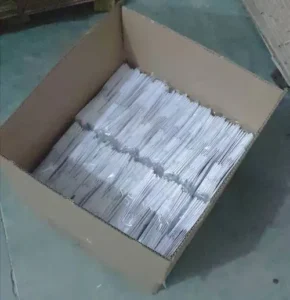
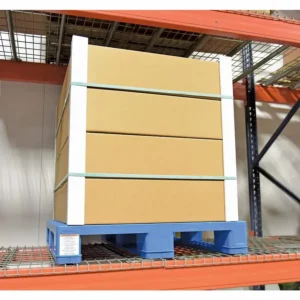
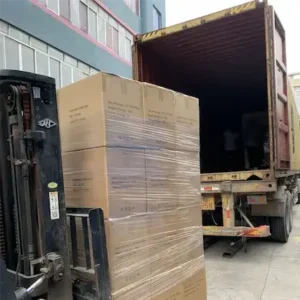
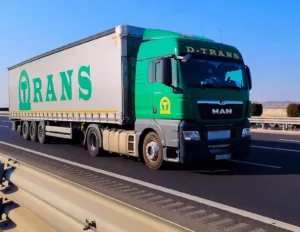
Composite cases from common buyer situations; the figures reflect typical 2025–2026 market ranges.
Sarah, US gift-brand owner — stung by CIF destination charges (April 2025). Sarah quoted 8,000 kraft handled bags at $0.52 per bag CIF Los Angeles, a clean single number she could forward to her finance team. The container arrived, and then the real bills came: a $1,850 destination terminal handling charge, $2,340 in import duty, and a $610 customs broker fee. That was $4,800 of cost she had not budgeted — about $0.06 extra per bag, wiping out the margin she thought CIF had protected. “I thought CIF meant it was delivered,” she said. “It meant the ship delivered it. Everything after that was mine.”
James, UK skincare startup founder — chose DDP to skip customs (March 2026). Ordering his first 5,000 bags, James compared a FOB quote equivalent to £0.64 per bag with a DDP quote of £0.71. He took DDP. The premium was about 11%, but he avoided hiring a customs broker, posted no import bond, and sidestepped a 9-day clearance hold that would have missed his launch date. “The £0.07 looked expensive on paper,” he said. “On launch day, when the bags were already in my fulfilment centre, it looked like the cheapest decision I made.”
Lena, German retail chain procurement lead — saved by self-arranging freight (Q4 2025). On 15,000 bags, Lena took FOB Shenzhen and booked her own consolidator for $1,150. The factory’s CIF quote for the same 20-foot container was $1,920. The $770 gap worked out to roughly $0.05 per bag — enough across the annual program to fund a second print color. “Once you have a forwarder you trust, letting the factory ‘helpfully’ book the freight is the expensive option,” she noted.
How to Choose the Right Incoterm for Your Paper Bags
There is no single best term, only the best one for your capability and volume. Use the matrix, then read the two sections below.
| Buyer profile | Recommended term | Why |
|---|---|---|
| First-time importer, small volume | DDP | No broker, all-in price, predictable landing |
| Amazon FBA / DTC brand | DDP to FBA warehouse | Avoids customs entirely; shipments go straight to the FC |
| Experienced importer, FCL | FOB | You control freight, consolidate, and cut cost |
| Want seller to handle shipping, can clear customs | CFR or CIF | Seller books freight; you keep the clearance |
| Mid-volume, want near-door, have a broker | DAP | Convenience without the full DDP premium |
| Large chain with own broker | FOB or EXW | Maximum control and the lowest price |
Match the Term to Your Buyer Type
First container? Default to DDP or DAP for a calm onboarding with no bond, broker negotiation, or customs entry. If you already import and have a forwarder, FOB is almost always cheaper because you skip the factory’s freight markup. Amazon sellers often use DDP straight to the FBA centre so the shipment skips a customs queue they cannot manage.
Match the Term to Your Order Size
Order size changes the math because fixed logistics costs divide across more units.
- Under one cubic metre (roughly under 2,000–3,000 bags): the FOB freight saving is small and the customs hassle is real, so DDP or DAP usually wins on total landed cost and sanity.
- One full container (FCL), 15,000+ bags: FOB pays off hard, because your self-arranged freight spreads over a large quantity.
- Between the two (a few cubic metres, LCL): it is a coin flip. Get both quotes and normalize them with the stage table before deciding.
Before you finalize volume, check the custom printed paper bags MOQ so your order size and your Incoterm choice are decided together, not separately.
Common Mistakes When Comparing Paper Bag Quotes
A few errors recur often enough that naming them saves money.
Comparing a FOB Price With a DDP Price
This is the classic. A $0.40 FOB quote and a $0.52 DDP quote for the same bag are not the same offer — the FOB number is a starting gun, the DDP number the finish line. Normalize both to landed cost before you judge. If you are unsure what drives the unit price, our piece on why printed bags cost more separates material, print, and finish from freight and duty.
Assuming CIF Pays the Destination Bills
As covered, CIF ends at the port. Destination terminal handling, customs entry, duty, and inland trucking remain yours. Build those into the comparison or CIF will quietly beat you.
Forgetting Insurance Under FOB and CFR
Under FOB and CFR the risk is on you from the load port, and you must also arrange the marine insurance. Buyers who skip it to save a few dollars learn too late that a sunk container is their loss, not the factory’s. The Flexport Incoterms 2020 explainer shows where risk and cost actually shift.
A Practical Workflow for Your Next China Order
Turn the theory into a repeatable process so every quote is comparable.
Step 1: Ask for the Same Spec in Two Terms
Always request FOB and DDP (and optionally CIF) on the identical spec; this forces the factory to reveal the freight-and-duty gap instead of quoting only its preferred term. Tie it to a confirmed spec from your PPS (pre-production sample) so the comparison is real, not a moving target.
Step 2: Add the Costs the Quote Leaves Out
For any non-DDP quote, add freight, insurance, destination handling, duty, broker, and last-mile. A spreadsheet row per quote keeps you honest; loop in your broker early because duty depends on the bag’s material and country of import.
Step 3: Be Honest About Your Freight Capability
If you do not have a forwarder, do not pretend FOB will save you money after you pay a broker to clean up a clearance problem. Pick the term that matches the operation you actually have. When you are ready to select a partner, our guide to choose a reliable manufacturer and how to verify supplier certifications will keep the product side as solid as the logistics side.
Your manufacturer lead time decides whether FOB’s longer planning window fits your launch, and your supplier payment terms must align with the Incoterm — a 30% deposit on a DDP order and on an FOB order carry different cash exposure once freight is in play. Build in quality control before shipping regardless of term: under FOB, CIF, and DDP the risk is on you the moment the bags leave the factory, so a defect you catch after arrival is your cost to fix.

What do FOB, CIF, and DDP mean in plain terms?
FOB means the seller loads the bags on the ship and from there the risk and the freight are yours. CIF adds seller-paid freight and insurance to the destination port, but the risk is still yours from the load port. DDP means the seller does nearly everything, including customs and duty, and delivers to your door.
Which Incoterm is safest for paper bag imports?
Safest for a buyer’s peace of mind is DDP, because the seller carries the most risk and does the customs work. Safest for cost control is FOB, if you have a forwarder, because you avoid the seller’s freight markup. “Safest” depends on whether you fear logistics surprises or inflated freight.
Who pays freight and insurance under each term?
Freight is paid by the buyer under EXW and FOB, by the seller under CFR, CIF, DAP, and DDP. Insurance is paid by the buyer under EXW, FOB, and CFR, and by the seller under CIF, DAP, and DDP (the latter two usually, though not strictly mandated). Risk still passes to the buyer at the load port under FOB, CFR, and CIF.
Does DDP include customs clearance and import duties?
Yes. Under DDP the seller clears the goods for import and pays the duty and taxes, delivering them to the named place ready for you. That is the key difference from DAP, where you handle clearance and duty yourself.
Which Incoterm is best for small or first-time buyers?
DDP or DAP. Small volumes make the freight saving from FOB too small to justify the customs work, and first-timers rarely have a broker. DDP removes the most friction; DAP keeps the cost a bit lower if you already have a broker you trust.
Can you mix Incoterms across one order or with one supplier?
You can, but keep it clean. A common pattern is FOB for your main annual volume and DDP for a small trial shipment, or DAP for one market and DDP for another. Do not mix terms within a single shipment — it creates disputes over where risk transferred. Put the chosen term in writing on every proforma invoice.
Is CIF truly “delivered,” or do I still pay destination charges?
CIF is delivered only to the destination port. You still pay destination terminal handling, customs brokerage, import duty, and final trucking. Treat CIF as “freight and insurance to the port, risk on you from the load port,” not as door-to-door.
Conclusion
The letters after the price are not fine print — they are the price. FOB vs CIF vs DDP for paper bags comes down to one question: where do you want to draw the line between the factory’s job and yours? FOB gives you control and, with a forwarder, the lowest cost. CIF gives you one tidy sea number but the same destination bills. DDP gives you a bag on your dock with customs already cleared, at a premium first-timers usually gladly pay. DAP sits between the two delivered terms for buyers who keep their own broker.
Pick the term that matches the operation you actually run, normalize every quote to landed cost, and never assume a CIF or FOB number is the finish line. Do that and the cheapest quote stops being a trap and starts being a real saving. Start your next order by requesting the same spec in FOB and DDP, add the costs each leaves out, and choose with your eyes open.

ALLEN LEE
Hi, I’m Allen Lee, the owner of Allenboxes.com, I’ve been in the packaging industry for over 20 years and running a factory in China that produce for 10+ years, and the purpose of this article is to share with you the knowledge related to packaging from a Chinese supplier’s perspective.
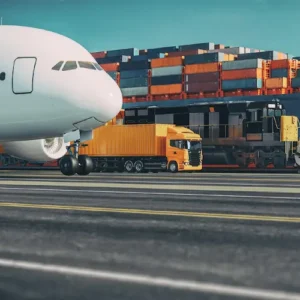

3 Steps to Save Shipping costs
Step 1: Use foldable boxes instead of two-piece rigid boxes.
Step 2: Customize to a smaller box. And Order early to use economy ocean freight instead of air.
Step 3: Select Door to door service include all taxes and freight.
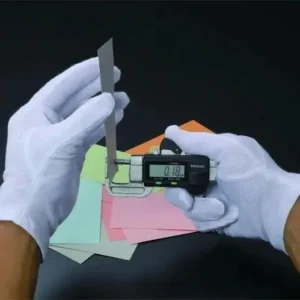
5 tips about Materials of Paper Boxes
1.Measure thickness of raw material
2.Cut a 10x10cm sheet
3.Measure paper weight
4.Measure paper thickness
5.Check standard weight-thickness tables

12 Common Box Inserts Introduction
1.Sponge (with velvet or paper)2.EVA Foam 3.Pearl cotton (EPE)
4.Paper Cardboard 5.Corrugated Paper 6.Plastic Blister
7.Tissue Paper 8.Raffia Filler9.Bubble Beads
10.Satin Fabric,11.Small Pouches 12.Mini Pillows
Fob cif ddp paper bags
Understand Incoterms 2020 for paper bag imports from China: what FOB, CIF, DDP, EXW, CFR and DAP mean, who pays freight, insurance and duty, and how to choose the right quote. Pick the term that matches the operation you actually run, normalize every quote to landed cost.
6 steps to customize paper boxes
1. Design Box style, Colors, Logos.
2. Meet the budget.
3. Revisions & Prototyping
4. Final Approval & Refinement
5. Small-Batch Testing
6. Mass Production

How to control color discrepancy of paper boxes
1.Same materials /ink batch
2.Same printing machines & crew
3.Same finishing (lamination/coating)
4.Identical inspection tools + standards
5. Smart color choices (e.g., black + embossed logo)